







The Psychological 'Small Payment' Trap
The appeal of a small Equated Monthly Instalment (EMI) is rooted in psychology. Services like 'Buy Now, Pay Later' (BNPL) reduce the immediate "pain of paying." Instead of parting with a large sum, you commit to a smaller, seemingly insignificant future
payment. This makes expensive items feel instantly attainable and less stressful on your wallet. This sense of instant gratification and perceived control can lead to more frequent and larger purchases than you might otherwise make. The brain focuses on the small monthly figure, not the total cost accumulating over time, creating an illusion of affordability that can be dangerously misleading.
How the Snowball Effect Cripples Your Budget
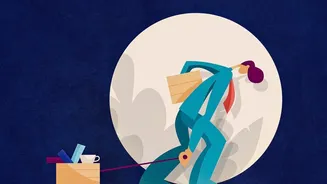
One EMI of ₹3,000 feels manageable. A second one for ₹4,000 for a new appliance seems doable. Soon, a travel loan adds another ₹5,000. Individually, they are small. Collectively, they become a substantial fixed expense that eats into your monthly income before you've even paid for essentials. This is the EMI snowball effect: multiple streams of small debts converging into a large, immovable monthly outflow. Suddenly, a significant portion of your salary is already committed, leaving you with less flexibility for daily expenses, savings, or emergencies. This slow pile-up can happen so gradually that you don't realize the extent of the problem until you feel the financial strain.
The Hidden Damage to Your Financial Health
The most significant impact of multiple EMIs is on your Debt-to-Income (DTI) ratio, a key metric lenders use to assess your financial health. The DTI ratio is the percentage of your gross monthly income that goes toward paying off debt. Financial experts recommend keeping your total EMIs under 40% of your income. When multiple loans push this ratio above 50%, lenders see you as a higher-risk borrower. A high DTI ratio can make it significantly harder to get approved for crucial future loans, such as a home or car loan, or you may be offered them at a much higher interest rate.
Your Credit Score is Quietly Watching
While making timely EMI payments is good for your credit history, having too many active loans at once can be a red flag for credit bureaus and lenders. Each time you apply for a new loan, it triggers a 'hard inquiry' on your credit report, which can temporarily lower your score. Multiple hard inquiries in a short period can signal to lenders that you are 'credit hungry' or potentially facing financial instability, increasing their risk perception. Even if you never miss a payment, a high number of concurrent loans can negatively affect your credit profile, making future borrowing more difficult and expensive.
Taming the EMI Beast: How to Regain Control
If you find yourself overwhelmed by multiple EMIs, the first step is to create a complete list of all your debts, including the outstanding amount, interest rate, and tenure for each. Prioritise paying off high-interest loans first, like credit card debt, while making minimum payments on others. Another effective strategy is debt consolidation, where you combine several smaller loans into a single larger loan, often at a lower interest rate. This simplifies your finances to a single monthly payment and can reduce your overall interest burden. Automating this single EMI payment can further help avoid late fees and protect your credit score.