



The End of the Round-Trip Rut
The classic international trip has a familiar rhythm: you fly into a major global city, explore, and then fly home from that very same airport. While straightforward, this model often involves inconvenient and time-consuming backtracking. Imagine spending
your last vacation day on a long train ride back to your arrival city just to catch your flight home. This rigidity limits exploration, forcing travellers to plan their journeys around a single point of entry and exit. It’s an approach that can add unnecessary travel time and expense, eating into the precious hours you’d rather spend discovering a new place. Thankfully, this era of restrictive travel planning is giving way to a more dynamic and traveller-friendly alternative, driven by a significant expansion in India’s international flight network.
A Wave of New Connections
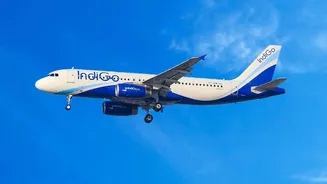
Indian and international airlines are aggressively launching new routes, transforming how the country connects with the world. In 2026 alone, a flurry of new non-stop services has been introduced. For instance, IndiGo has enhanced connectivity to Asia with new flights from Kolkata to Shanghai and Delhi to Colombo. Meanwhile, Air India has expanded its reach in the Far East with a Mumbai-Tokyo (Haneda) service and resumed its popular Delhi-Rome route. European carriers are also deepening their India footprint; SWISS launched a Bengaluru-Zurich flight, and SAS Scandinavian Airlines re-entered the Indian market with a Mumbai-Copenhagen connection. This expansion isn't just limited to metros. Tier-2 cities are becoming international gateways, with Air India Express connecting Indore to Abu Dhabi and, significantly, opening up Northeast India with direct flights from Guwahati to Dubai and Abu Dhabi. This boom is fuelled by growing demand from Indian travellers and a strategic push to develop airports beyond Delhi and Mumbai.
Unlocking Your Dream Itinerary
These new routes are more than just dots on a map; they are the building blocks for more creative and efficient travel. The key is to embrace what the industry calls "open-jaw" tickets. This simply means you fly into one city and out of another. For example, you could fly from Mumbai to Copenhagen on the new SAS flight, explore Scandinavia by train, and then fly home from another European capital like Zurich or Rome. In Southeast Asia, you could fly directly into Hanoi from Delhi on Air India, travel south through Vietnam, and then fly home from Ho Chi Minh City, saving an entire day of backtracking. This approach allows for true A-to-B journeys, where your travel is always moving forward. It’s perfect for multi-country tours in Europe, coastal road trips in Australia, or island-hopping adventures, maximising your time on the ground.
How to Book Multi-City Trips
Booking an open-jaw or multi-city itinerary is easier than you might think. Most major flight search engines and airline websites have a dedicated "multi-city" search option right next to the standard "round trip" and "one way" tabs. Simply select this and enter each leg of your journey separately. For example: Flight 1: Delhi to Paris. Flight 2: Rome to Delhi. The search engine will then piece together the best options and pricing. Contrary to popular belief, this is often not more expensive than a conventional return ticket. In some cases, especially on long-haul routes, it can even be cheaper than booking two separate one-way flights. This method gives you the power to design a trip that fits your interests perfectly, rather than letting flight routes dictate your plans. It puts you in control, allowing you to build an itinerary that is both logical and inspiring.