

Not Your Average Household Dust
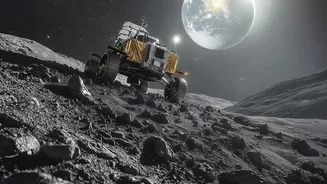
Lunar dust, or regolith, is fundamentally different from the dust on Earth. On our planet, wind and water erode particles over millennia, making them rounded and relatively smooth. The Moon, lacking an atmosphere and weather, is a different story. Its
surface is covered in fine particles created by billions of years of micrometeorite impacts that pulverize rock. The result is a layer of dust made of microscopic, jagged shards, as sharp as broken glass. To make matters worse, the constant bombardment of solar radiation gives these particles an electrostatic charge, causing them to cling to everything like static-charged balloons. This combination of sharpness and stickiness makes lunar dust a unique and persistent hazard.
The Dangers Lurking in the Regolith
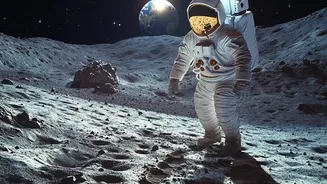
The threat from lunar dust is twofold: it harms both humans and hardware. For astronauts, the risk begins with inhalation. During the Apollo missions, astronauts who brought dust back into their lunar module experienced what they called “lunar hay fever”—sneezing, watery eyes, and sore throats. While these symptoms were temporary, scientists are concerned about the long-term effects of prolonged exposure, which could lead to serious respiratory issues similar to those caused by inhaling toxic dust on Earth. Studies using simulated lunar soil have shown it can be toxic to lung and brain cells. The damage to equipment is just as severe. The abrasive nature of the dust wore down the outer layers of the Apollo astronauts' boots and gloves. It clogged mechanisms, caused instruments to overheat by coating surfaces, and damaged the vacuum seals on sample containers. For the long-duration missions planned under the Artemis program, where astronauts will live and work on the Moon for extended periods, such degradation could lead to catastrophic failures of spacesuits, habitats, and essential machinery.
What NASA is Testing Now
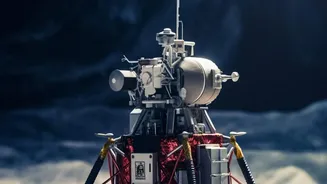
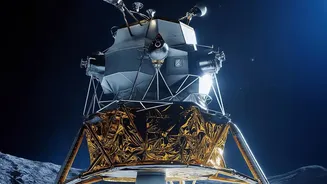
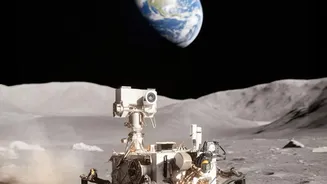
To prepare for a sustained human presence on the Moon, NASA is conducting a range of tests to understand and mitigate the dust problem. A key part of this research involves using 'simulants'—materials created on Earth to mimic the physical and chemical properties of lunar regolith, such as the Black Point-1 simulant from a volcanic region in Arizona. At facilities like NASA's Langley and Johnson Space Centers, engineers are using these simulants in specialized vacuum chambers to test how new hardware holds up. Very recent tests, for example, involve firing rocket exhaust into bins of simulated dust to measure how it gets kicked up during landings and what damage the high-velocity spray could do to the lander itself. Other tests focus on developing new technologies, including dust-repellent coatings, specialized air filtration systems, and even electrostatic dust shields that use electric fields to actively remove particles from surfaces. Instruments are also being developed for future Artemis missions, like the DUSTER suite, which will measure the charge, size, and movement of dust on the lunar surface to build better mitigation strategies.
Paving the Way for Artemis and Beyond
The insights gained from these tests are crucial for the success of the Artemis program and its goal of establishing a long-term lunar base. Solving the dust problem will directly influence the design of everything from the next generation of spacesuits and rovers to habitats and power systems. For instance, understanding how dust accumulates on solar panels is vital for ensuring a reliable power source, while designing better seals and mechanisms will prevent critical equipment failures. These efforts are not just for the Moon; the lessons learned will be invaluable for future missions to Mars, which has its own challenging dust environment. As India's own Chandrayaan program continues to explore the lunar surface, the global effort to understand and conquer lunar dust underscores a fundamental truth of space exploration: success often depends on solving the smallest of problems.