


A Tale of Two Faces
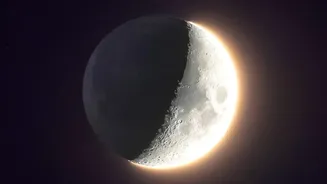
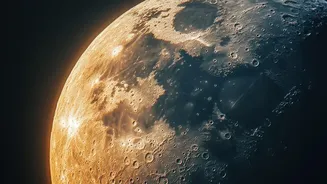
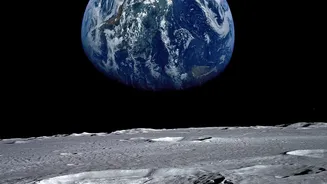
The lunar surface we see, the near side, is defined by vast, dark plains of volcanic basalt, known as 'maria' or seas. These smooth, low-lying basins are what create the familiar 'Man in the Moon' pattern. The near side also has a significantly thinner
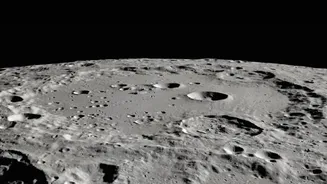
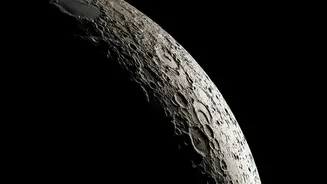
crust. In stark contrast, the far side is almost entirely covered in rugged, crater-pocked highlands. It's virtually devoid of the large maria that dominate the near side, and its crust is substantially thicker, by about 20 kilometres on average. This striking difference in geology and topography is known as the lunar dichotomy, a puzzle that has captivated astronomers since the first Soviet probes photographed the far side in 1959.
A Primordial Collision
The leading explanation for this asymmetry begins billions of years ago with a cataclysmic event. According to the Giant Impact Hypothesis, the Moon itself was formed when a Mars-sized planet, nicknamed Theia, slammed into a young Earth. The debris from this cosmic crash eventually coalesced in orbit to form the Moon. Some theories suggest that this was not the only major impact in the Moon's early life. One idea proposes that another, smaller dwarf planet later collided with the Moon, but at a relatively low speed. Instead of creating a massive crater, this impact could have essentially plastered material onto one hemisphere, creating the thicker, highlands-dominated crust we see on the far side today.
The Impact That Reshaped a World
Another powerful theory points to the immense South Pole-Aitken (SPA) basin on the far side. This is the largest, oldest, and deepest impact crater on the Moon—and one of the largest in the entire solar system. The sheer energy released by the impact that created this 2,500-kilometre-wide basin some 4.3 billion years ago would have been transformative. Numerical simulations show that this single event could have sent a massive wave of heat through the Moon's interior. This wave of heat may have caused radioactive, heat-producing elements like potassium, phosphorus, and thorium to migrate and concentrate on the opposite side of the Moon—the near side. This concentration of radioactive elements would have kept the near side's mantle hotter for longer, fueling the prolonged volcanic activity that created the vast, smooth maria we see today.
New Clues From Ancient Rocks
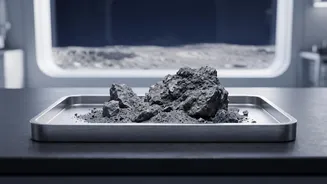
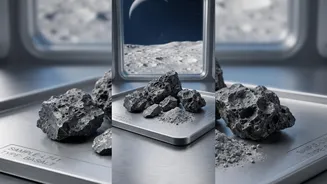
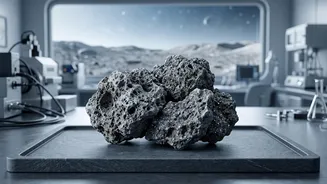
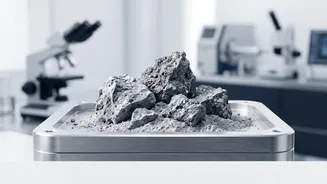
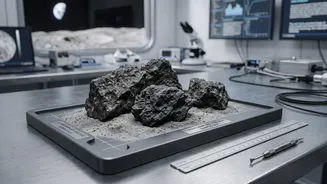
More recent investigations, including analysis of the first-ever samples returned from the Moon's far side by China's Chang'e-6 mission, are adding new layers to the story. This new evidence suggests that after the Moon became tidally locked with Earth, meaning the same side always faces us, our planet's immense gravity played a key role. The tidal forces and residual heat from the young, hot Earth could have unevenly heated the Moon's ancient magma ocean. This temperature difference may have driven enormous, hemisphere-scale currents of molten rock. Hot magma, carrying lighter materials, flowed from the near side toward the far side, contributing to the buildup of a thicker crust there. This internal circulation, kicked off by a massive impact and sustained by Earth's influence, provides a powerful mechanism for why the two faces of our nearest celestial neighbour turned out so differently.