

A New Era of Discovery
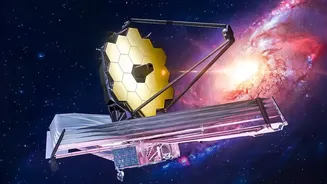
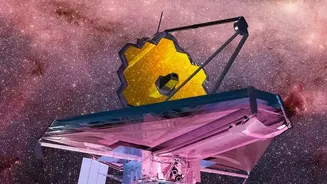
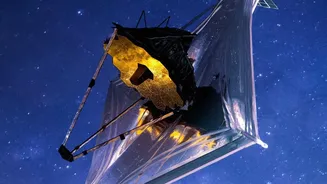
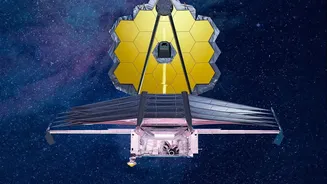
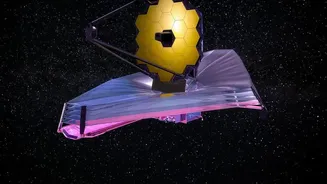
The James Webb Space Telescope, an international collaboration between NASA, the European Space Agency (ESA), and the Canadian Space Agency (CSA), has begun to deliver on one of its most anticipated promises: to analyze the air of planets orbiting other
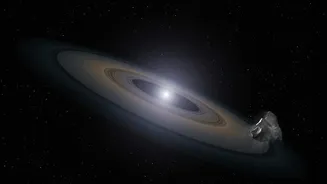
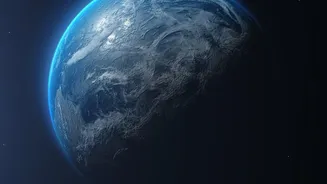
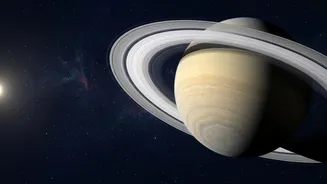
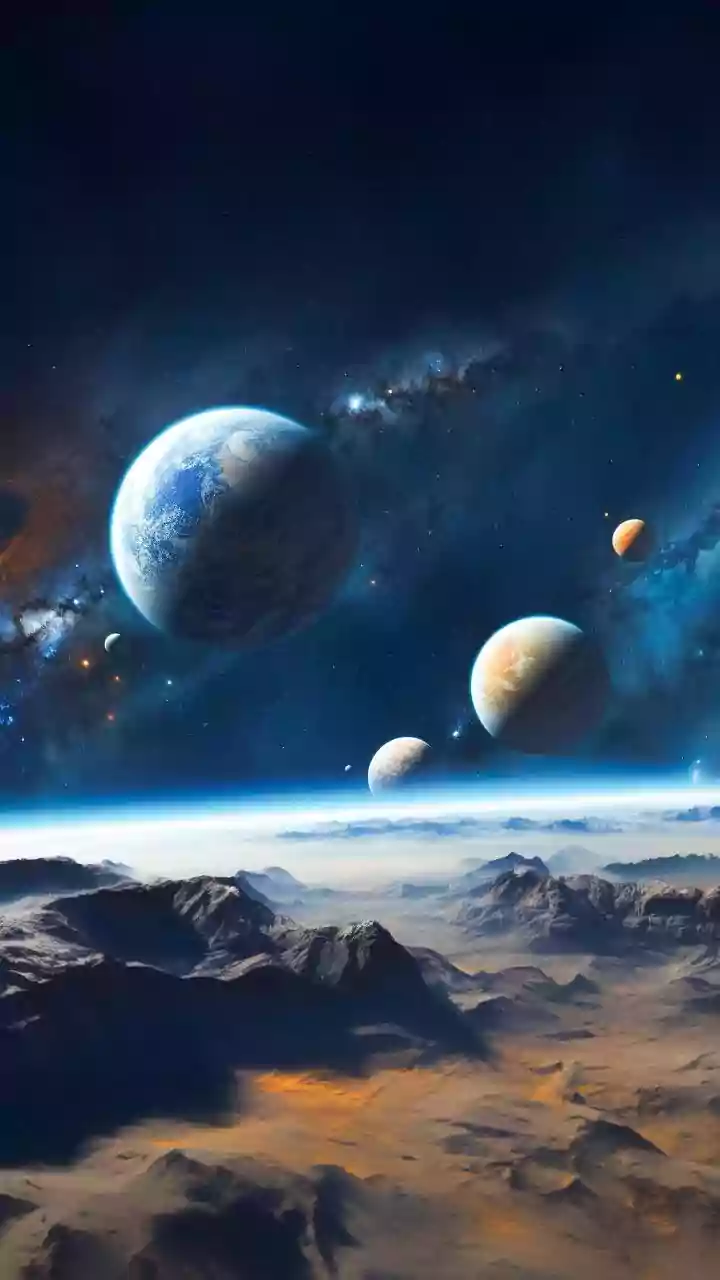
stars. In a series of groundbreaking observations, the telescope has detected the distinct chemical signature of water vapour in the atmospheres of several exoplanets. While water has been detected before by instruments like the Hubble Space Telescope, the JWST's power and precision are providing a level of detail that was previously impossible, opening what NASA has called a "new era in exoplanet research". These alien worlds are not necessarily Earth-like; many are 'sub-Neptunes' or 'hot Jupiters', types of planets that don't even exist in our own solar system. The findings are both confirming long-held theories and challenging our understanding of how planets form.
How to See the Unseeable
Detecting what's in the air of a planet light-years away sounds like science fiction, but it's accomplished through a clever method called transmission spectroscopy. As an exoplanet passes in front of its host star from our point of view, a tiny fraction of the starlight filters through the planet's atmosphere. Different chemical elements and molecules absorb light at very specific wavelengths, or colours. When this starlight reaches the JWST's sensitive instruments, like its Near-Infrared Spectrograph (NIRISS), certain colours will be missing or dimmed. These missing pieces create a unique barcode, or spectrum, that reveals the chemical fingerprint of the atmosphere. By analyzing this spectrum, astronomers can confidently identify the presence of molecules like water vapour, methane, and carbon dioxide. It’s an indirect but incredibly powerful way to study worlds we can never hope to visit.
A Tale of Two Worlds
Two prominent examples of the JWST's capability are the exoplanets WASP-96 b and GJ 9827d. WASP-96 b, a gas giant located about 1,150 light-years away, showed the unambiguous signature of water in its atmosphere. More recently, observations of GJ 9827d, a 'super-Earth' roughly twice our planet's diameter, suggest an atmosphere composed almost entirely of hot steam. At a scorching 400 degrees Celsius, this 'steam world' is far from habitable for life as we know it. However, its existence confirms that planets with water-rich atmospheres can indeed form and persist, even in hostile environments. Such discoveries help scientists test and refine their models of planetary formation. The data suggests some of these worlds may have formed farther from their star, where water ice is plentiful, and later migrated inward.
Not Earth 2.0, But a Vital Clue
It is crucial to manage expectations. Finding water vapour, even in large amounts, does not mean we have found life or a habitable ocean world. Many of these planets, like the 'hot Jupiter' WASP-39b and the 'steam world' GJ 9827d, are far too hot for liquid water to exist on their surface. In some cases, the water detected is in the form of scorching steam or even broken apart by the intense heat and radiation from the planet's star. However, these discoveries are a vital step in the right direction. The presence of water is believed to be a necessary, though not sufficient, condition for life. By studying the atmospheres of a wide variety of planets, scientists can begin to understand the chemistry that leads to a potentially habitable world. The goal is to eventually turn the JWST towards smaller, rocky, Earth-like planets orbiting within their star's 'habitable zone'—the region where liquid water could potentially exist.