



The Unseen Psychological Frontier
Venturing into space is inherently risky. We have spent decades engineering solutions for radiation, microgravity, and micrometeoroids. Yet, as missions extend from months to years, another hazard has come to the forefront: the immense psychological strain
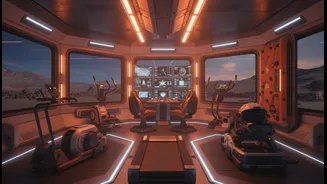
of being isolated and confined. For crews heading to the Moon or Mars, this means living in a space potentially the size of a studio apartment for years, with only a few other people for company. The risk isn't just loneliness; it's a collection of behavioural and cognitive challenges, including anxiety, depression, sleep disruption, and a decline in morale that can jeopardise not just an astronaut's well-being, but the success of the entire mission. This psychological dimension is the new frontier that space agencies like NASA are working tirelessly to understand and conquer.
Life in a High-Stakes Bubble
On Earth, you can walk away from a tense situation. In space, that's not an option. Astronauts on the International Space Station (ISS) live and work in close quarters with a small, diverse crew. While this can foster deep bonds, it also creates an environment where minor disagreements can escalate. Research from spaceflight analogue environments, like Antarctic research stations, shows that prolonged confinement often leads to interpersonal friction and social tension. A study at Antarctica's Concordia Station found that constant physical proximity, rather than fostering support, actually correlated with increased conflict and mistrust among crew members. Astronauts must not only be technically proficient but also possess exceptional interpersonal skills, including cultural communication and conflict management, to maintain a functional team dynamic hundreds of miles from Earth.
When Earth Becomes a Distant Star
For astronauts on the ISS, Earth is a constant, beautiful presence out the window. They can also connect with family and support teams in near real-time. But a mission to Mars changes everything. The communication delay can be up to 22 minutes each way, making a normal conversation impossible. This eliminates the immediate psychological support from home and mission control that today's astronauts rely on. Furthermore, the psychological impact of seeing Earth shrink to just another point of light can be profound, creating an unprecedented feeling of separation. This "Earth-out-of-view" phenomenon is expected to be a significant stressor, amplifying feelings of homesickness and disconnection.
Simulating Mars on Earth
To prepare for these challenges, scientists can't wait for the first Mars mission. Instead, they use ground-based analogues that simulate the isolation of long-duration spaceflight. The most famous of these was the Mars-500 experiment, where a six-person international crew lived in a sealed habitat in Moscow for 520 days—the duration of a round trip to Mars. The study provided critical data on how mood, performance, and social dynamics change over time. For example, it revealed that participants had considerable sleep problems and that psychological adaptation occurred in stages. Other simulations, like NASA's SIRIUS projects, continue to study multicultural crews in confinement to develop countermeasures for the psychological hazards of future deep-space missions.
Building the Resilient Astronaut
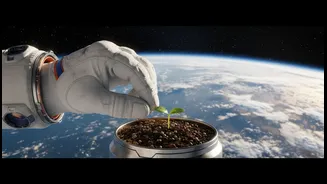
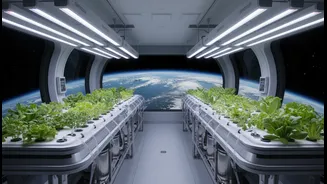
Space agencies are not just studying the problem; they are actively developing solutions. The process begins with rigorous psychological screening to select candidates who are resilient and compatible. Once selected, astronauts undergo extensive training in what NASA calls an "expeditionary mindset," focusing on teamwork, self-care, and stress management. Onboard the ISS, astronauts maintain structured routines, exercise daily to combat both physical and mental decline, and are encouraged to keep journals. Looking ahead to Mars, NASA is exploring technologies like programmable lighting systems to regulate sleep cycles, virtual reality to provide psychological relief, and even automated therapy systems to offer support when Earth is out of reach. Even something as simple as tending to a small space garden can provide therapeutic benefits and a connection to life back home.