





The Basic Rule: No Air, No Sound
The core claim of the headline holds up, at least on the surface. Sound, as we experience it on Earth, is a mechanical wave. It needs a medium—a substance like air, water, or solid ground—to travel. Think of it like ripples in a pond. When you speak,
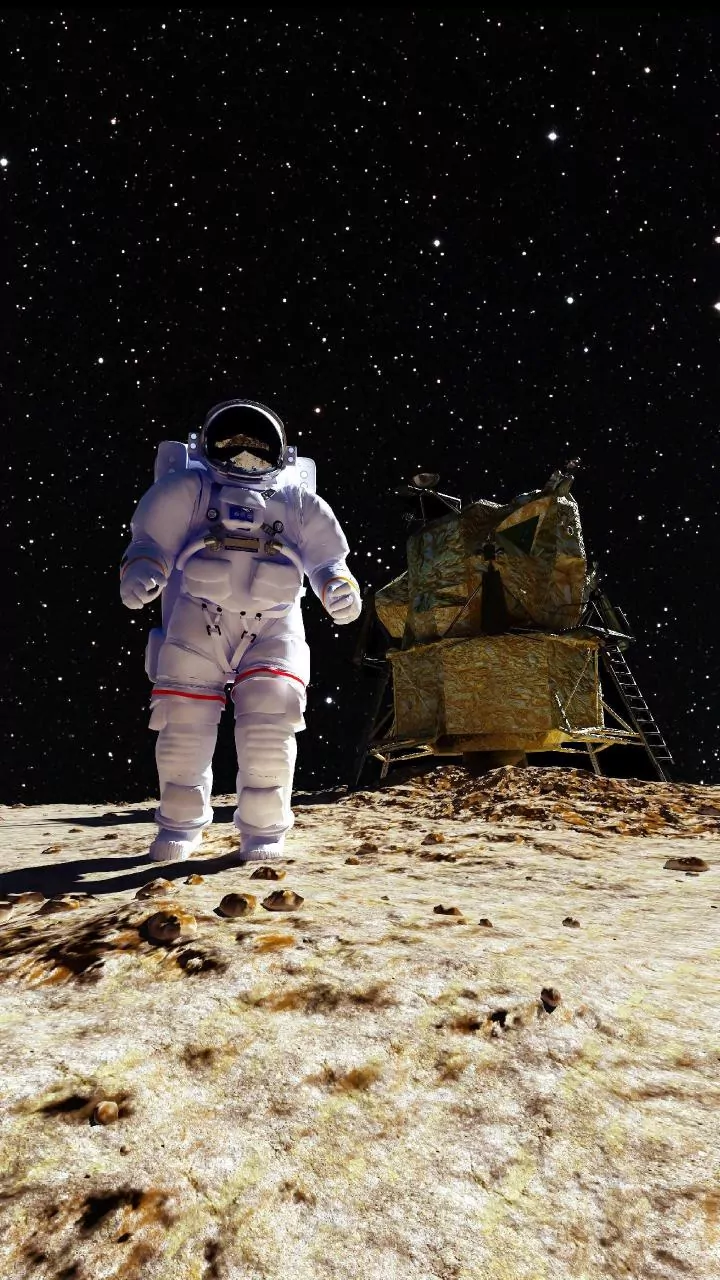
your vocal cords vibrate, pushing and pulling on air molecules. This creates a chain reaction of compressions and rarefactions that eventually reach someone's eardrum. Without a medium, there are no particles to vibrate, and the sound has nowhere to go. [7, 12, 13] Space is the closest thing to a perfect vacuum we know, meaning it's almost entirely devoid of matter. [18] So, an explosion, a collision, or a massive, burning star has no air to carry its roar, rendering it completely silent to human ears. [7, 12]
Reality Check: Space Isn't Truly Empty
Here's where the 'absolute' and 'complete' part of the headline starts to break down. While space is an astonishingly effective vacuum compared to anything on Earth, it's not perfectly empty. [10, 26] The vast regions between stars and galaxies are filled with stray particles, including gas, dust, and plasma (ionised gas). [10, 11] Interstellar space might average only about one atom per cubic centimetre, but it's not zero. [10, 29, 30] More importantly, entire clusters of galaxies are enveloped in enormous clouds of gas. A galaxy cluster has copious amounts of gas, which provides a medium for sound waves to propagate, even if it's not in a way humans could hear directly. [1] This subtle but crucial fact opens the door for space to have a 'voice', just not one we were expecting.
Cosmic 'Sounds' We Can Detect
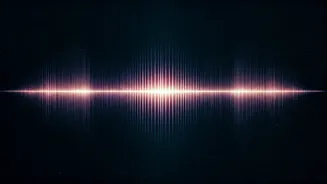
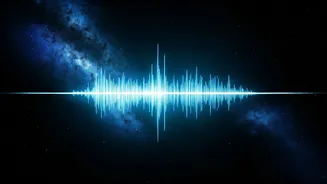
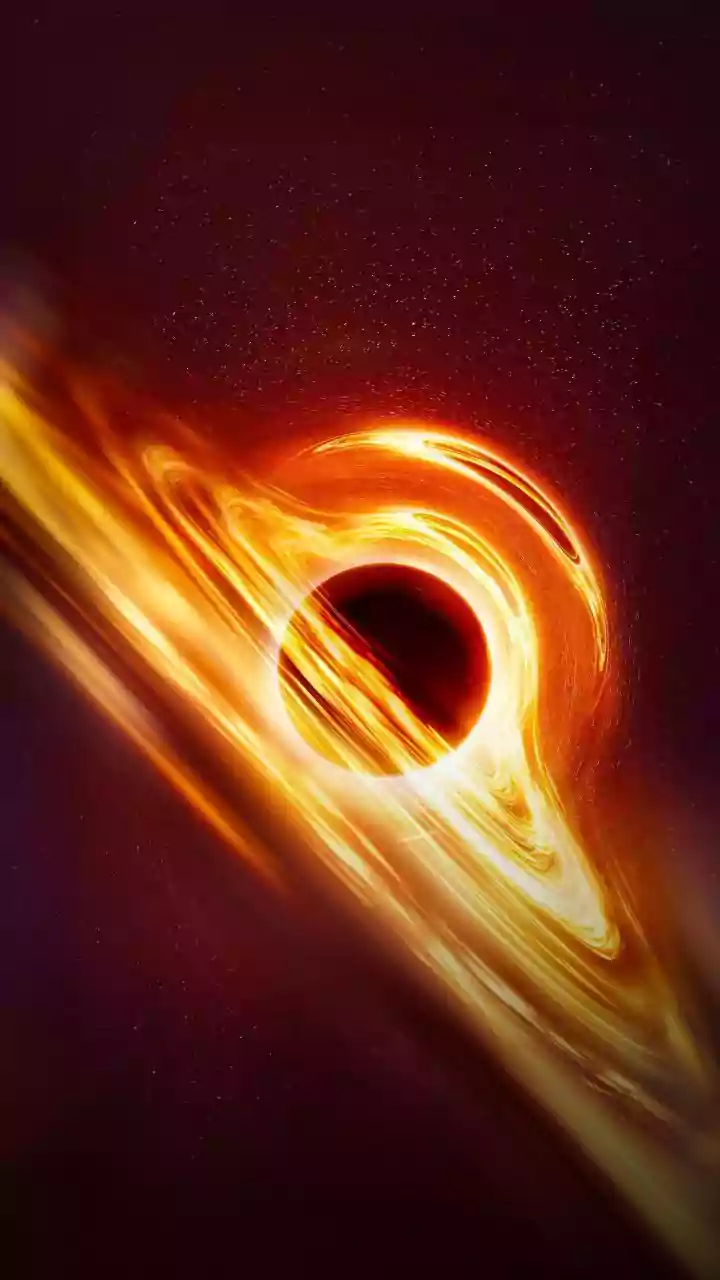
If space isn't perfectly empty, can we 'hear' it? Yes, but not with our ears. Scientists use a process called data sonification, which translates different types of waves into audible sound. In 2022, NASA released an eerie sonification of a supermassive black hole at the centre of the Perseus galaxy cluster. [15, 16] Astronomers found that the black hole emits pressure waves that cause ripples in the surrounding hot gas. [1, 4] These ripples are a form of sound, but at a pitch 57 octaves below middle C, far too low for humans to hear. [1, 4, 15] By scaling those frequencies up by 144 quadrillion times, they created an audible version of the black hole's hum. [4, 15] Similarly, NASA's Voyager probes have instruments that detect vibrations in plasma waves, which can be converted into audio-frequency sounds. [14, 22, 24] These 'sounds of interstellar space' help scientists determine the density of the medium the probes are travelling through. [14, 23, 27]
The Chirp of Spacetime and Sounds on Other Worlds
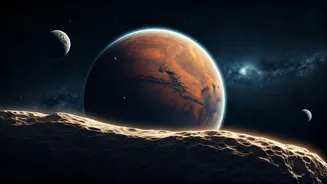
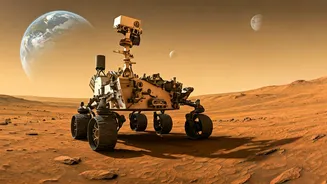
Beyond plasma and gas, even the fabric of spacetime can 'ring'. When massive objects like black holes or neutron stars collide, they create ripples in spacetime itself, known as gravitational waves. [19, 25] These waves are often compared to sound, and when their detected frequencies are converted to audio, they produce a characteristic 'chirp'. [5, 17, 28] It's another way we can 'listen' to the universe's most violent events. And of course, while the vacuum of space is silent, places *in* space are not. Mars, for instance, has a thin atmosphere. NASA's Perseverance rover is equipped with two microphones that have captured nearly five hours of audio from the Red Planet. [2, 3] We can now hear the gusting Martian winds, the crunch of the rover's metal wheels on gravel, and the whir of the Ingenuity helicopter—proving that there is indeed sound in space, as long as you find a place with a little bit of air. [2, 6, 8, 9]