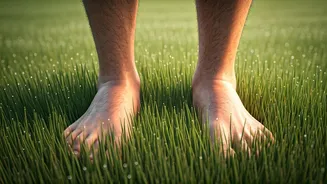









The Science of Grounding
The core concept behind walking barefoot on natural surfaces is often called "grounding" or "earthing." The theory suggests that direct physical contact with the Earth's surface allows for a transfer of free electrons from the ground into the body. [14,
17] Proponents believe these electrons act as antioxidants, potentially neutralizing free radicals that contribute to inflammation and pain. [17, 18] Some small studies have explored grounding's effect on post-exercise recovery. A pilot study on delayed-onset muscle soreness (DOMS) found that participants who were grounded reported less pain and showed different patterns in markers of inflammation compared to a non-grounded group. [25] Other research has pointed to grounding's potential to reduce muscle soreness, improve sleep, and lower stress hormones like cortisol. [12, 14, 23] While the science is still emerging and requires more large-scale studies, the initial findings are intriguing for those seeking natural recovery methods. [12]
Strengthen Your Foundation
Beyond the electrical theories of grounding, the physical act of walking barefoot offers well-documented benefits for your feet and posture. [11] Modern, cushioned shoes can prevent many of the small, intrinsic muscles in our feet from fully engaging. [6, 11] Walking on an uneven, natural surface like grass forces these muscles to work, helping to build strength and stability in your foot's natural arch. [9, 11] This increased muscle activation is not just about the feet; it has a chain reaction up the body. A stronger, more stable foot can lead to better alignment and mechanics in the ankles, knees, and hips, potentially easing strain on the calf and back muscles. [3, 7, 11] It all comes down to proprioception—your body's awareness of its position in space. Your feet are packed with over 200,000 nerve endings, and walking barefoot supercharges the feedback they send to your brain, improving balance and coordination. [1, 5, 8]
Nature's Stress Reducer
The benefits of a post-workout grass walk aren't just physical. Spending time in green spaces has a profound and measurable impact on mental well-being, which is crucial for effective recovery. Research consistently shows that exposure to nature can lower levels of cortisol, the body's primary stress hormone. [15, 27] A walk in a park or even a grassy backyard can help shift your nervous system from a state of stress to one of rest and relaxation. [23, 24] This mental restoration helps reduce feelings of anxiety and boosts positive emotions. [26] Lowering psychological stress is a key component of physical recovery, as it can help relax tense muscles and improve sleep quality—two essential factors in letting your body repair itself after exercise. [13, 21]
How to Start Your Barefoot Walk
Integrating this practice into your routine is simple, but it’s wise to start slowly. After your next workout and cool-down, find a clean, safe patch of grass. Ensure the area is free from sharp objects, litter, and chemicals. [2] Start with just 10 to 15 minutes of walking. [7] Pay attention to how your feet feel as they connect with the ground. Notice the texture of the grass and the subtle shifts in the terrain. This isn't a power walk; the goal is mindful, gentle movement. If you've spent most of your life in supportive shoes, your foot muscles will need time to adapt. [7] Listen to your body and ease up if you feel any new or sharp pain. [3] People with certain conditions, like diabetes or peripheral neuropathy, should consult their doctor before walking barefoot outdoors due to the increased risk of unnoticed injuries. [2, 7]