





The Sun’s Unpredictable Temper
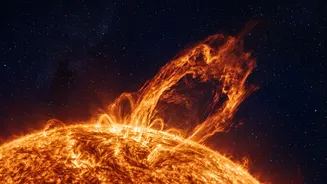
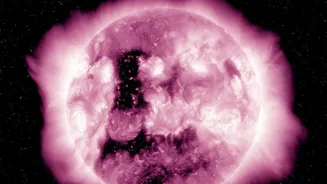
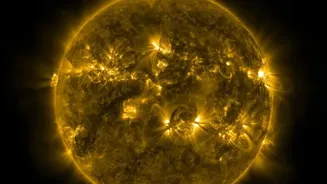
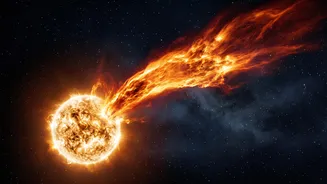
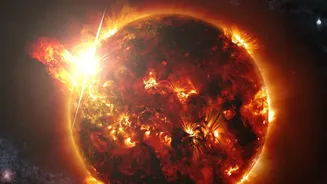
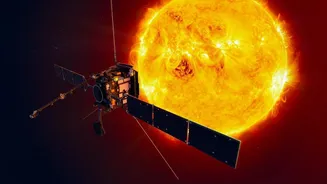
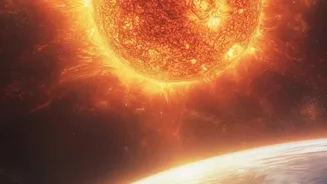
The sun, our life-giving star, has a volatile side. It sometimes releases immense bursts of energy and magnetised particles, known as solar storms or coronal mass ejections (CMEs). While Earth's magnetic field protects us from most of this onslaught,
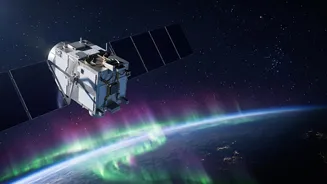
a sufficiently strong and well-aimed storm can have devastating consequences for our technology-dependent society. These events can induce powerful electrical currents in our infrastructure, threatening to overload power grids and cause widespread blackouts. They can also disrupt high-frequency radio signals used by aircraft, damage the sensitive electronics in our satellites, and interfere with the GPS signals that everything from logistics to app-based taxis rely on.
The Old Way: A Race Against Time
Traditionally, forecasting the impact of a solar storm was a reactive process. Scientists had to wait for a solar eruption to occur and then use satellites to observe the resulting cloud of particles hurtling towards us. This gave very little time to prepare for where and how severely the storm would affect Earth’s magnetic environment. In a world where a major event could cripple economies and endanger lives, this narrow warning window has long been a significant concern for governments and commercial operators alike. The computational challenge of predicting the storm's impact on a global scale meant that specific, actionable forecasts were difficult to produce quickly.
Enter DAGGER, The AI Forecaster
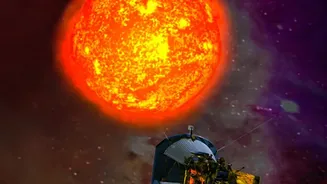
This is where NASA's new AI model, called DAGGER (Deep Learning Geomagnetic Perturbation), changes the game. Developed by an international team at the Frontier Development Lab, a partnership that includes NASA, it uses a form of AI called deep learning to find hidden patterns in vast amounts of data. The model was trained on information from numerous heliophysics missions, learning the complex relationship between the solar wind—the stream of particles constantly flowing from the sun—and the resulting magnetic disruptions on Earth. By analyzing real-time data from satellites, DAGGER can now predict where a geomagnetic storm will strike anywhere on Earth, with 30 minutes of advance warning.
Why 30 Minutes Is a Game-Changer
Thirty minutes might not sound like much, but in the context of protecting critical infrastructure, it's a revolutionary leap forward. This warning provides just enough time for power grid operators to re-route power and take sensitive systems offline to prevent cascading failures. Satellite operators can take protective measures, potentially by reorienting their spacecraft or temporarily shutting down non-essential components to avoid electrical damage. This AI system can generate a detailed global prediction in less than a second and updates its forecast every minute, providing a continuous and accurate picture of the impending threat. It is the first system to combine the speed of AI with real-time measurements from space to produce such rapid, precise, and global forecasts.
Protecting Our Digital Foundation
In an increasingly connected India, the stakes are enormous. Our reliance on a stable power grid, satellite communications for broadcasting and internet services, and GPS for navigation and logistics makes us vulnerable. A severe solar storm could disrupt everything from digital payment systems that rely on network stability to the complex operations of shipping and aviation. As the sun moves towards its next 'solar maximum' in 2025—the peak of its 11-year activity cycle—the risk of a powerful storm increases. The development of AI-powered tools like DAGGER represents a crucial step in building resilience. The lead author of the paper on the model, Vishal Upendran of the Inter-University Center for Astronomy and Astrophysics in India, noted that with this AI, it's now possible to make rapid predictions to minimize or even prevent devastation to modern society.