







What Exactly is Microgravity?
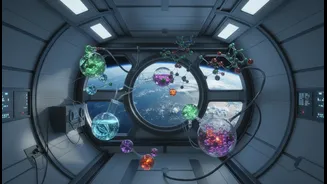
Imagine a world without weight. In orbit, around 400 kilometres above Earth, objects and people are in a constant state of freefall, creating an environment of 'microgravity'. It's not zero gravity, but the gravitational pull is so weak it becomes almost
negligible. On Earth, gravity influences everything. It causes denser materials to settle and lighter ones to rise (buoyancy), and it drives heat transfer (convection). In microgravity, these forces vanish. This allows scientists to observe the fundamental properties of materials and biological systems in a way that is impossible on the ground, revealing behaviours that are normally masked by gravity's constant pull.
Gaganyaan: The Gateway to a Space Lab
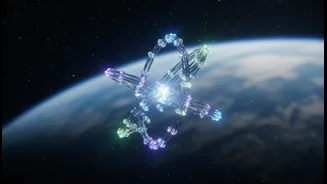
India's ambition to harness microgravity is directly linked to its human spaceflight mission, Gaganyaan. While the initial missions are focused on demonstrating the capability to safely send astronauts to Low Earth Orbit and bring them back, the programme is the essential stepping stone. Even the early uncrewed flights are slated to carry microgravity experiments, including a humanoid robot named Vyommitra designed to perform initial tests. The ultimate goal is the Bharatiya Antariksha Station (BAS), a modular space station India plans to have operational by 2035. This 'home in the sky' will serve as a dedicated national laboratory for long-duration research, allowing Indian scientists to conduct advanced experiments without relying on foreign space stations.
The Promise of a Floating Laboratory
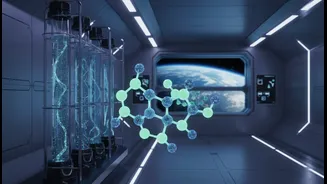
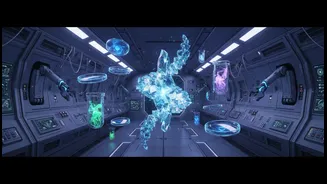
The potential applications of microgravity research are vast and could have transformative effects back on Earth. In medicine, for example, proteins—the building blocks of life and the targets for many drugs—can be grown into larger, more perfect crystals in space. This allows scientists to map their structures with incredible precision, leading to the design of more effective medicines to fight diseases like cancer. Similarly, stem cells grow more easily into 3D structures that mimic human tissue, providing better models for drug testing and understanding diseases. In materials science, the absence of gravity allows for the creation of unique metal alloys and higher-quality semiconductors that are impossible to produce on Earth. This could lead to breakthroughs in electronics and communications.
Opening Doors for Indian Innovation
The Indian Space Research Organisation (ISRO) is actively encouraging the nation's scientific community to get involved. Through initiatives like the Indian Microgravity Experiments (IMEx-2026) programme, ISRO has invited proposals from universities, research labs, and even startups. The call is for experiments in a wide range of fields, including space biology, agriculture, drug research, and in-space manufacturing. This approach aims to democratise access to space, ensuring that the benefits are not confined to the space agency alone. By fostering a domestic ecosystem for space research, India hopes to nurture new industries and inspire a generation of scientists and engineers to pursue careers in STEM fields. One Indian startup is even developing an underwater habitat to simulate microgravity conditions for astronaut training and research.