


The Challenge of Urban Stargazing
The biggest obstacle for any city-based astronomer is light pollution. The excessive artificial light from street lamps, buildings, and cars creates a bright haze that washes out all but the brightest celestial objects. This can make finding specific
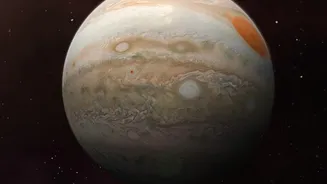
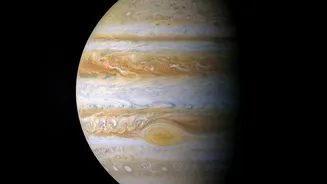
stars and planets feel like searching for a needle in a haystack. While Jupiter and Saturn are bright enough to be visible from most cities, knowing exactly where to look is crucial. You could be staring right at a planet and mistake it for a high-flying airplane or just another star. This is where technology steps in to bridge the gap between your curiosity and the cosmos.
A Planetarium in Your Pocket
Modern stargazing apps transform your smartphone into a powerful, portable planetarium. By using your phone's built-in GPS, compass, and gyroscope, these apps know your exact location and the direction you're pointing the device. They then generate a real-time map of the sky, showing you precisely what stars, constellations, and planets are in your line of sight. You no longer need to learn complex star charts or spend hours trying to orient yourself. Just point your phone at the sky, and the app identifies everything for you, making astronomy accessible to everyone, regardless of prior knowledge.
Key Features for City Dwellers
The most useful feature for urban observers is Augmented Reality (AR). By activating your phone's camera, the app overlays its star map onto a live view of your surroundings. This allows you to see the names and paths of planets like Jupiter and Saturn superimposed directly onto the night sky, removing all guesswork. Many apps also include a "Time Travel" function, letting you see where planets will be on a future date or time, which is perfect for planning. To help with visibility, look for apps with light pollution settings that can simulate what is realistically visible from your location and a red-light "Night Mode" that preserves your night vision while you use the app.
Top Apps to Get You Started
Several highly-rated apps can help you find Jupiter and Saturn tonight. Stellarium Mobile: Often considered a gold standard, Stellarium offers a massive database of celestial objects and a very accurate sky map. Its free version is incredibly powerful, and it includes a feature to adjust for light pollution, helping you manage expectations of what's visible from a city. SkyView Lite: This app is praised for its intuitive and user-friendly interface. Its primary strength is its simple "point-and-identify" AR functionality. You just open the app, point it at a bright object, and it will quickly tell you if you're looking at Jupiter, Saturn, or a bright star. Star Walk 2: Known for its beautiful graphics and 3D models of constellations, Star Walk 2 is both educational and practical. It uses AR effectively and has a "Visible Tonight" section that tells you the best objects to look for from your specific location, making it ideal for casual observers.
Tips for Your First Sighting
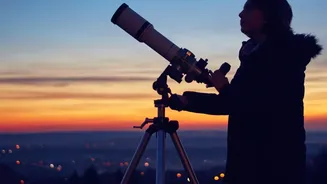
Once you have an app, a few simple tips can improve your experience. First, find the darkest spot available to you, like a park, a rooftop, or even just the least-lit side of your building. Give your eyes at least 15-20 minutes to adjust to the darkness; this will help you see fainter objects. While apps can show you where planets are, binoculars can dramatically enhance the view. Even with a basic pair, you might be able to distinguish Saturn’s rings or see Jupiter's largest moons as tiny pinpricks of light next to the planet. Finally, check the weather and plan your session for a clear, cloudless night for the best possible views.