


The Everyday Fitness Advantage
Nordic walking is gaining popularity as a highly efficient form of daily exercise. Unlike regular walking, which primarily uses muscles in the lower half of the body, Nordic walking engages up to 90% of your body's muscles. By using specially designed
poles to propel yourself forward, you activate your arms, shoulders, chest, and core. Studies have shown this can increase calorie burn by 20% to over 45% compared to walking without poles. This elevated workout comes without the feeling of greater exertion, making it a sustainable choice for many. Furthermore, the poles provide added stability and distribute weight more evenly, which can reduce the impact on your back, hips, and knees, making it an excellent option for older adults or those with joint concerns.
It's All in the Technique
Simply carrying poles isn't Nordic walking. The benefits are unlocked through a specific technique, which is why learning the correct form is a practical priority. Without proper form, you not only miss out on the full workout but can also cause unnecessary strain. The fundamental motion is based on a natural, cross-body walking pattern: as your right leg moves forward, your left arm swings forward, and vice-versa. This coordinated movement is what engages the core and creates a smooth, rhythmic stride. Many beginners make the mistake of moving the arm and leg on the same side together, which halts the torso rotation that is central to the exercise.
Mastering the Pole Plant and Push
The poles are not walking canes for balance; they are levers for propulsion. A common error is planting the pole too far in front of your body, which acts as a brake and puts stress on your joints. Instead, the pole should be planted on the ground between your feet. As you step forward, you push back on the pole, propelling your body forward. This pushing motion should come from the shoulder, using a long, straight arm rather than a bent elbow, which engages the larger muscles of your upper back and triceps.
The Grip, Release, and Posture
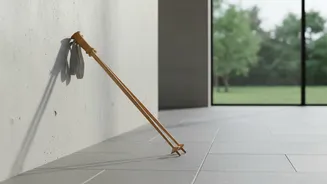
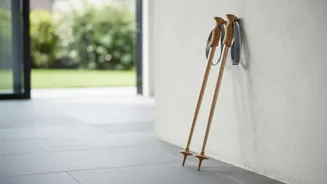
Proper hand technique is crucial. Nordic walking poles come with a glove-like strap that allows you to open your hand at the end of the push-off phase. The cycle is to grip the handle firmly as you plant the pole, push back, and then open your hand as your arm extends behind your body. This release allows for a full range of motion and prevents you from clenching the grips, which can cause tension. Maintaining an upright posture is also essential. Many people tend to look down at their feet, which causes them to slouch and reduces lung capacity. Keep your gaze forward, your shoulders relaxed and down, and your chest open to maintain proper alignment and breathe efficiently.
Choosing the Right Equipment
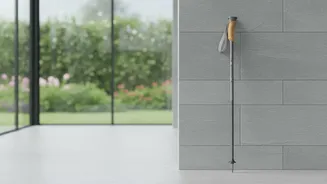
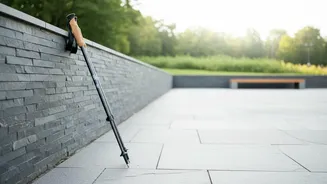
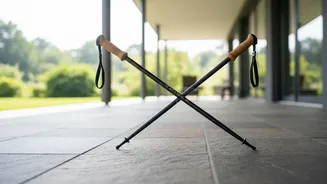
While technique is paramount, the right gear makes a significant difference. Nordic walking poles are distinct from trekking poles; they are lighter and feature a specific strap system designed for the walking technique. Pole length is critical: if they are too long, they can strain your shoulders, and if they are too short, you'll be forced to hunch over. A general rule is to multiply your height in centimetres by 0.68 to find the correct length, or ensure your elbow is at a 90-degree angle when holding the pole upright. While fixed-length poles are often lighter, adjustable poles offer versatility, especially for beginners. Look for poles made with some carbon content to absorb vibrations better than pure aluminium.