

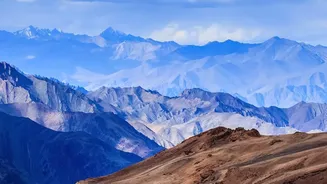
The Rain Shadow Secret
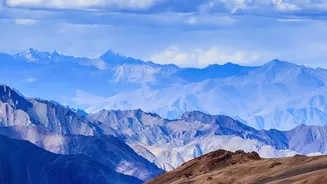
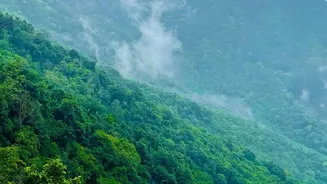
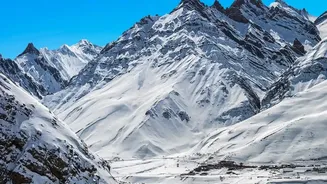
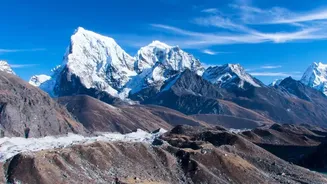
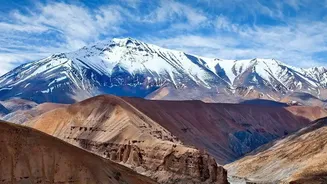
Ladakh's magic trick is a geographical one. Nestled between the mighty Himalayan and Karakoram ranges, it lies in a rain shadow zone. The towering mountains act as a colossal barrier, blocking the moisture-laden monsoon clouds that travel up from the Indian
Ocean. By the time these clouds cross the high passes, they have already shed most of their rain on the southern slopes. What arrives in Ladakh is dry air, resulting in a stark, arid landscape that receives less than 100 mm of annual rainfall, making it a certified cold desert. This unique climatic condition makes July and August, peak monsoon months elsewhere, the perfect time to experience Ladakh under sunny skies.
A Surge in Sunshine Seekers
The secret is out, and recent trends confirm Ladakh's growing popularity. The Union Territory has seen a massive surge in tourism in 2026, with arrivals in June and July alone crossing the one-lakh mark for each month. By the end of July 2026, tourist arrivals had already nearly matched the total for the entire previous year, indicating a significant boom. This influx is partly driven by travellers specifically timing their visits to coincide with the monsoon break. While road travel from Manali and Srinagar can be challenging due to rains in the lower foothills, flying into Leh remains a popular and reliable option. Improved infrastructure and connectivity within Ladakh have also made it more accessible than ever.
What to See and Do
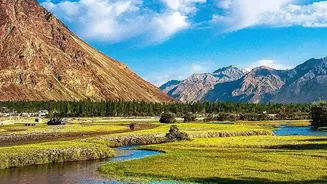
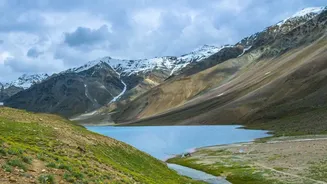
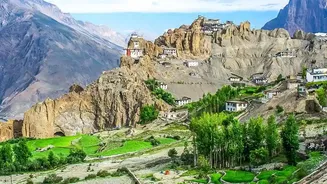
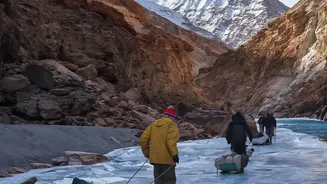
The dry weather opens up a world of adventure. The roads to iconic sights like the turquoise Pangong Tso and the high-altitude Tso Moriri lake are clear and accessible. Nubra Valley, famous for its sand dunes and double-humped Bactrian camels, becomes a prime destination. This period is ideal for exploring ancient monasteries perched on hillsides, such as Thiksey, Hemis, and Diskit, their colourful prayer flags fluttering against a backdrop of deep blue skies. For thrill-seekers, the options are plentiful: from white-water rafting on the Zanskar and Indus rivers to trekking through remote valleys and mountain biking down some of the world's highest motorable passes like Khardung La.
Planning Your High-Altitude Escape
A trip to Ladakh requires careful planning. The most crucial factor is acclimatisation. Arriving in Leh, which sits at an altitude of over 3,500 metres, requires your body to adjust to the lower oxygen levels. It is essential to rest for at least the first 24-48 hours upon arrival to prevent acute mountain sickness. Daytime temperatures in August can be pleasant, hovering between 20°C and 30°C, but they drop sharply at night, so packing layers is key. The sun at this altitude is harsh, making sunscreen, sunglasses, and a hat non-negotiable. While the core of Ladakh is dry, the approach roads from Manali and Srinagar can face landslides, so it's wise to build extra buffer days into your itinerary if you're planning a road trip.