





The Last-Mile Conundrum
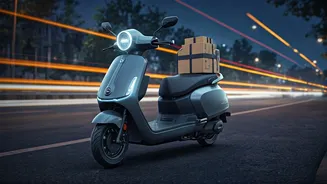
Last-mile delivery, the final step in getting a package to your door, is the most expensive and fuel-intensive part of the supply chain. With India’s e-commerce market projected to become the world's second-largest by 2030, the number of delivery vehicles
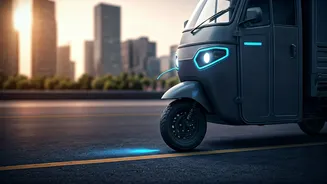
is surging, leading to increased emissions and congestion in cities. Electric vehicles are a logical solution, offering significantly lower running costs—an electric three-wheeler can operate for as little as ₹0.50 to ₹1.30 per kilometre, compared to ₹4 to ₹5 per kilometre for a diesel or CNG equivalent. However, widespread adoption by logistics companies has been slow. The main roadblocks have been the high initial purchase price of EVs, range anxiety, and the operational downtime required for charging. For a business where vehicle uptime is critical, taking a vehicle off the road for several hours to charge is a significant logistical and financial problem.
Lowering the Entry Barrier: Subscriptions and Leasing
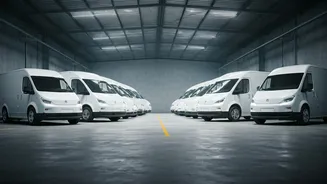
One of the most effective solutions to the high upfront cost is the rise of EV subscription and leasing models. Instead of buying a vehicle outright—a major capital expenditure—fleet operators can pay a fixed monthly fee. This model, often called 'EV-as-a-Service', bundles the vehicle, insurance, maintenance, and sometimes even charging into one predictable operational expense. This approach makes it far easier for businesses, from large logistics firms like Delhivery to individual gig workers, to transition to electric mobility without a massive initial investment. It provides flexibility, allowing companies to scale their fleet up or down based on demand, and removes the risks associated with battery degradation and uncertain resale values.
Solving the Energy Puzzle: Battery-as-a-Service (BaaS)
The Battery-as-a-Service (BaaS) model takes this a step further by unbundling the battery—the single most expensive component—from the vehicle itself. The battery can constitute 30-40% of an EV's total cost. With BaaS, the fleet operator buys the vehicle without the battery at a much lower price and pays a separate subscription or a pay-per-use fee for the battery. The key advantage is the introduction of battery swapping. Instead of plugging a vehicle in to charge, a driver can go to a swapping station and exchange a depleted battery for a fully charged one in minutes. This virtually eliminates charging downtime, a crucial factor for high-utilisation sectors like food and grocery delivery. With over 2,600 swap stations already in place in India by 2024, this network is making EVs as convenient as refueling a petrol vehicle.
The Power of an Integrated Ecosystem
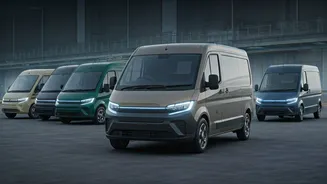
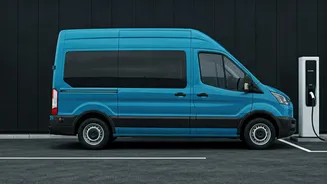
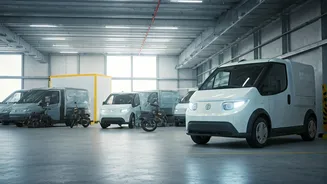
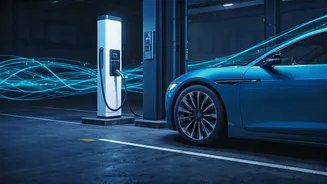
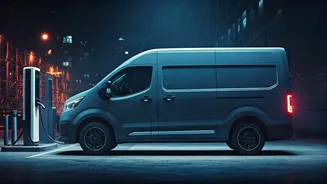
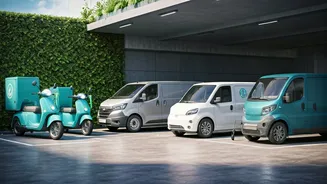
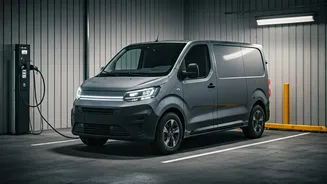
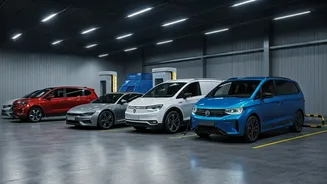
Beyond financing, the practicality of commercial EVs depends on a reliable energy ecosystem. This is where integrated support models and dedicated charging infrastructure come in. Companies are now offering 'Charging-as-a-Service' (CaaS), setting up and managing charging depots specifically for commercial fleets. This ensures that vehicles are charged efficiently, often overnight, without disrupting delivery schedules. Major logistics players are building their own ecosystems, combining diverse fleets of two, three, and four-wheeled EVs with a network of charging and service stations. This holistic approach guarantees vehicle uptime and operational efficiency, which are critical for success in the competitive logistics market. Government support, through policies and subsidies like the PM E-DRIVE scheme, further sweetens the deal by narrowing the initial price gap between EVs and their ICE counterparts.
The New Calculus: Total Cost of Ownership
Ultimately, for any business, the decision to switch to EVs comes down to the Total Cost of Ownership (TCO). TCO considers not just the purchase price but all costs over the vehicle's life, including fuel, maintenance, financing, and resale value. While EVs have a higher upfront cost, their dramatically lower operating expenses for fuel and maintenance mean they are often cheaper over their lifetime, especially for high-mileage applications like last-mile delivery. The support models of leasing, subscription, and BaaS directly attack the primary barrier of high initial capital, allowing businesses to immediately benefit from the lower running costs. For many operators, the savings on fuel alone can cover a large portion of the monthly EMI or subscription fee, with payback on the price premium often achieved within 18 to 30 months for high-use vehicles.