







A Fragile Frontline
The Sundarbans, the world's largest mangrove forest, is a UNESCO World Heritage Site shared by India and Bangladesh. This intricate delta, formed by the Ganges, Brahmaputra, and Meghna rivers, is more than just a unique ecosystem; it is a shield for millions.
However, this natural fortress is under immense pressure. Rising sea levels, increasingly frequent and intense cyclones, and soil erosion pose a constant threat. For generations, communities have faced a cycle of devastation and recovery, with their lives and livelihoods hanging in the balance. The degradation of the mangroves, whether from human activity or climate impacts, weakens this shield, leaving coastlines and communities dangerously exposed.
Nature's Coastal Engineers
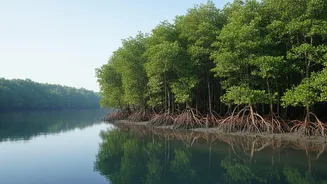
Mangroves are nature's most effective coastal engineers. Their dense, tangled root systems are a marvel of natural design, acting as the first line of defence against the sea. These roots trap sediment, gradually building up land and countering erosion. During storms and cyclones, the forest acts as a massive natural barrier, absorbing and dissipating the energy of waves and tidal surges, which significantly reduces their destructive power inland. Studies have shown that healthy mangrove forests can reduce wave energy and buffer storm surges, providing natural protection that is often more effective and sustainable than hard-engineered structures like sea walls.
Restoration in Action
Recognising the mangroves' vital role, extensive restoration efforts are underway across the Sundarbans. These are not simple tree-planting drives. Community-led initiatives, often spearheaded by local women's groups, are at the forefront of this green revolution. Supported by organisations like the Nature Environment and Wildlife Society (NEWS), thousands of women have been trained to collect seeds, raise saplings in nurseries, and replant them in degraded areas. This approach combines traditional ecological knowledge with scientific techniques, ensuring the right species are planted in the right locations to maximise survival and growth. These efforts not only rebuild the coastal shield but also provide crucial livelihood opportunities, empowering the very communities that are most vulnerable to climate change.
The View from Above
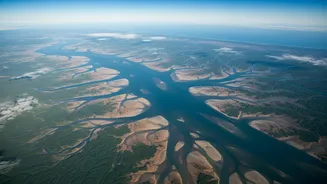
For years, the benefits of restoration were observed on the ground. Now, satellite technology is providing a bigger picture with unprecedented clarity. Using data from satellite missions like Landsat and Sentinel, researchers can monitor vast, inaccessible areas of the Sundarbans over time. By analysing remote sensing data, scientists can track changes in mangrove health and density using metrics like the Normalized Difference Vegetation Index (NDVI). This 'greenness' index allows them to see how the forest canopy is changing, identify areas of degradation or stress, and, crucially, measure the success of restoration projects.
Data Confirms Success
The data from these eyes in the sky is conclusive: where mangroves are being restored, coastlines are becoming more stable. Time-series analysis shows that areas with new and revitalised mangrove growth exhibit reduced erosion and, in some cases, land accretion where sediment is being trapped. Recent studies demonstrate a direct correlation between rising NDVI values—indicating healthier, denser vegetation—and the establishment of robust mangrove forests in restoration sites. This satellite-based evidence quantitatively proves that restoration efforts directly contribute to the primary goal of coastal protection. It transforms anecdotal success stories into hard data, validating the investment in these nature-based solutions.
A Blueprint for Coastal Resilience
The success story unfolding in the Sundarbans, as verified by satellite tracking, offers a powerful blueprint for other vulnerable coastlines in India and around the world. It demonstrates a successful synergy between community-led action, ecological wisdom, and cutting-edge technology. This model proves that investing in nature is one of the most effective strategies for climate adaptation. The Indian government's MISHTI (Mangrove Initiative for Shoreline Habitats & Tangible Incomes) initiative reflects a growing recognition of this fact at a national level. By protecting and restoring these vital ecosystems, we are not just saving a forest; we are safeguarding lives, livelihoods, and our collective future against the rising tides of climate change.