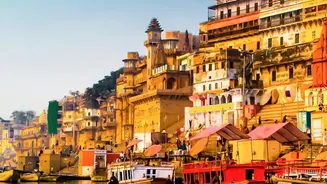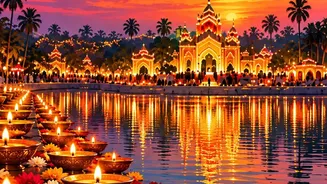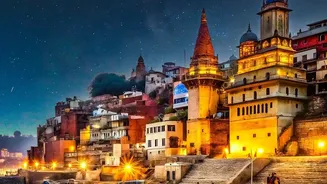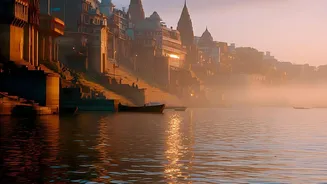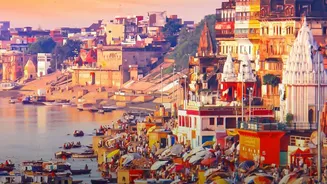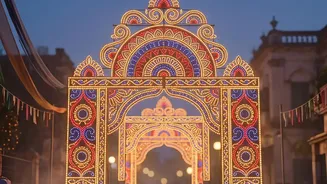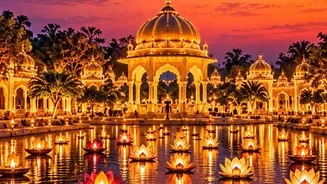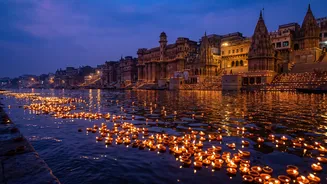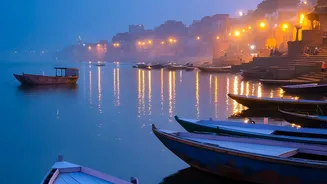



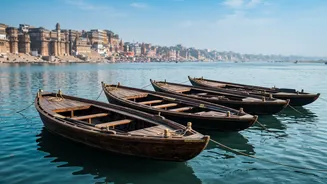
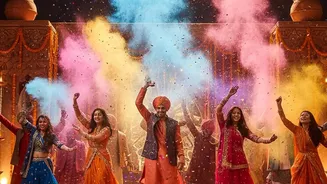
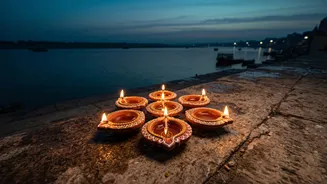
As dusk settles on Varanasi, a celestial event unfolds. Millions of earthen lamps flicker to life along the Ganga, but it's the stone ghats themselves that become a gallery, showcasing the city's vibrant heart through elaborate rangoli art.
A River of Light and Legend
Dev Deepawali,
often called the 'Diwali of the Gods', is a festival that transforms Varanasi into a realm of myth and light. Celebrated on Kartik Purnima, the full moon night fifteen days after Diwali, it marks Lord Shiva’s victory over the demon Tripurasura. Legend holds that on this auspicious night, the gods themselves descend to Earth to bathe in the holy Ganga. To welcome them, the city's 84 ghats are adorned with millions of diyas, creating an unbroken chain of light that mirrors the stars above. This tradition, which reportedly began at Panchganga Ghat in 1985, has evolved into one of India's most breathtaking cultural spectacles, drawing pilgrims and art lovers from across the globe.
A Canvas of Devotion on Stone
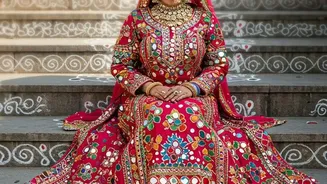
At the heart of this luminous celebration is a burgeoning artistic tradition: the creation of large-scale rangoli on the wide steps of the ghats. For days leading up to the festival, these ancient stone stairways become temporary canvases for local artists. Using coloured powders, flower petals, and even eco-friendly materials, they craft intricate designs that are staggering in their scale and detail. The stone floors, often uneven and challenging, are transformed into vibrant tapestries of faith and creativity. These are not just decorations; they are sacred offerings, a visual form of prayer that adds another layer of profound beauty to the spiritual atmosphere. The artworks turn the entire riverfront into an open-air gallery where devotion is expressed through colour and form.
The Hands Behind the Masterpieces
The artists behind these ephemeral masterpieces are a diverse group, reflecting the city's own eclectic spirit. Many are fine arts students from institutions like Banaras Hindu University, who bring their academic training and youthful energy to the ghats. They are joined by seasoned local artists, community groups, and even schoolchildren, all united by a shared passion for their city and its traditions. For them, this is more than just an art project. It's an act of service and participation in a sacred event. They work for hours under the sun, meticulously placing each grain of colour, driven by a collective desire to make the ghats worthy of their divine visitors. Their efforts are a testament to the community spirit that underpins the grand spectacle.
From Mythology to Modern Messages
The themes of the rangoli are as varied as their creators. Many designs draw from deep mythological roots, depicting Lord Shiva, Goddess Ganga, and other deities. Traditional motifs like the 'Om' symbol, lotus flowers, and diyas are common, reinforcing the spiritual significance of the occasion. However, the art also serves as a form of contemporary expression. In recent years, artists have used their platform to create designs that touch on pressing social issues or celebrate national pride, such as the inauguration of the Ram Mandir. This blend of the ancient and the modern shows how rangoli on the ghats is a living tradition, capable of reflecting both timeless faith and the conversations of the present day.