


Embrace the Dry-Out Period
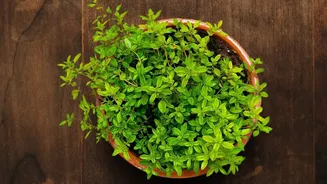
Thyme is a drought-tolerant herb native to the rocky, sun-baked hillsides of the Mediterranean. It despises having its roots sit in constantly damp soil, a condition often called 'wet feet'. This is the single most common reason potted thyme fails. Unlike
moisture-loving herbs like basil or mint, thyme thrives on a cycle of drying out almost completely between waterings. Indoors, this can mean watering as infrequently as every 7 to 10 days. In hot, sunny weather on a balcony, you may need to water every few days, but the core principle remains: let the soil dry before you water again. Never water on a schedule without first checking the soil.
The Golden Rule of Watering Thyme
The key is to check the soil before you even think about grabbing the watering can. The simplest method is the finger test: stick your finger into the soil up to the first or second knuckle. If you feel moisture, wait. If it feels dry, it’s time to water. An even better technique for small pots is the weight test. Get a feel for how heavy the pot is right after a thorough watering and how light it is when completely dry. When the pot feels noticeably light, it is ready for a drink. Thyme leaves don’t wilt dramatically like many other plants, so they are not a reliable indicator of thirst; the soil and pot are your best guides.
Water Deeply, Not Lightly
When it is time to water, do it thoroughly. Pour water evenly over the soil surface until it begins to run freely from the drainage holes at the bottom of the pot. This ensures the entire root ball gets hydrated, rather than just the top layer. After this deep soak, allow the pot to drain completely. It is crucial to not let the pot sit in a saucer full of water, as this will keep the roots saturated and lead to root rot. If you use a decorative outer pot without drainage, always remove the inner pot for watering and let it finish draining before placing it back.
Set the Stage with Proper Drainage
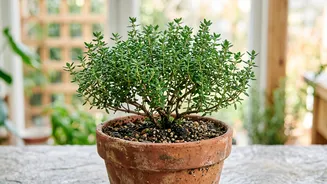
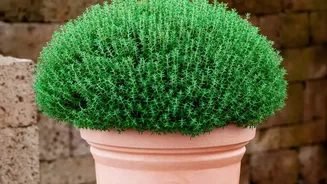
Successful watering starts with the right setup. Thyme must be in a pot with at least one large drainage hole. Terracotta pots are an excellent choice because the porous clay helps the soil dry out more evenly between waterings. The soil itself is just as important. Standard potting mix often holds too much moisture. To create an ideal environment, amend your potting soil with about one third coarse sand, perlite, or fine grit to improve drainage. This gritty, lean mix mimics the rocky soil where thyme naturally grows and is the best defense against overwatering.
Signs of Watering Trouble
It’s important to recognize the difference between an overwatered and underwatered plant, as their symptoms can sometimes appear similar. Overwatering, the more common issue, often causes leaves to turn yellow while feeling soft or limp. You might also see mushy, dark stems near the soil line, a sign of root rot. An underwatered plant, by contrast, will have dry, brittle, and crispy leaves that may curl or brown at the edges. If a plant is wilting, check the soil. If the soil is wet and the plant is wilting, it is a classic sign of root rot from overwatering, and adding more water will only make it worse.