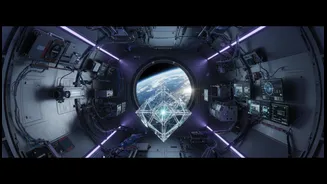





Welcome to the Quantum World
At its heart, quantum science studies the universe at its smallest scales. Forget solid particles behaving like tiny billiard balls; at the quantum level, things get weird. Atoms and particles can act like waves, exist in two places at once, and even
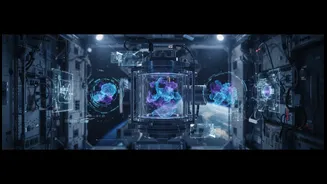
pass through each other. These behaviours, while counterintuitive, are the foundation for technologies we use every day, including lasers, mobile phones, and MRI machines. Now, scientists want to harness these peculiar properties in new and more powerful ways, a field sometimes called "quantum 2.0". The goal is to directly manipulate these large quantum states to create the next wave of revolutionary technologies.
Why Space Is the Perfect Laboratory
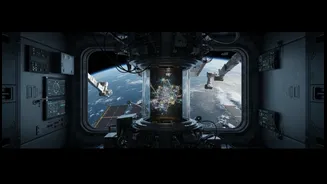
On Earth, gravity is a major hurdle for quantum experiments. The constant downward pull causes delicate atomic structures to collapse quickly, giving scientists only milliseconds to observe them. But in the microgravity of low-Earth orbit, it's a different story. Aboard the International Space Station (ISS), the near-weightless environment allows these quantum phenomena to last for much longer periods. Researchers can create larger and longer-lasting quantum waves, making them easier to study and measure. This unique setting provides an unprecedented opportunity to probe the fundamental laws of matter under conditions that are impossible to replicate on Earth.
The Coldest Spot in the Known Universe
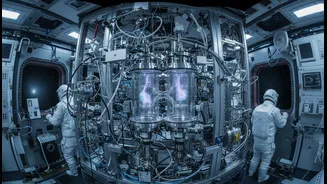
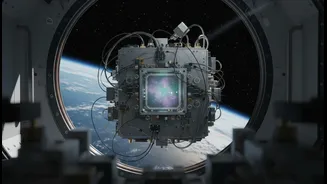
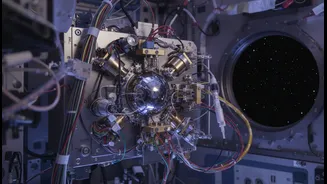
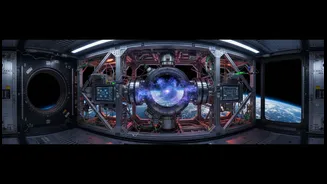
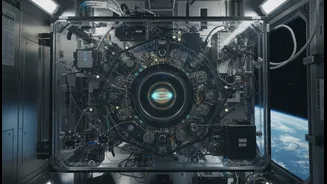
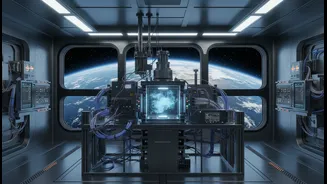
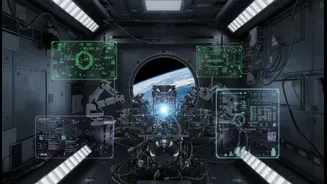
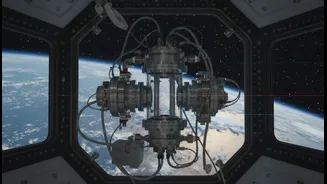
The key to this research is an incredible piece of hardware on the ISS called the Cold Atom Lab. About the size of a mini-fridge, this facility is designed to do one thing exceptionally well: get incredibly cold. Using a combination of lasers and magnetic fields, the lab chills atoms to temperatures just fractions of a degree above absolute zero, colder than any known natural place in the universe. At these extreme temperatures, atoms slow to a near standstill and can merge into a fifth state of matter called a Bose-Einstein condensate (BEC). First predicted by Albert Einstein and Indian physicist Satyendra Nath Bose in the 1920s, a BEC is a cloud of atoms that behaves like a single, massive quantum wave, making its strange properties visible on a larger scale.
Upgrades and Future Breakthroughs
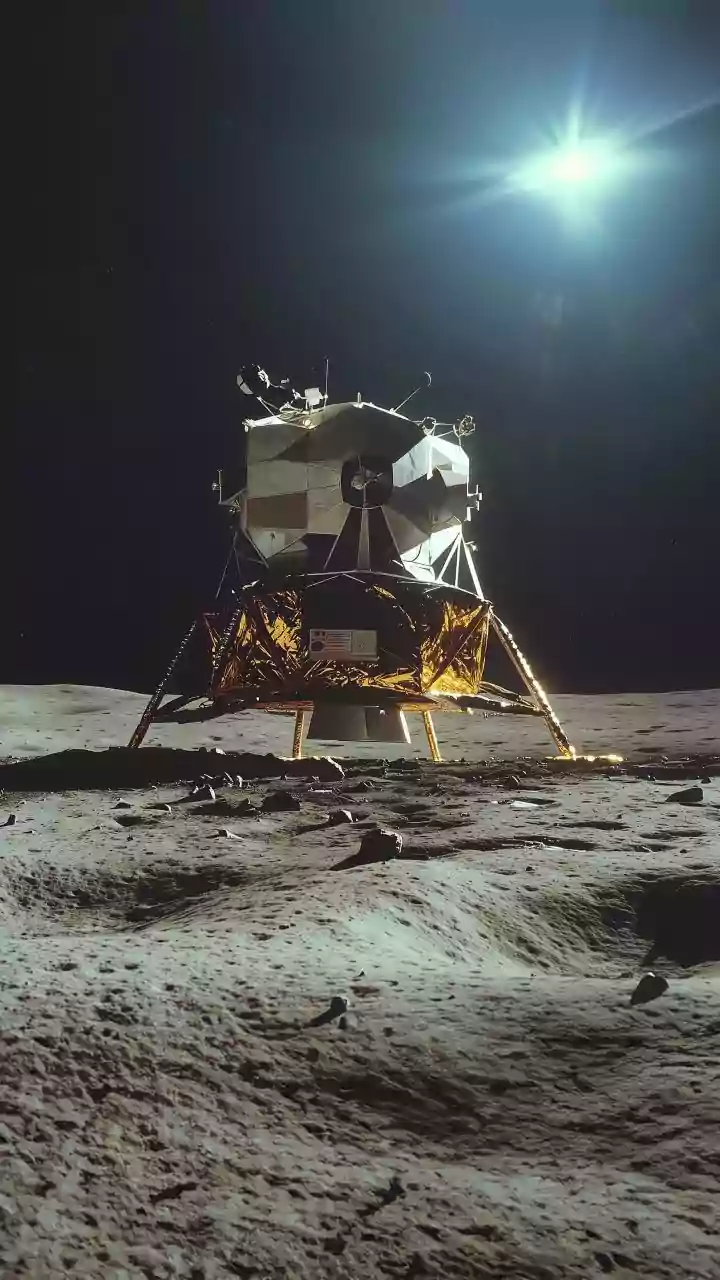
The Cold Atom Lab, first installed in 2018, recently received its fourth major upgrade in April 2026, which was activated in June. These enhancements include a redesigned magnetic trap that gives scientists more control over the shape of the atom clouds, opening new avenues for investigation. This work is more than just fundamental physics; it is laying the groundwork for a suite of powerful quantum technologies. The research could lead to ultra-precise sensors capable of monitoring Earth's water reserves or mapping the gravity of the Moon with unmatched accuracy. It could also enable future navigation systems that don't rely on GPS, and create quantum communication networks that are fundamentally unhackable, paving the way for a new era of secure data transfer across the globe and in space.