







The Tale of Two Catches
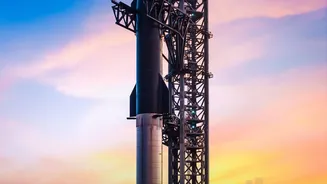
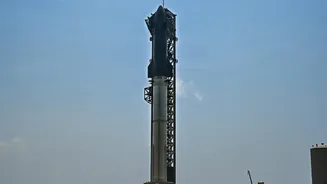
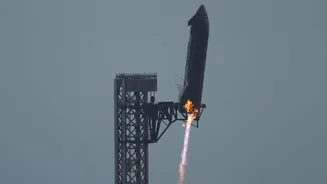
The mission on November 13-14 had an audacious primary goal: to launch the two-stage Starship vehicle and then recover both parts by catching them with the giant mechanical arms of the launch tower, nicknamed 'Mechazilla'. This had never been attempted
for both stages on a single flight. The plan was for the Super Heavy booster to return for a catch just minutes after liftoff, followed by the Starship upper stage returning from orbit for its own catch a day later. Achieving this 'double catch' is the holy grail for SpaceX, as it’s the key to the rapid and complete reusability that could fundamentally change the economics of space travel.
The Booster's Fiery Setback
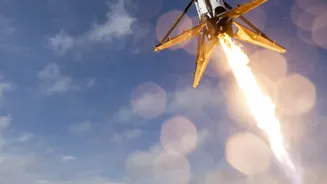
The first part of the plan went awry. While the Super Heavy booster performed its initial ascent and separation flawlessly, its return journey did not go as planned. During its boostback burn, an automated system detected that the booster was low on fuel. The guidance system, determining it could not safely approach the launch tower for the catch, triggered an automatic abort. The booster diverted itself away from the launch site and toward the Gulf of Mexico, where it performed a landing burn over the water before its flight was terminated. It was a significant setback and a failure of the upgraded V3 booster's first catch attempt, losing all 33 of its advanced Raptor engines in the process.
Starship's Historic Solo Triumph
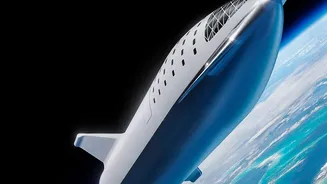
While the booster's recovery failed, the Starship upper stage, 'Ship 42', continued its mission perfectly. It soared into orbit and, over a 22-hour flight, successfully deployed 26 Starlink satellites. This demonstrated a key commercial capability for the vehicle. After completing 14 orbits of Earth, the spacecraft performed a precise deorbit burn and headed back to Texas. In a landmark achievement, the Starship flawlessly navigated its atmospheric reentry and was successfully caught by the launch tower's 'chopstick' arms, marking the first time an orbital-class upper stage has ever been recovered this way.
Why 'Partial Success' Is Still a Win
Losing a massive booster is undeniably a failure, but in the world of SpaceX, it's a failure that came with invaluable data. The company's entire development philosophy is built on an iterative process of testing, failing, and learning. The fact that the booster's automated safety systems worked correctly to abort an unsafe landing is a success in itself. More importantly, the flawless flight and historic recovery of the Starship upper stage was a monumental victory. It proved the most challenging part of the recovery system—catching a vehicle returning from orbital velocity—is possible. The mission successfully demonstrated both halves of the recovery puzzle, just not on the same flight. This partial success provides SpaceX with crucial insights for both the booster's fuel management and the ship's proven return capability, pushing the entire program closer to its ultimate goal.