



The Magic of Living Architecture
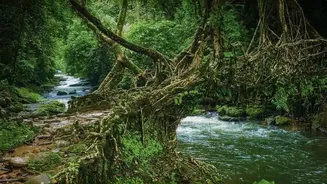
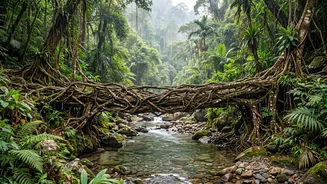
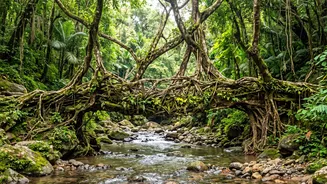
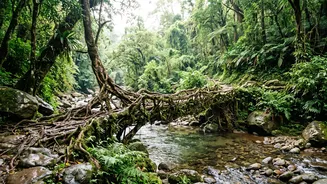
Deep in the hills of Meghalaya, the Khasi and Jaintia tribes have perfected a form of natural engineering that is breathtaking to witness. For centuries, they have guided the aerial roots of the Ficus elastica (rubber fig) tree across rivers and gorges.
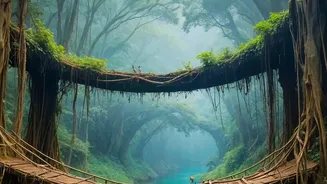
Over decades, these roots grow, intertwine, and strengthen to form sturdy, living bridges that can withstand the region's heavy monsoons. The most famous of these is the Umshiang Double-Decker Bridge in Nongriat village, a two-tiered marvel that has become an icon of sustainable, generational craftsmanship. Visiting these is not just a tourist activity; it's a step into a unique cultural heritage.
Getting There on a Shoestring
Your journey to the root bridges will likely start from Shillong, Meghalaya's capital. The key to saving money is to travel like a local. Instead of hiring a private taxi, which can be expensive, head to the Anjali Cinema taxi stand in Shillong's Bara Bazaar. From here, you can catch a shared Sumo (a large jeep) to Cherrapunji (also known as Sohra) for a fraction of the cost, typically around ₹200-₹250 per person. The trek to the double-decker bridge begins at Tyrna village, which is about 20 km from Cherrapunji. Getting a shared taxi from Cherrapunji to Tyrna can be tricky as drivers often prefer to be hired privately, but it is possible if you are patient and start your day early.
The Famous 3,500 Step Trek
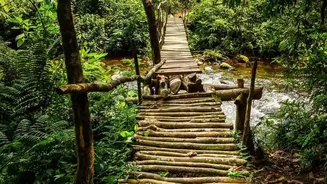
From Tyrna, the only way to reach Nongriat village is on foot, via a trail of approximately 3,500 stone steps that descend into the valley. This trek is the price of admission to paradise. The descent is manageable for anyone with average fitness and takes about 90 minutes to two hours. Along the way, you'll cross a couple of wobbly but safe suspension bridges and be surrounded by the sounds of the jungle. The climb back up is the real challenge, which is why many travellers choose to stay overnight. The entry fee for the Double-Decker bridge itself is minimal, usually costing just ₹20-₹30.
Authentic and Affordable Homestays
The best way to experience Nongriat is to spend the night. This allows you to see the bridges in the quiet morning light, free from day-tripping crowds. The village has several basic but welcoming homestays that offer an authentic taste of Khasi hospitality. These are the most budget-friendly accommodation you will find. A dorm bed can cost as little as ₹300, while a simple private double room typically ranges from ₹800 to ₹1,500. Booking ahead is wise, especially during peak season, as capacity is limited and can't be found on major booking websites. These homestays are not just a place to sleep; they are an integral part of the experience.
Eating Well Without Spending Much
Food in Nongriat is simple, hearty, and inexpensive. Most homestays provide meals for their guests at a very reasonable price. You can expect staples like rice, dal, vegetables, and sometimes chicken. There are also a few small shacks in the village and along the trail where you can get tea, Maggi noodles, and snacks. Eating this way not only saves a significant amount of money but also gives you a taste of local home cooking. Packing some of your own snacks and a reusable water bottle, which you can refill from natural springs or your homestay, is another great way to cut down on costs and plastic waste.
Beyond the Double-Decker Bridge
While the double-decker bridge is the main attraction, your adventure doesn't have to end there. An additional 90-minute trek from Nongriat will lead you to the stunning Rainbow Falls. The trail is more rugged, but the reward is a spectacular waterfall that often creates a rainbow in its mist when the sun hits it right. There is no entry fee for the falls. On your way down to Nongriat, you will also pass signs for other single-decker root bridges that are less crowded and equally beautiful. Exploring these smaller bridges and natural pools adds immense value to your trip without adding to your budget.