




Elon Musk has once again sketched out a future that feels plucked from science fiction. His latest comments describe an ambitious plan for a space-based AI infrastructure, effectively creating a thinking network in Earth's orbit.
AI with a View: Musk's Orbital Brain
In remarks made over the
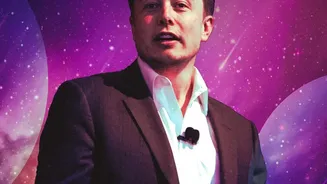
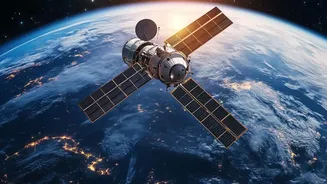
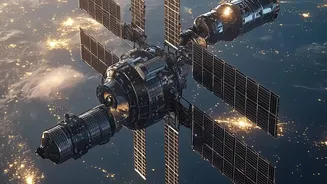
weekend, Elon Musk elaborated on his vision to merge his ventures in space and artificial intelligence. He described a future where the next generation of Starlink satellites do more than just relay internet data. The plan involves equipping these satellites with significant onboard processing power, effectively turning the vast constellation into a distributed computing network. Speaking at a technology forum, Musk suggested this network could function as a global, space-based AI, capable of processing vast amounts of data in orbit without needing to send it back to terrestrial data centres first. This isn't just about faster internet; it's about building a foundational layer for a new kind of global intelligence.
The Three Pillars of a Space-Based AI
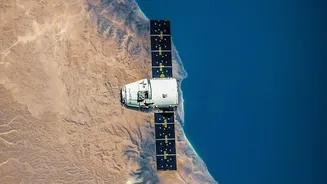
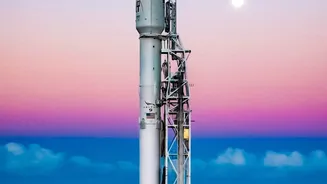
This grand vision rests on the synergy between three of Musk’s major companies. First is SpaceX, which provides the launch capability. Its reusable rockets, and particularly the in-development Starship, are essential for affordably deploying the thousands of heavier, more complex satellites this network would require. Second is Starlink, the satellite constellation itself. It already provides a global communication backbone, but in this new role, it would become the physical hardware of the AI network. The third, and perhaps most crucial, pillar is xAI, Musk's artificial intelligence company. The algorithms and models developed by xAI would be the 'software' that runs on the Starlink 'hardware', creating the intelligence layer of the system.
Why Put an AI in Orbit?
The immediate question for many is: why go to all the trouble of building this in space? The answer lies in overcoming the limitations of Earth-based infrastructure. A space-based AI network would offer unparalleled coverage, capable of delivering advanced AI services to the most remote corners of the globe, from research stations in Antarctica to ships in the middle of the Pacific. It also promises a significant reduction in latency for certain tasks. By processing data directly in orbit, the system can provide real-time analysis and decision-making without the delay of a round trip to a ground station. Furthermore, a space-based system offers a unique level of resilience and security, operating independently of terrestrial networks that can be vulnerable to natural disasters or geopolitical disruption.
From Communication to Cognition
This represents a fundamental shift in what a satellite constellation can be. For decades, satellites have been relatively 'dumb' relays, simply passing signals from one point to another. Musk’s vision is to evolve them into active, 'smart' nodes in a network. Imagine weather satellites that don't just capture images but analyse them in real_time to predict a storm's path with greater accuracy. Think of a global logistics network where ships and planes are constantly optimised by an overarching AI that sees the entire system at once. It's a move from simple communication to a form of global cognition, with data being gathered, processed, and acted upon at a planetary scale.
Challenges on the Horizon
While the vision is compelling, the road to achieving it is fraught with immense challenges. The technical hurdles of designing, launching, and operating thousands of sophisticated processing nodes in the harsh environment of space are non_trivial. The cost will be astronomical, requiring sustained investment and a clear path to profitability. Regulatory and geopolitical issues also loom large, as nations will have concerns about a privately controlled global intelligence network orbiting above them. Other major tech and aerospace players are also investing heavily in both satellite communications and AI, ensuring that even if Musk's plan succeeds, it will not go uncontested. The race for the 'brain in the sky' is just beginning.