


A Ghostly Fingerprint in Starlight
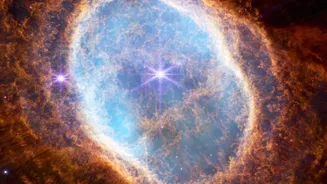
For decades, finding Earth-like planets has been a key goal, but identifying the composition of their atmospheres has been beyond our reach. The James Webb Space Telescope, a multi-billion dollar investment in technology, was designed to change that.
One of its primary missions is to analyse the atmospheres of exoplanets using a technique called transit spectroscopy. When a planet passes in front of its host star, a tiny fraction of the starlight filters through the planet’s atmosphere. The gases present absorb specific colours, or wavelengths, of that light, leaving behind a unique chemical barcode. By analysing this barcode, or spectrum, astronomers can identify molecules like water, methane, and carbon dioxide from light-years away. This method is Webb's superpower, allowing it to perform a chemical analysis of worlds it can never directly visit.
The Landmark Discovery
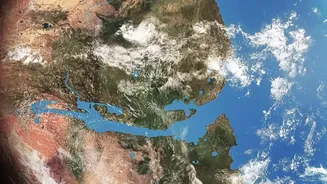
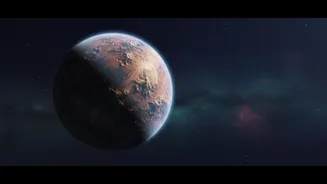
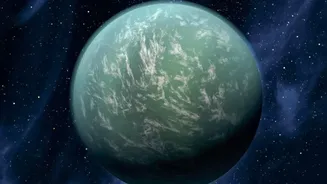
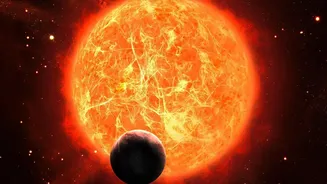
The latest breakthrough centres on a temperate, rocky exoplanet located dozens of light-years from Earth. Recent observations from JWST have returned what scientists are calling one of the clearest atmospheric characterisations of such a world to date, revealing an unambiguous spectral signature of water vapour. This finding is monumental because while water has been detected on gas giants like Jupiter before, finding it on a rocky, potentially Earth-like planet is a completely different ballgame. The planet in question, believed to be LHS 1140 b, is a 'super-Earth' — larger than our own world but still terrestrial. Its location within its star's habitable zone, the region where temperatures could allow for liquid water, makes this discovery particularly thrilling.
Why Rocky Worlds Are the Holy Grail
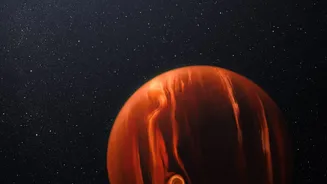
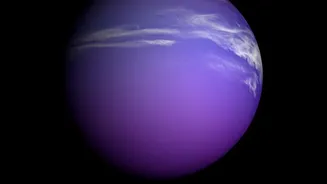
The distinction between a gas giant and a rocky world is crucial in the search for life. Gas giants, like WASP-96 b where Webb also found water, are massive balls of hydrogen and helium with no solid surface. Life as we know it needs a solid or liquid surface to emerge and thrive. Rocky planets like Earth, Mars, and Venus provide that foundation. For years, scientists debated whether smaller, rocky planets could even hold onto a substantial atmosphere, especially those orbiting volatile red dwarf stars. Many were feared to be just bare rocks, blasted by stellar radiation. This detection of an atmosphere containing water on a rocky planet proves that such worlds can exist, dramatically boosting the odds in the search for habitable environments beyond our solar system. It transforms the search for life from a theoretical exercise into a practical hunt with real targets.
A New Era of Planetary Science
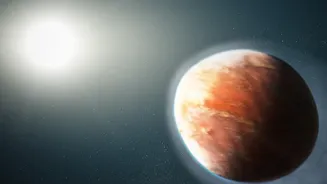
This discovery isn't happening in a vacuum. It is the crowning achievement, so far, of a broader JWST campaign to understand the atmospheres of many different worlds. The telescope is also studying the hellish lava planet 55 Cancri e, which may have a secondary atmosphere bubbling up from a magma ocean, giving insights into the early, molten stages of planets like Earth. It has investigated planets in the famous TRAPPIST-1 system, a family of seven Earth-sized worlds that remain prime targets for atmospheric study. Some of these initial observations have come up empty, confirming some worlds have no atmosphere at all, which is just as important for understanding planetary evolution. Together, these observations demonstrate JWST's incredible power not just to find one type of atmosphere, but to characterise a diverse array of rocky worlds, each with its own story.
A Signpost, Not a Destination
It is crucial to manage expectations. Detecting water vapour is not the same as detecting life. The presence of water is a critical prerequisite for life as we understand it, but it is just one ingredient in a very complex recipe. The planet could be a sterile water world, a steamy greenhouse like Venus, or something else entirely. What this discovery provides is not an answer, but the most promising signpost yet. It tells scientists exactly where to point their instruments for the next, even more detailed phase of the search. The follow-up observations will focus on looking for 'biosignatures'—combinations of gases like oxygen, methane, and carbon dioxide that are difficult to explain without the presence of biological processes. Finding water was the first step on a long road; now the real search begins.