






Meet Your Fermentation Crew
To control your brew, you first need to understand who's doing the work. Your SCOBY (Symbiotic Culture of Bacteria and Yeast) is a living colony. Think of it as a team with two key players. The yeast are the sugar fanatics; they eat the sugar in your sweet
tea and convert it into ethanol and carbon dioxide (hello, fizz!). The bacteria then take over, consuming that ethanol and transforming it into healthy organic acids, which give kombucha its signature tartness. The balance between these two actions is what creates the flavor you're after.
The First Fermentation: Your Flavor Foundation
This initial brewing stage is where you have the most control. The three main levers you can pull are sugar, temperature, and time. Most recipes call for about one cup of sugar per gallon of tea, which provides enough food for a healthy ferment. The temperature of your brewing space is crucial; warmer environments (ideally 24–29°C) speed up fermentation, while cooler spots slow it down. If your brew is always too sour, it might be fermenting too fast in a warm corner. Conversely, a brew that stays sweet for weeks might be too cold.
Time and Taste: Your Most Important Tools
Recipes provide a timeline, often 7 to 14 days, but this is just a guideline. The single most important skill to develop is taste-testing. Starting around day five, use a clean straw to take a small sample each day. At first, it will taste like sweet tea. As days pass, you'll notice the sweetness receding and a pleasant tartness emerging. That perfect moment right before it gets too acidic is your sweet spot. The goal is to bottle it when it's slightly sweeter than you’d ultimately like, as it will continue to ferment and become more acidic in the bottle.
Troubleshooting Common Flavor Problems
If your kombucha tastes more like vinegar, you've simply let the first fermentation go on for too long, or it brewed in a very warm spot. This over-fermented batch is still safe to drink and makes an excellent, potent starter tea for your next brew. You can also dilute it with fruit juice or sparkling water to make it more palatable. If your brew is consistently too sweet, it likely needs more time to ferment or a warmer location to encourage the yeast and bacteria to become more active. A weak or small SCOBY might also struggle to ferment a large volume of tea, so ensure your culture is appropriately sized for your batch.
The Impact of Second Fermentation
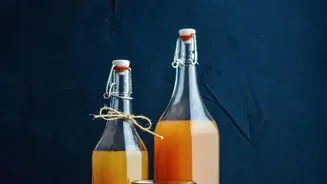
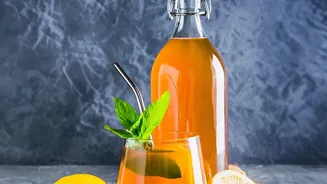
The second fermentation, where you bottle your kombucha with flavorings like fruit or ginger, also plays a role in the final taste. Adding sugary fruits or juices provides more food for the remaining yeast, which will create more carbonation and also more acidity. If you bottle a brew that is already quite tart and add a lot of sugary fruit, the final product could become even more acidic. Conversely, if your initial brew is a touch sweet, the second fermentation can help balance it by converting some of those remaining sugars.