







The Unseen Conductor of the City
Every day, along India's 7,500-kilometre coastline, the sea pulls and recedes in a predictable, powerful cycle. For inland dwellers, tides are a distant concept. But in cities like Mumbai, Kolkata, and Chennai, high tide is a critical daily event that
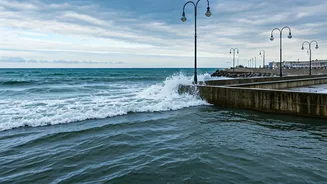
can bring the city to its knees. When the tide is in, the sea level rises, sometimes by several metres. This simple act of nature has profound consequences for urban systems, especially when it coincides with another major weather event: heavy monsoon rain. Authorities in cities like Mumbai even publish lists of high-tide days, preparing for potential chaos. During these hours, the floodgates of the city's drainage systems are often closed to prevent seawater from rushing into the streets. If it rains heavily at the same time, the runoff from the city has nowhere to go, leading to rapid and severe waterlogging.
Gridlock, Delays, and Waterlogged Roads
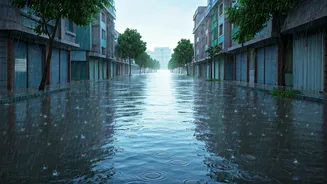
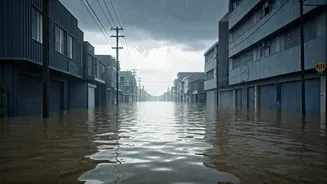
The most visible impact of high tides is on urban infrastructure. In Mumbai, a city where much of the land is low-lying and reclaimed from the sea, high tides regularly lead to flooded streets and traffic chaos. Areas like Hindmata, King's Circle, and the Andheri subway are notorious for submerging, turning commutes into nightmares. It’s a phenomenon called tidal flooding, or 'nuisance flooding,' where even without rain, the high tide can push water back through the drainage systems and onto the roads. When combined with monsoon downpours, the situation becomes critical. One study found that heavy rainfall during high tide significantly increases mortality rates in Mumbai, while the same amount of rain during low tide has a minimal impact. This combination disrupts not just road traffic but also the city's lifeline—the local train network—leaving millions of commuters stranded.
The Economic Ebb and Flow
The effects of high tides ripple through the urban economy. For the fishing communities that dot the coastline, like the Koli community in Mumbai, the tide schedule is the master clock, determining when boats can go out and return safely. But beyond traditional livelihoods, modern commerce is also at the mercy of the tides. Ports, the engines of India's trade, must schedule the arrival and departure of massive cargo ships around tidal patterns. Inland, the disruption caused by tidal flooding has a direct economic cost. Businesses are forced to close, deliveries are delayed, and productivity is lost. In the long term, recurrent flooding in commercial and residential areas can devalue property and deter investment, creating a cycle of economic uncertainty for vast sections of the city.
A Future Under Greater Threat
The challenge posed by high tides is being amplified by a much larger force: climate change. As global temperatures rise, sea levels are rising, meaning that the baseline for every high tide is getting higher. This makes coastal cities more vulnerable to flooding than ever before. Studies predict that by 2050, large parts of Mumbai, Kolkata, and other coastal cities could be below the high-tide line, threatening millions of people and critical infrastructure. The problem is compounded by land subsidence, where the cities themselves are sinking. This dual threat of rising seas and sinking land means that what is considered a 'king tide' today could become the normal high tide of the future, making routine flooding a permanent feature of city life.
Adapting to a New Reality
Recognizing the growing threat, coastal cities are exploring ways to adapt. This includes building sea walls, restoring natural barriers like mangroves, and upgrading outdated drainage systems. In Mumbai, projects are underway to improve the city's century-old storm drain network and install massive pumps to eject floodwater during high tides. In Kolkata, which faces similar issues with the Hooghly River, drainage and dredging are critical topics. However, these engineering solutions are expensive and often just one part of the answer. Planners also emphasize the need for 'blue-green infrastructure'—restoring lakes, wetlands, and creating permeable surfaces that can absorb rainwater naturally. For the millions living on India's coasts, acknowledging that high-tide hours matter is the first step toward building a more resilient future.