





The Hubble Model: A Legacy of Hands-On Repair
For decades, the Hubble Space Telescope set the standard for serviceable space assets. Orbiting just a few hundred kilometres above Earth, it was well within reach of NASA's Space Shuttle fleet. Astronauts conducted five separate servicing missions between
1993 and 2009, performing complex tasks that included replacing gyroscopes, installing new scientific instruments, and even correcting a flaw in its primary mirror. These missions dramatically extended Hubble's life and scientific capabilities, proving that in-space maintenance was not just possible, but transformative. However, with the retirement of the Space Shuttle, this era of hands-on repair for major observatories came to a close, leaving a significant gap in our ability to care for our most valuable eyes in the sky.
A Million Miles From a Wrench
The game changed with the James Webb Space Telescope (JWST). Unlike Hubble, JWST operates at the second Lagrange Point (L2), a gravitationally stable spot about 1.5 million kilometres from Earth. This location is ideal for an infrared telescope, as it keeps the observatory cold and shielded from Earth's heat and light. But this distance makes an astronaut servicing mission virtually impossible with current technology. JWST was launched with no plans for in-orbit repairs, a high-stakes gamble for a nearly $10 billion observatory. This new reality, where our most advanced telescopes are deliberately placed far beyond human reach, is the primary driver for developing sophisticated robotic alternatives. Future flagship missions, like the planned Habitable Worlds Observatory (HWO), are being designed from the ground up with robotic serviceability as a core requirement.
The Dawn of the Robotic Mechanic
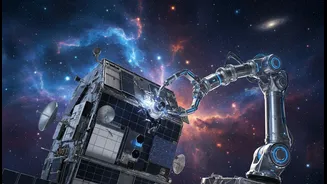
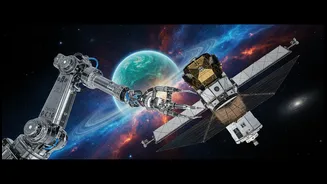
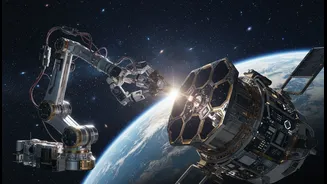
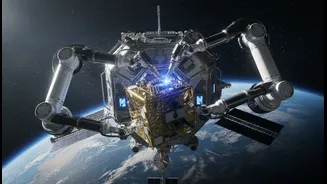
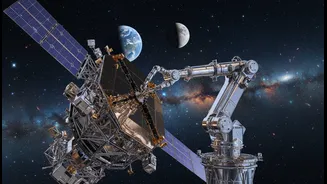
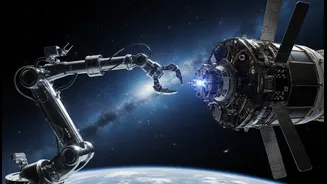
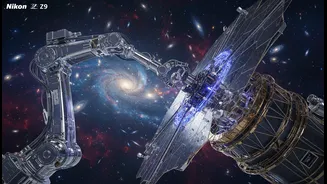
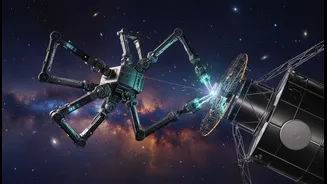
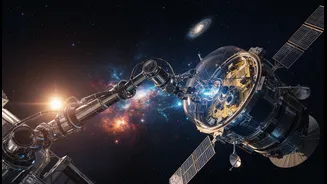
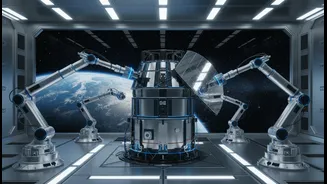
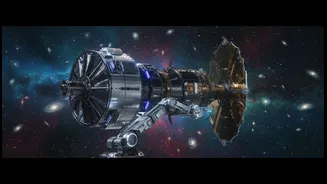
Fixing a satellite a million miles away presents immense challenges. The time delay for radio signals makes direct, real-time control impractical. This means a robotic servicer can’t be operated like a simple drone; it must possess a high degree of autonomy. Advances in artificial intelligence and robotics are making this possible, creating systems that can diagnose problems, plan complex procedures, and execute delicate tasks without constant human guidance. These robotic mechanics are being designed with multi-jointed arms capable of dexterous operations, advanced sensors for rendezvous and proximity operations, and the intelligence to work around unforeseen issues. The goal is to create a versatile 'space tug' or robotic servicer that can refuel, repair, and even upgrade satellites that were never designed to be touched after launch.
From Theory to Practice
This technological shift is already happening. In a landmark mission launched in July 2026, a robotic servicing spacecraft from Katalyst Space was sent to rescue NASA's ageing Neil Gehrels Swift Observatory. The mission aims to use robotic arms to latch onto the telescope and boost it into a higher orbit, extending its life by years. This represents a pivotal test for commercial robotic servicing. Other government and commercial ventures are also pushing the field forward. NASA's On-orbit Servicing, Assembly, and Manufacturing (OSAM) initiative is developing technologies for robotic refueling and assembly. These projects are turning the concept of a disposable satellite into a relic of the past, paving the way for a more sustainable and resilient space infrastructure.
A Sustainable Future in Orbit
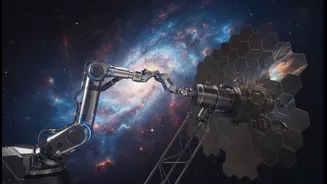
The development of advanced robotics is about more than just fixing what's broken. It's about fundamentally changing our approach to space operations. This technology will enable in-orbit assembly of structures too large to fit in a single rocket, like the next generation of truly massive telescopes. It will allow for routine refueling to extend mission lifespans, and it provides a viable solution for tackling the growing problem of space debris by safely de-orbiting defunct satellites. As the on-orbit servicing market grows, it promises to reduce the long-term cost of space exploration and commercialisation, making our presence in space more permanent and efficient. This new generation of robotic problem-solvers will be the unsung heroes keeping our cosmic ambitions alive.