


From Landing to Launching
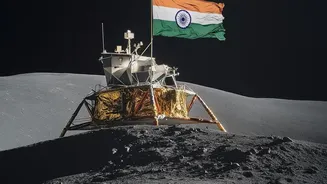
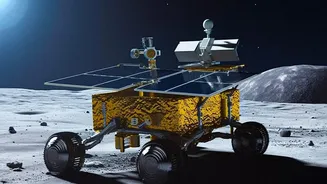
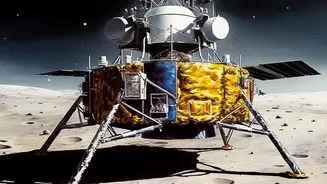
While Chandrayaan-3 was a masterclass in soft-landing technology, Chandrayaan-4 is in a league of its own. This mission is designed to perform a complex sequence of manoeuvres that represents a significant step up in capability for India’s space program.
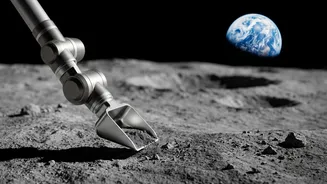
It’s not enough to just land safely. The spacecraft must then collect samples, launch itself off the lunar surface, rendezvous with an orbiting module, and begin the long journey back to Earth. This entire process, from landing to a successful return, would make India only the fourth country in history to accomplish a lunar sample-return mission, joining an elite club currently composed of the United States, the former Soviet Union, and China. The mission is a clear statement of intent, showcasing ISRO's confidence and growing expertise in deep-space exploration.
An Ambitious Five-Part Mission
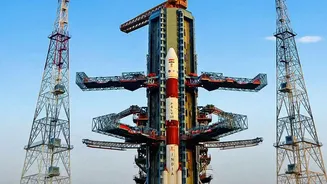
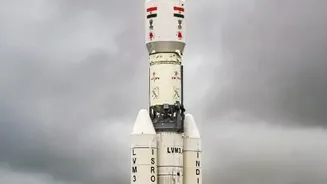
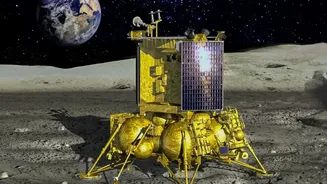
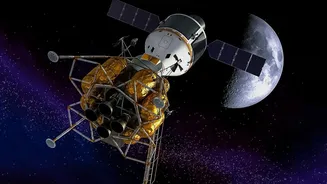
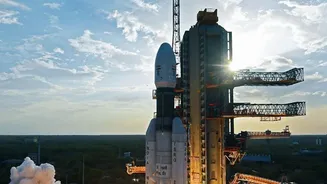
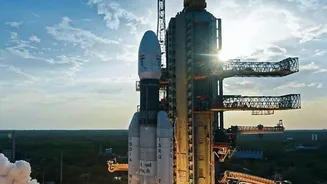
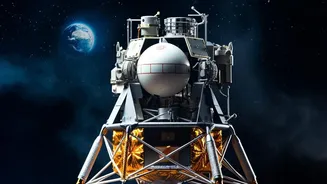
The sheer complexity of Chandrayaan-4 is reflected in its architecture. The mission will use five distinct modules: a Propulsion Module (PM) for the journey to the Moon, a Descender Module (DM) to land, an Ascender Module (AM) to lift off from the lunar surface, a Transfer Module (TM) for the trip back, and a Re-entry Module (RM) to safely bring the precious cargo through Earth’s atmosphere. Due to the combined weight, which is far greater than what a single LVM3 rocket can carry, the mission will require two separate launches. The components will then perform an autonomous docking procedure in Earth orbit to form the complete spacecraft before heading to the Moon—a critical capability ISRO has been developing. This multi-stage, dual-launch strategy highlights the mission's incredible technical demands.
Why Bring Moon Dust Home?
Rovers and landers can perform amazing science on the lunar surface, but they are limited by the size and power of the instruments they can carry. Bringing lunar soil, or regolith, back to Earth opens up a world of possibilities. Scientists can use highly sophisticated, state-of-the-art laboratory equipment to analyze the samples in far greater detail. These pristine samples could hold clues to the origin and evolution of the Moon, the history of bombardment in the inner solar system, and the distribution of valuable resources like water ice, especially from the targeted south polar region. Furthermore, these samples can be preserved and re-analyzed for decades to come with new technologies, answering questions that we haven't even thought to ask yet. The Apollo-era moon rocks are still yielding new discoveries over 50 years later, and Chandrayaan-4's samples would become a similar national treasure for Indian science.
The Path to a 2028 Launch
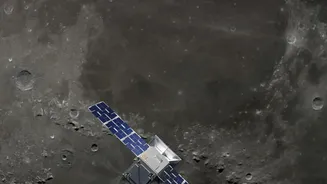
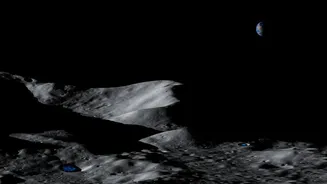
The Indian government officially approved the Chandrayaan-4 mission on September 18, 2024, allocating a budget of over ₹2,100 crore. While initial timelines were aggressive, ISRO is currently targeting a launch in 2028, reflecting the mission's unprecedented complexity. A landing site has already been identified in the Mons Mouton region near the lunar south pole, a location chosen for its scientific potential and suitable terrain. This mission is not just a standalone project; ISRO views it as a critical stepping stone. The technologies developed and proven for Chandrayaan-4—from robotic arms and automated docking to re-entry vehicles—are foundational for India’s future ambitions, including establishing the 'Bharatiya Antariksha Station' by 2035 and landing an Indian astronaut on the Moon by 2040.