





A Sudden and Unprecedented Brightening
In late 2019, a previously unremarkable galaxy named SDSS1335+0728, located about 300 million light-years away in the constellation Virgo, suddenly began to shine brighter than ever before. The Zwicky Transient Facility, an observatory in California,
first flagged the dramatic surge in brightness. This alert triggered a worldwide effort by astronomers to understand what was happening. For years, the galaxy had been quiet. Now, it was putting on a spectacular light show that has only continued to intensify. This wasn't a brief flash in the pan; more than four years later, the galaxy is still brightening, a behaviour that sets it apart from other known cosmic explosions.
What It Means for a Black Hole to 'Wake Up'
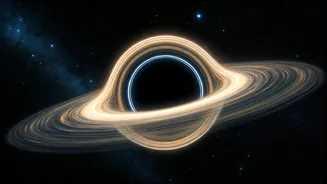
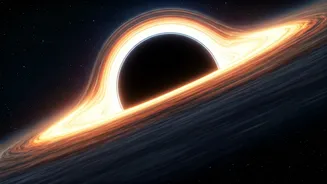
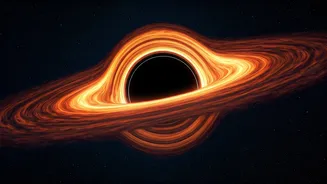
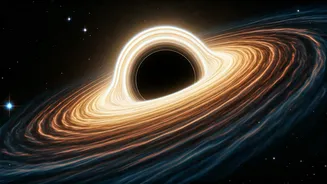
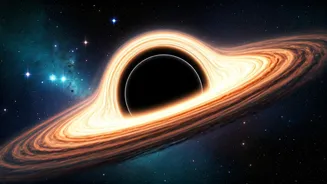
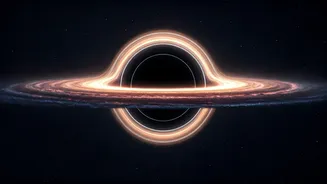
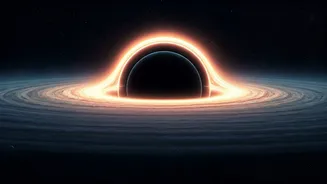
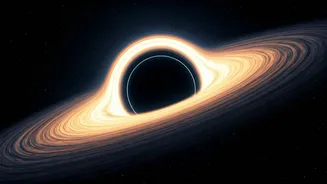
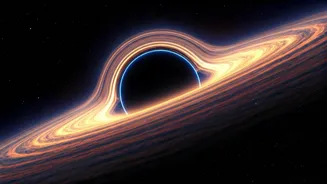
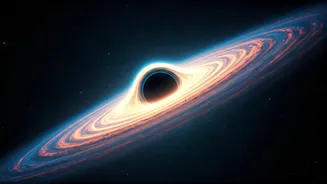
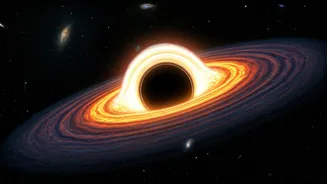
At the heart of most large galaxies, including our own Milky Way, lies a supermassive black hole—a cosmic monster with a mass hundreds of thousands to billions of times that of our sun. Most of these giants are 'sleeping' or dormant, meaning they are not actively pulling in large amounts of matter. An 'awakening' occurs when the black hole begins to feast on the gas and dust available in its vicinity. As this material gets pulled in, it forms a swirling, ultra-hot structure called an accretion disk. The intense friction and gravitational forces heat the material to extreme temperatures, causing it to radiate enormous amounts of energy across the spectrum, from X-rays to infrared light. This process is what transforms a quiet galactic core into a dazzlingly bright 'active galactic nucleus' (AGN).
The Cosmic Detective Work
To solve the mystery of SDSS1335+0728, scientists combined new observations with archival data. Using powerful instruments like the European Southern Observatory’s Very Large Telescope (VLT) in Chile, they compared data from before and after the brightening event. The results were stunning. The galaxy was radiating significantly more light in the ultraviolet, optical, and infrared ranges. Then, in February 2024, it also began to emit X-rays. Astronomers had to rule out other possibilities for the sudden flare. Events like supernova explosions or tidal disruption events (when a star is torn apart by a black hole) can cause a galaxy to light up, but these phenomena are typically short-lived, lasting for a few hundred days at most. The sustained and increasing brightness of SDSS1335+0728 pointed to something entirely new: the birth of an active galactic nucleus, witnessed in real time for the first time in history.
A New Window into the Universe
This discovery is monumental because it provides the first-ever direct observation of a black hole's activation process. While scientists have studied active and inactive galaxies for decades, they had never before caught one in the middle of the transition. "Imagine you’ve been observing a distant galaxy for years, and it always seemed calm and inactive," said Paula Sánchez Sáez, an astronomer at ESO in Germany and lead author of the study. "Suddenly, its core starts showing dramatic changes in brightness, unlike any typical events we've seen before." Observing this process can teach us invaluable lessons about how black holes grow and how they influence the evolution of their host galaxies. The immense energy released by an AGN can heat and blow away gas, potentially shutting down star formation within the galaxy. This observation gives researchers a front-row seat to one of the most powerful and transformative processes in the cosmos.