





The Ultra-Processed Problem
First, let's call many of these snacks what they are: ultra-processed foods (UPFs). Whether they are baked, fried, or air-puffed, diet chips are often engineered to be hyper-palatable. This means their combination of salt, flavour enhancers, and texture
is scientifically designed to be irresistible, encouraging you to eat more. Research shows that UPFs can disrupt the natural signals between your gut and brain that tell you when you're full. As a result, you might easily consume more calories than you intended, even if the per-chip calorie count is slightly lower than its full-fat counterpart.
The 'Health Halo' Effect
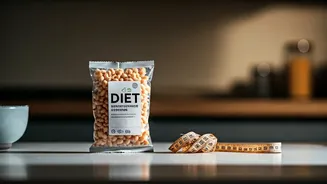
When a food is labeled 'low-fat' or 'diet', it creates a psychological phenomenon known as the 'health halo'. We perceive the food as being healthier overall and feel less guilty about eating it. Studies have shown that this halo effect can lead people to eat significantly larger portions of a food they believe is healthy, completely negating any calorie savings. You might think, 'It's a diet snack, so I can have a few extra.' This mindset can lead to consuming more calories than you would have if you had just eaten a smaller, more satisfying portion of the regular, full-fat version.
The Artificial Sweetener and Fat Substitute Puzzle
Many diet chips rely on artificial ingredients to cut calories. Fat substitutes, like the infamous Olestra used in 'Wow' chips decades ago, can cause digestive distress and interfere with the absorption of essential fat-soluble vitamins. While formulations have changed, the principle remains: removing fat often means removing what makes a snack satisfying. Other chips might use artificial sweeteners to enhance flavour. While the research is complex and sometimes conflicting, some studies suggest that certain non-nutritive sweeteners may alter our gut microbiome, affect metabolic health, and even increase cravings for sweet foods later on.
Lacking in Satiety
The goal of a good snack is to bridge the gap between meals, keeping hunger at bay. The problem with many diet chips is that they lack the key nutrients that promote satiety: protein and fibre. A handful of regular chips is often unsatisfying for the same reason, but their 'diet' counterparts can be even worse. By stripping out fat and replacing it with refined starches or fillers, you are left with a snack that provides 'empty calories'—it doesn't fill you up or provide sustained energy. This lack of satisfaction makes you more likely to keep snacking or to overeat at your next meal.