



A Symphony in Bloom
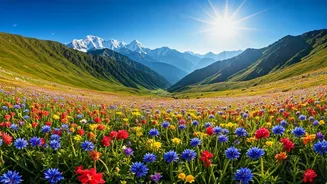
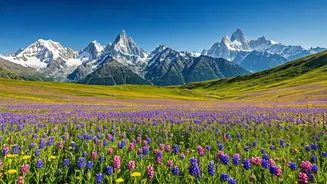
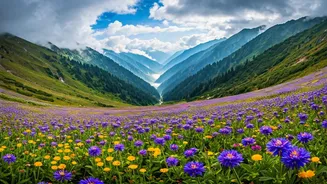
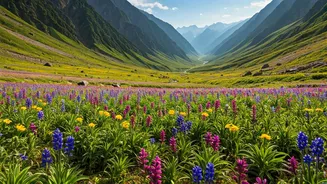
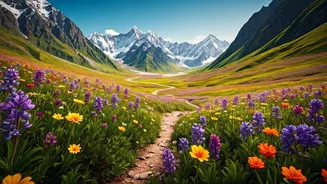
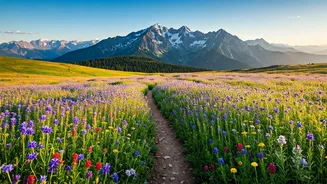
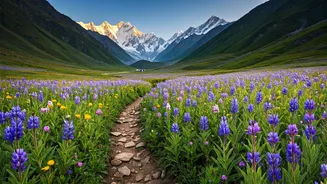
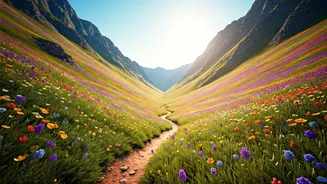
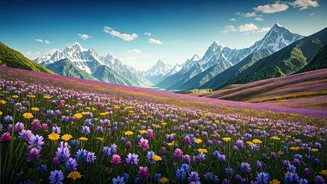
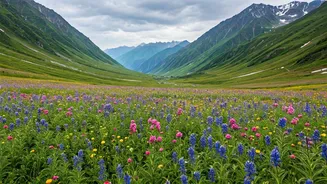
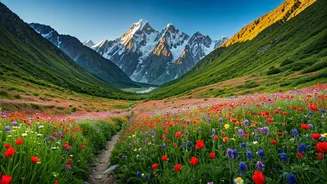
Nestled at an altitude of over 3,600 metres, the Valley of Flowers is a place that defies easy description. During the monsoon months, from July to early September, this glacial corridor transforms into a living carpet of alpine flora. Over 600 species,
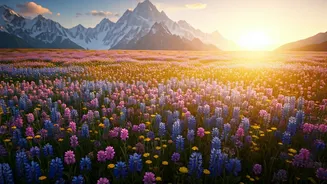
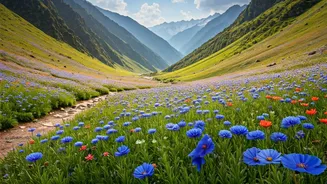
many of which are found nowhere else on earth, burst into life, painting the landscape in shades of violet, blue, yellow, and pink. Picture vast swathes of Himalayan blue poppies, delicate primulas, vibrant marigolds, and the ethereal Brahma Kamal, the state flower of Uttarakhand. The air is thick with the scent of blossoms, the hum of insects, and the sound of glacial streams like the Pushpawati River, which carves a path through the heart of the valley. It’s a sensory overload in the best possible way—a natural spectacle that feels both grand and deeply intimate.
The Legend of the Life-Giving Herb
The valley’s significance extends far beyond its botanical riches. It is steeped in mythology, forever linked to a pivotal moment in the epic Ramayana. As legend has it, this is the very place from which the monkey-god Hanuman was tasked to fetch the life-saving Sanjeevani herb to revive Lakshmana, who was],” grievously wounded in battle. Overwhelmed by the sheer variety of flora and unable to identify the specific herb, Hanuman is said to have lifted the entire mountain and carried it back with him. This story imbues the valley with a sacred aura, transforming it from a mere botanical wonder into a spiritual sanctuary. For pilgrims and trekkers alike, every step through the valley feels like walking through a living chapter of ancient lore, a landscape charged with divine energy.
The Journey is the Destination
Reaching this paradise is an adventure in itself, a pilgrimage that demands effort and rewards it tenfold. The journey begins from the roadhead at Govindghat, from where a moderately challenging 14-kilometre trek leads to the bustling base village of Ghangaria. This trail, which runs alongside the gushing Alaknanda River, is a scenic marvel of its own, dotted with waterfalls and breathtaking views. After an overnight stay in Ghangaria to acclimatise, a further 4-kilometre trek takes you to the official entrance of the Valley of Flowers. The path is well-laid but steep in places, and as you ascend, the landscape slowly reveals its floral treasures, building anticipation until you finally emerge into the vast, open meadow. The physical exertion of the trek simply melts away in the face of such overwhelming beauty.
A UNESCO World Heritage Site
Recognised for its outstanding universal value, the Valley of Flowers, along with the adjacent Nanda Devi National Park, was declared a UNESCO World Heritage Site in 2005. The park is a critical habitat for a variety of endangered species. While the flowers are the main draw, the valley is also home to rare fauna. Lucky visitors might spot the elusive snow leopard, the Asiatic black bear, the Himalayan musk deer, or the vibrant blue sheep (bharal) grazing on the high-altitude slopes. The strict regulations—no overnight camping, no littering, and sticking to marked paths—are in place to preserve this fragile ecosystem, ensuring that its magic remains intact for generations to come. It’s a powerful reminder of the delicate balance between human access and natural conservation.
Planning Your Floral Pilgrimage
A trip to the Valley of Flowers requires careful planning. The window to witness the 'peak bloom' is short, typically from mid-July to mid-August. This is when the monsoon rains have fully nourished the soil, and the maximum number of species are in flower. Trekkers should be well-prepared with sturdy waterproof boots, rain gear, and warm layers, as the mountain weather is notoriously fickle. Ghangaria serves as the only base for accommodation, offering a range of guesthouses and hotels. Remember that the valley is only open during the day, from morning until evening, and visitors must trek back to Ghangaria before dusk. Acclimatisation is key, so it's wise to spend a day in Ghangaria before undertaking the final ascent.