




The Illusion of a Global Election
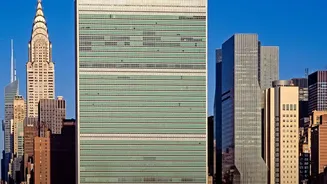
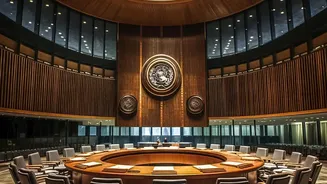
On paper, the selection of the United Nations Secretary-General appears democratic. The UN Charter states that the General Assembly, representing all 193 member states, appoints the leader. However, this happens only 'upon the recommendation of the Security
Council'. This single clause shifts the true power to the 15-member Council, and more specifically, to its five permanent members (P5): China, France, Russia, the United Kingdom, and the United States. For decades, the process was shrouded in secrecy, with the P5 negotiating behind closed doors before presenting a single candidate for the General Assembly to rubber-stamp. While recent reforms have introduced public dialogues and vision statements from candidates, the fundamental power structure remains unchanged. The final decision is still brokered in private, often through a series of informal straw polls where the P5's preferences ultimately determine the outcome.
The Decisive Power of the Veto
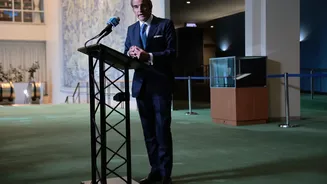
The ultimate tool of control for the P5 is the veto. To be recommended, a candidate needs at least nine affirmative votes in the Security Council, with no 'no' vote from any permanent member. A single veto can eliminate even the most popular and qualified candidate. This dynamic turns the selection into a process of finding the 'least objectionable' nominee rather than the most inspiring one. Candidates perceived as too independent or likely to challenge the interests of a P5 nation are quickly filtered out. Russia, for instance, has voiced opposition to Argentine candidate Rafael Grossi over his work as head of the IAEA concerning the Zaporizhzhia nuclear plant in Ukraine. This process forces candidates to moderate their ambitions and avoid taking strong stances on sensitive issues, ensuring the eventual winner is someone palatable to the world's most powerful countries.
A Mandate Limited by Compromise
A Secretary-General who ascends to the office primarily due to the backing of one or two superpowers begins their term with a compromised mandate. Their ability to act as a neutral arbiter and a courageous moral voice is constrained by the political debts incurred during their selection. How can a UN chief effectively mediate a conflict when they owe their job to one of the involved parties? How can they push for aggressive climate action if their key backer is a major fossil fuel producer? This structure encourages a risk-averse leadership style, where the Secretary-General often acts more like a chief administrator than the world's top diplomat. The result is an institution that can appear hesitant and ineffective during major global crises, further eroding public trust in the UN's capacity to maintain peace and security.
The Path to a More Legitimate Leader
Calls for reform have grown louder over the years. The changes implemented for the 2016 selection—including public hearings and vision statements—were a step toward transparency. These reforms allowed the wider UN membership and global civil society to engage with the process for the first time. However, they did not alter the Security Council's final authority. True reform would require more fundamental changes. Proposals have included the Security Council recommending multiple candidates for the General Assembly to choose from, or a single, non-renewable seven-year term to free the Secretary-General from the political pressures of seeking reappointment. Even a recent resolution requiring the General Assembly to convene a debate whenever a veto is cast on any issue could raise the political cost of a P5 member single-handedly blocking a strong candidate.
Why It Matters for India and the World
The current selection process is deadlocked, with the Security Council having held eight rounds of voting without reaching a consensus as António Guterres's term ends on December 31, 2026. This gridlock is embarrassing for the P5 and highlights the dysfunction of the current system. For India and other nations in the Global South, the stakes are immense. A more independently elected Secretary-General would be better positioned to champion the interests of developing countries, advocate for equitable climate solutions, and push for the reform of international financial institutions. Such a leader could serve as a genuine guardian of multilateralism, a principle crucial for addressing complex challenges that no single nation can solve alone. As the world becomes more polarized, the need for a UN chief who serves all of humanity, not just the powerful few, has never been more urgent. A leader with broad-based, global backing is essential for the UN to reclaim its credibility and fulfill its founding mission.