







The Scientific Connection
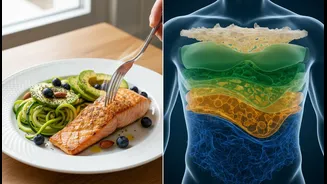
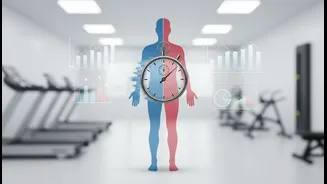
Numerous studies have established a strong correlation between eating quickly and a higher risk of obesity. A systematic review and meta-analysis confirmed that fast eaters are more likely to have a higher Body Mass Index (BMI) and a larger waist circumference.
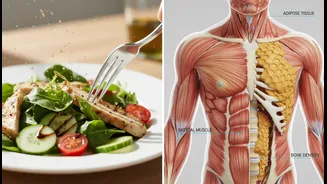
In one large Japanese study, fast eaters were found to be significantly more likely to be obese than their slower-eating counterparts. Research also indicates that fast eating is associated with greater visceral fat, the more dangerous type of fat that surrounds our organs. This link appears to hold true even when factors like physical activity are taken into account, suggesting that eating speed is an independent factor in weight management. The evidence consistently points in one direction: a faster pace at the dinner table is linked to a less favourable body composition.
The Hormonal Opportunity
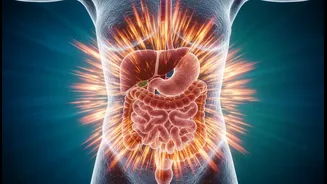
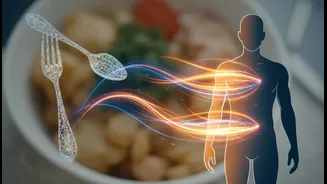
The reason slowing down works isn't just about willpower; it’s rooted in our biology. It takes approximately 20 minutes for your gut to send signals to your brain that you are full. When you eat too fast, you can easily consume more calories than you need before this communication loop is complete. Slowing down allows key satiety hormones, such as Peptide YY (PYY) and Glucagon-like peptide-1 (GLP-1), to be released from the gut and signal to your brain that you are satisfied. At the same time, it helps suppress ghrelin, the hormone that drives hunger. This hormonal response not only helps you eat less during a meal but can also lead to feeling full for longer afterwards. Furthermore, slower eating improves digestion, as it begins with thorough chewing, which breaks down food and eases the workload on your stomach and intestines.
Simple Steps for Slower Eating
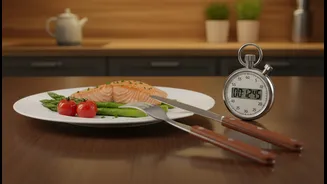
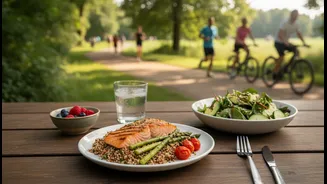
Harnessing the benefits of slower eating doesn't require a drastic overhaul of your diet. It's about building mindful habits. One of the most effective techniques is to simply put down your fork or spoon between bites. This creates a natural pause, forcing you to slow down. Another key is to chew your food more thoroughly; aim for 20-30 chews per bite to aid digestion and increase satisfaction. Minimising distractions is also crucial. Turning off the television and putting your phone away allows you to pay more attention to your body’s hunger and fullness cues. Sipping water throughout your meal can also help you pace yourself and aids in digestion. Try setting a timer for 20 minutes and making it your goal to have your meal last at least that long. These small adjustments can transform a rushed meal into a more mindful and satisfying experience.
Understanding the Limits
While the evidence is compelling, it's important to be realistic. Eating speed is a powerful tool, but it is not a magic bullet for weight loss. Most of the research highlights a strong association, but it's harder to prove direct causation; for instance, it's not entirely clear whether eating fast leads to weight gain or if people with higher body weights tend to eat faster. Some experts also note that many studies rely on self-reported eating speeds, which can be subjective. Ultimately, your overall diet quality, calorie intake, and physical activity levels remain the cornerstones of a healthy body composition. Changing your eating speed should be seen as one component of a holistic approach to health. It is a valuable and effective strategy, but it works best when combined with a balanced diet and an active lifestyle, not as a substitute for them.