



The Calorie Question
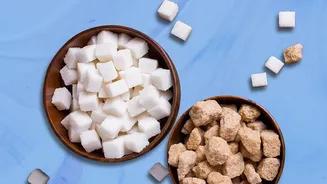
On the surface, the numbers seem to favour sugar. A teaspoon of granulated sugar contains about 16 calories, while a teaspoon of honey has around 21. This is because honey is denser; a spoonful of the liquid gold simply weighs more than a spoonful of sugar crystals.
However, honey is also sweeter than sugar because it has a higher concentration of fructose. This means you might find yourself using less honey to achieve the same level of sweetness, which could even out the calorie difference in practice.
Blood Sugar and Glycemic Index
The glycemic index (GI) measures how quickly a food raises your blood sugar levels. Here, honey has a slight edge. Table sugar (sucrose) has a GI of around 65, whereas honey's GI is typically lower, averaging around 58, though it can vary widely depending on the type. This means honey may cause a slower, more gradual rise in blood sugar compared to the sharper spike from table sugar. This difference is due to honey's chemical structure. Sugar is made of sucrose, where glucose and fructose are bound together. In honey, these sugars are mostly separate, and the higher fructose content is processed more slowly. For this reason, some studies suggest honey produces a lower blood glucose response than sugar.
Nutritional Benefits Beyond Sweetness
This is where honey truly separates itself from sugar. Table sugar offers what are often called 'empty calories'—it provides energy but no other nutritional value. Raw honey, on the other hand, is a complex natural substance. It contains trace amounts of vitamins, minerals like potassium and iron, amino acids, and enzymes. More importantly, honey is a source of antioxidants, such as flavonoids and phenolic acids, which can help protect the body from cellular damage. Darker honeys tend to contain more antioxidants than lighter varieties.
The Impact of Hot Tea
Many of honey's unique benefits, especially those from its enzymes and antioxidants, are sensitive to heat. Adding raw honey to boiling water can degrade or destroy some of these delicate compounds, reducing its nutritional advantage. Does this mean it becomes harmful? No, the idea that heated honey is toxic is a myth. It simply means the honey becomes more like regular sugar in terms of its benefits. To preserve as much of honey's natural goodness as possible, it's best to let your tea cool for a minute or two before stirring it in. Adding it to a warm, rather than scalding, cup is the ideal way to enjoy both its flavour and its benefits.
Flavour and the Final Sip
Beyond health, there's the crucial matter of taste. Sugar provides a clean, neutral sweetness that sweetens your tea without altering its flavour profile. Honey, however, is a flavour ingredient in its own right. Depending on the flowers the bees visited, honey can have notes that are floral, fruity, earthy, or rich. A delicate orange blossom honey might be perfect in a white tea, while a robust buckwheat honey could overpower it but stand up beautifully to a strong black tea. This makes honey a more complex and versatile flavouring agent, but one that requires more thought to pair correctly.