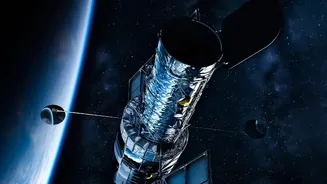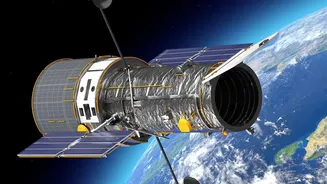






For over 35 years, the Hubble Space Telescope has been humanity's eye on the cosmos. Now, its orbit is slowly decaying, and NASA is turning to the commercial space industry for a lifeline to keep this iconic observatory from a fiery end.
An Icon's Slow Descent
Since its launch
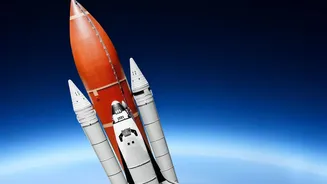
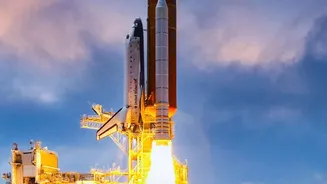
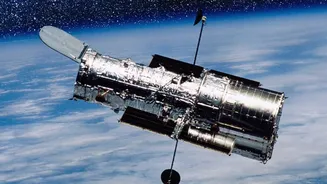
in 1990, the Hubble Space Telescope has revolutionized our understanding of the universe, capturing breathtaking images and providing data for countless scientific discoveries. But like all satellites in low Earth orbit, it faces a persistent, invisible foe: atmospheric drag. Even in the tenuous upper atmosphere, gas molecules create friction, gradually slowing the telescope and causing its orbit to shrink. Without its own propulsion system, Hubble relies on periodic boosts to stay aloft. The last such boost was during a Space Shuttle servicing mission in 2002. With the shuttle fleet now retired, Hubble's altitude has been steadily dropping, and without intervention, it is projected to make an uncontrolled reentry into Earth's atmosphere sometime in the early to mid-2030s.
NASA's Call for Commercial Heroes
In a significant shift in strategy, NASA has formally asked the private sector for help. The agency issued a Request for Information (RFI) on October 29, 2026, seeking ideas from commercial companies. This isn't a formal contract but rather a market survey to gauge what's possible. The RFI outlines three potential missions: boost Hubble to a higher, more stable orbit of at least 600 kilometers; service the telescope with potential upgrades; or, as a last resort, guide it to a safe, controlled deorbit over the ocean. NASA has made it clear that any proposed mission must not harm the priceless observatory and would need to be completed by 2032. The responding company would be responsible for nearly the entire mission, including the launch vehicle, spacecraft, and operations.
The Rise of Private Proposals
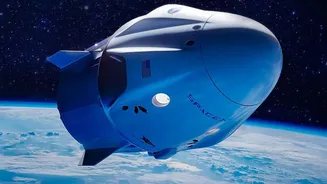
This public call for ideas follows a notable unsolicited proposal made in 2022. Billionaire entrepreneur and private astronaut Jared Isaacman, in partnership with SpaceX, suggested using a Dragon spacecraft to visit and reboost Hubble. That study, conducted under an unfunded Space Act Agreement with NASA, explored the feasibility of a crewed mission as part of Isaacman's Polaris Program. While NASA decided not to pursue that specific plan at the time, Isaacman's new role as NASA Administrator has brought fresh attention to finding a cost-effective solution. He has stated that the agency owes it to taxpayers and the scientific community to explore all innovative options to extend Hubble's life.
Robots or Astronauts? The Mission Ahead
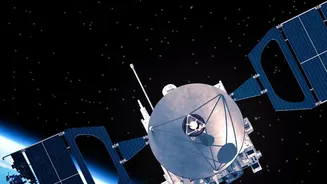
The key question is how such a rescue would be performed. While the Polaris_SpaceX concept envisioned astronauts, many experts believe a robotic mission is a more likely path forward. The in_space servicing industry has matured rapidly, with companies like Northrop Grumman and Astroscale developing robotic spacecraft designed for missions like docking, refueling, and repositioning satellites. A robotic 'tug' could be designed to carefully grab Hubble and push it into a higher orbit. This approach avoids the immense complexity and cost of a human spaceflight mission, though it comes with its own challenges, such as docking with a telescope that wasn't designed for it. Any company that takes on the task must prove it can rendezvous with and control the multi_ton observatory without damaging its sensitive optics or solar arrays.
A New Chapter for Public_Private Partnerships
Hubble was specifically designed to be serviced in space by astronauts during the Space Shuttle era. There were five successful servicing missions that repaired and upgraded the telescope, dramatically extending its life and capabilities. The final mission was in 2009. Today, with no government_owned vehicle capable of the task, NASA's outreach to the commercial sector marks a new era. Successfully saving Hubble would not only preserve a critical scientific asset but also serve as a powerful proof_of_concept for the commercial space servicing industry. It represents a move away from NASA owning and operating all its hardware to the agency becoming a customer, buying services from an innovative and growing private market.