



What Exactly Is Animal Flow?
Forget treadmills and dumbbells for a moment. Animal Flow is a ground-based movement system designed to improve your strength, flexibility, mobility, and coordination using just your body. The practice revolves around 'quadrupedal movement'—moving on all
fours, like an animal. Created by fitness expert Mike Fitch, it blends elements from various disciplines, including gymnastics, yoga, and breakdancing. At its core, Animal Flow is about reconnecting with our natural ability to move in dynamic, fluid ways. It's less about sets and reps, and more about creating seamless transitions between different forms, creating a 'flow'. You learn to control your body in new planes of motion, building functional strength that translates directly into everyday life.
Why Take Your Workout Outdoors?
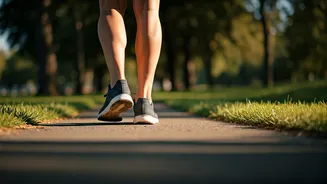
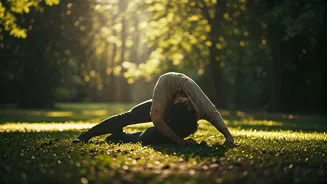
Moving your Animal Flow practice from a studio to a park or even your lawn offers unique benefits. The uneven terrain of grass or dirt challenges your stabiliser muscles in ways a flat, predictable gym floor never could, enhancing your balance and proprioception (your body's awareness of its position in space). The fresh air and natural sunlight provide a significant mental health boost, reducing stress and improving your mood. There's also a primal satisfaction in connecting with the earth while moving your body in these elemental patterns. It transforms a workout from a chore into a form of play and exploration, making you more likely to stick with it. Plus, it’s completely free and accessible to everyone.
Challenge 1: Master the Beast
The Beast is a foundational Animal Flow position that looks simple but engages your entire core, shoulders, and quads. Think of it as an active, 'loaded' version of a tabletop position.
How to do it: Start on all fours with your hands directly under your shoulders and your knees directly under your hips. Press firmly into the ground with your palms, keeping your arms straight. Now, tuck your toes and lift your knees just an inch or two off the ground. Your back should be flat, like a table. The challenge is to hold this position. Start with 20 seconds, rest, and repeat three times. Focus on keeping your core tight and your knees as low as possible. This is your new 'active rest' position.
Challenge 2: Unlock the Ape
The Ape position is a deep squat that is fundamental for lower body mobility. This move opens up your hips and ankles, a common area of stiffness for many people.
How to do it: Stand with your feet slightly wider than your shoulders, toes pointed slightly out. Lower your hips down and back into a deep squat, going as low as you can comfortably. Your goal is to keep your heels on the ground and your chest lifted. Place your palms on the ground between your feet for support. From here, you can practice the 'Ape Reach'. Keeping one hand on the ground, reach the other hand up towards the sky, rotating your chest open. This adds a thoracic spine stretch. Hold for a few seconds, return to the start, and switch sides.
Challenge 3: Command the Crab
The Crab position opens up the front of your body—your chest, shoulders, and hip flexors—while strengthening your posterior chain (glutes, hamstrings, and back).
How to do it: Sit on the ground with your knees bent and feet flat on the floor, about hip-width apart. Place your hands on the ground behind you, a little wider than your shoulders, with your fingertips pointing towards your feet. Now, press through your hands and feet to lift your hips off the ground, creating a 'tabletop' with your torso. The challenge here is the 'Crab Reach'. From your Crab position, shift your weight onto one hand, lift the other arm and reach it up and over your head in an arc as you drive your hips higher. You should feel a fantastic stretch across your side and chest. Lower back down with control and repeat on the other side.
Putting It All Together: A Mini Flow
The magic of Animal Flow happens when you connect the movements. Here’s a simple sequence to practice your outdoor challenge.
1. Start in Beast. Hold for three deep breaths.
2. From Beast, step one foot forward to the outside of your hand, then the other, landing in a low Ape squat.
3. From Ape, place your hands behind you and sit back, transitioning smoothly into the Crab position.
4. Perform one Crab Reach on each side.
5. From Crab, bring your hands forward again, place your feet, and push back up into your starting Beast position.
Repeat this sequence five times, focusing on making the transitions smoother with each round. This is your first flow!