


Beyond the Houseboat Highway
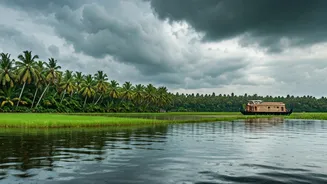
When people imagine the Kerala backwaters, they often picture the grand, slow-moving houseboats of Alleppey (Alappuzha). While iconic, these main channels can feel like aquatic highways, bustling with traffic. But the real soul of this liquid landscape
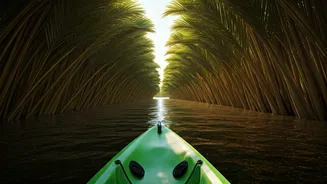
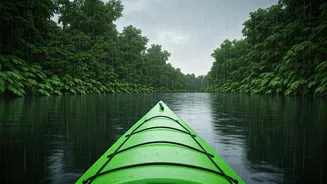
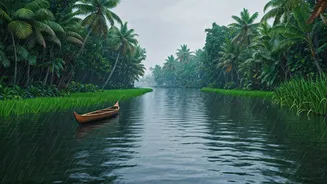
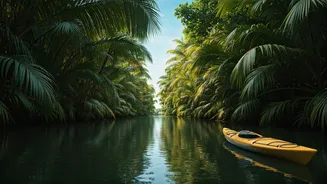
lies elsewhere, in the narrow, winding canals that snake through villages and lush greenery. This is where a kayak becomes less a vehicle and more a key, unlocking a world inaccessible to larger vessels. We’re talking about places like Munroe Island (Munaruthuruthu), an eight-island cluster where the Kallada River and Ashtamudi Lake converge. Here, the waterways are so intimate you can almost touch the palm fronds leaning over from the banks. This is not just a tour; it’s an immersion.
Finding Your Rhythm
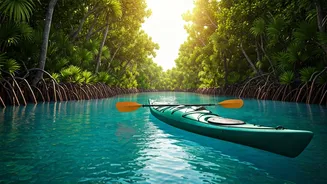
The first few minutes in a kayak are about finding balance. The paddle feels awkward, your steering is clumsy, and you might zig-zag more than you glide. But then, a rhythm emerges. Dip, pull, glide. Dip, pull, glide. The gentle resistance of the water becomes a steady partner, not an obstacle. This is the 'work' in 'worth every paddle.' It's a mindful effort that focuses your attention, silencing the chatter of your everyday life. With each stroke, you leave the world of notifications and deadlines further behind. The only sounds are the soft splash of your paddle, the distant call of a bird, and the gentle hum of village life. You are not just observing the scenery; you are actively moving through it, powered by your own strength.
A Symphony of Sights and Sounds
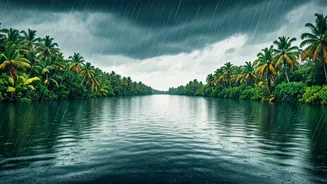
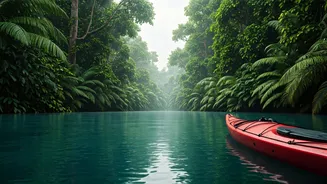
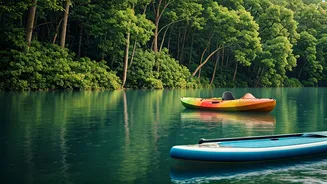
As you navigate these emerald corridors, the rewards reveal themselves. A flash of electric blue is a kingfisher, perched on a wire before it dives for its breakfast. A cormorant dries its wings on a low-hanging branch, unbothered by your silent approach. The water itself is a mirror, reflecting the coconut palms and the vast, open sky in perfect, glassy detail. You’ll glide under low-slung bridges, built just high enough for small canoes, forcing you to duck and become part of the canal's intimate scale. The air is thick with the scent of damp earth, woodsmoke from kitchen fires, and the subtle fragrance of tropical flowers. It’s a sensory feast that no photograph can fully capture.
Life on the Water's Edge
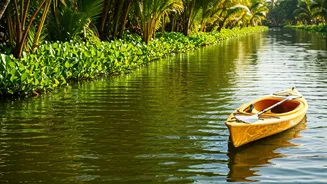
This adventure isn’t just about nature; it’s a gentle glimpse into a way of life intrinsically tied to the water. From your low vantage point, you see the world from a local’s perspective. Fishermen in smaller canoes, or ‘vallams’, cast their nets with practiced grace. A woman washes clothes at the water’s edge, her daily routine a part of the landscape’s fabric. Children on their way to school might pause on a bridge to wave, their curiosity a welcome interaction. Unlike the insulated experience of a large boat, a kayak fosters a quiet connection. You are a respectful visitor in their front yard, moving at a pace that allows for observation without intrusion. This human element adds a profound depth to the journey, reminding you that this beautiful ecosystem is also a home.
Planning Your Quiet Escape
Embarking on this adventure is surprisingly straightforward. The best time to visit Kerala’s backwaters is from September to March, when the weather is pleasant and the skies are clear. Numerous local operators, particularly around Munroe Island and the less-travelled canals near Alleppey, offer guided kayaking tours. These often last from three to four hours, typically in the early morning or late afternoon to avoid the midday sun and catch the best light. A guide is highly recommended, as they can navigate the labyrinthine waterways and point out flora and fauna you might otherwise miss. Wear light, quick-drying clothes, a hat, and sunscreen. Most importantly, bring a sense of wonder and a willingness to embrace the quiet.