






A Journey Spanning Continents
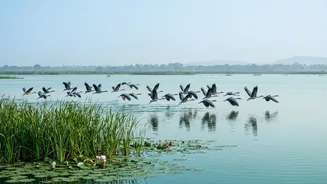
The annual migration is one of nature's most demanding feats. Birds travel thousands of kilometres along a path known as the Central Asian Flyway, which stretches from the northernmost parts of Russia and Siberia, across the Himalayas, and into the Indian
subcontinent. They are driven by instinct and necessity, fleeing the harsh, freezing conditions that lock away their food sources under ice and snow. This incredible journey requires immense endurance. Some species, like the famous Bar-headed Goose, are known to fly at extreme altitudes, crossing the formidable Himalayan range where oxygen is thin and temperatures are frigid. These birds have unique physiological adaptations, including highly efficient respiratory systems, that allow them to survive these grueling conditions.
India's Welcoming Waters
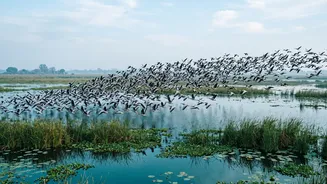
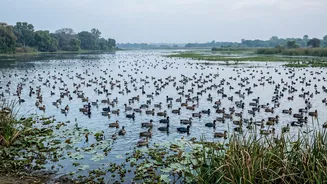
Upon arrival, these avian travelers find refuge in India's diverse network of wetlands. From the sprawling Chilika Lake in Odisha to Keoladeo National Park in Rajasthan and numerous wetlands in Kashmir and West Bengal, these habitats provide the perfect wintering grounds. Chilika, Asia's largest brackish water lagoon, is a critical site, hosting over a million birds each winter. Recent reports from late October 2026 show that the first flocks, including Northern Pintails and Gadwalls, have already started arriving in areas like Jalpaiguri in West Bengal and the wetlands of Kashmir. These sites offer abundant food in the form of aquatic plants, fish, and invertebrates, allowing the birds to rest and build up their energy reserves for the long flight back in spring.
The Feathered Guests of Honour
The diversity of species arriving in India is astounding. Among the most common waterfowl are the Northern Pintail, a graceful duck recognised by the male's long, pointed tail feathers, and the Eurasian Wigeon. Other notable visitors include the Ruddy Shelduck, Common Teal, and the magnificent Bar-headed Goose, with its distinctive head stripes. The Northern Pintail, often one of the first to arrive, can be seen in large numbers across the country, from northern lakes to southern reservoirs. These birds are highly gregarious, often forming large, mixed flocks that create a constant buzz of activity on the water. Birdwatchers and nature enthusiasts flock to these wetlands to witness the spectacle, with states like Odisha even hosting festivals to celebrate their arrival.
An Ecological Barometer
The arrival of these birds is more than just a beautiful sight; it is a vital indicator of environmental health. The number and diversity of migratory birds reflect the condition of the wetlands they depend on. A healthy wetland supports a rich food web, which is essential for the birds' survival. However, these crucial habitats are under threat. Pollution, urban expansion, and habitat degradation are shrinking the spaces available for these birds to rest and feed. Furthermore, climate change is disrupting the delicate timing of migration. Studies show that rising temperatures and erratic weather patterns can alter food availability and water levels, forcing birds to change their arrival and departure times, which can have cascading effects on their breeding success and survival.