






The Sweet Spot of Stability
The single biggest factor in sleeper bus comfort is the smoothness of the ride. A bus is essentially a long lever, with the wheels acting as pivot points. Berths located directly over or near the front and rear axles will feel every bump, pothole, and road
imperfection most intensely. The rear of the bus is often considered the worst, as the motion can be amplified, leading to a bouncy, jarring experience. The mid-section, however, is situated furthest from both sets of wheels. Positioned closer to the bus's centre of gravity, this area acts like a hammock, experiencing significantly less up-and-down motion. This means fewer disturbances from rough patches on the highway, allowing for a much steadier and more peaceful sleep.
An Escape from Noise and Disruption
Beyond the physical bumps, ambient noise is a major sleep disruptor. The rear of the bus is home to the engine, which produces a constant, low-frequency hum and vibrations that can be difficult to ignore. The front section isn't immune to noise either; it’s where you'll hear the chatter from the driver's cabin, the hiss of the pneumatic doors at every stop, and the glare of oncoming headlights. The middle section offers a relative sanctuary from both ends. It’s far enough from the engine to muffle the drone and distant enough from the front door to avoid the commotion of frequent stops, creating a quieter cocoon for the night.
Minimising Sway and Motion Sickness
It’s not just vertical bumps that disrupt comfort; side-to-side sway on winding roads or during lane changes can be just as unsettling. The front and rear of the bus experience the most pronounced lateral movement. The middle, being the pivot point, moves in a smoother, more predictable arc. For travellers prone to motion sickness, this is crucial. The conflict between what your inner ear feels and what your eyes see is a primary trigger for nausea. By providing a more stable and less erratic ride, a middle berth can significantly reduce the chances of feeling unwell, especially on routes with many twists and turns.
Upper Berth or Lower Berth?
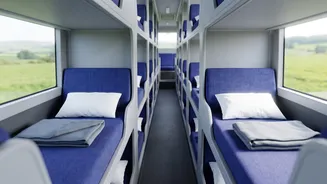
Once you’ve settled on the mid-section, there’s one more choice: upper or lower? There are clear trade-offs. Lower berths are generally considered more stable and are far easier to access, especially for middle-of-the-night bathroom breaks. They often feel less bumpy since they are closer to the bus's chassis. Upper berths, on the other hand, offer a greater sense of privacy and security, as you are removed from the foot traffic in the aisle. However, they can experience more sway on turns and the curved ceilings might feel claustrophobic to some. For pure stability, lower is often better, but for privacy, many travellers prefer the upper deck.