





The Policy That Changed Everything
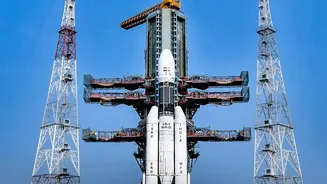
The skies above India have become a lot more crowded, and it's by design. The single biggest catalyst for this new space race was the government's landmark Indian Space Policy, approved in 2023. This policy was more than just a document; it was a formal
invitation for private companies to participate in end-to-end space activities. Before this, private firms were largely limited to being component suppliers for the Indian Space Research Organisation (ISRO). Now, they can build, own, and operate everything from launch vehicles to satellite constellations. To manage this new landscape, the government established the Indian National Space Promotion and Authorisation Centre (IN-SPACe) as a single-window agency. Its job is to promote, authorise, and supervise the activities of these private players, known as Non-Governmental Entities (NGEs), effectively rolling out the welcome mat to a sector once dominated by the state.
Meet the New Trailblazers
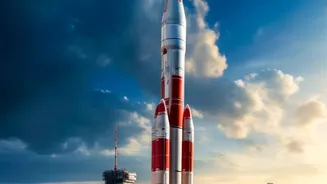
This policy shift has unleashed a wave of innovation, with several startups quickly becoming stars. Hyderabad-based Skyroot Aerospace made history in July 2026 by successfully launching its Vikram-1 rocket, making India only the third country, after the US and China, to have a private company achieve an orbital launch. This was a monumental 'SpaceX moment' for India, proving that the private sector could deliver complex, mission-critical technology. Another key player, Chennai's Agnikul Cosmos, is pushing the boundaries of manufacturing with its 3D-printed rocket engines. The company, which operates from its own private launchpad, is developing the Agnibaan rocket, designed for small satellite launches. These companies aren't just building rockets; they're creating a competitive, cost-effective launch capability that caters to the booming global small-satellite market.
More Than Just Rockets
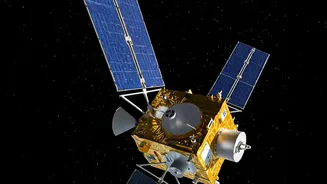
While launch vehicles grab the headlines, the private sector's impact is felt across the entire space value chain. Startups like Pixxel are deploying advanced hyperspectral imaging satellites that can 'see' the Earth in unprecedented detail, offering insights for agriculture and environmental monitoring. Meanwhile, GalaxEye has developed satellites that combine radar and optical sensors, allowing them to see through clouds and darkness—a significant advantage for all-weather surveillance. In just a few years, the number of Indian space startups has skyrocketed from a handful in 2020 to over 400. This growth has turned the sector into a high-tech job magnet, even attracting experienced talent from ISRO itself, creating a dynamic exchange of expertise that strengthens the entire domestic ecosystem.
A New Symbiotic Orbit
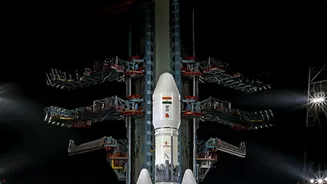
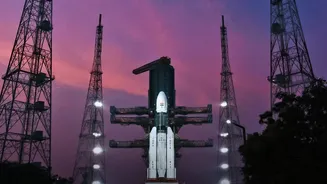
The rise of private ventures isn't a threat to ISRO; it's a force multiplier. By opening up the sector, the government has allowed private companies to take over more routine and commercial activities, such as building operational satellites and providing launch services. This frees up ISRO to conserve its resources and focus its world-class talent on what it does best: pioneering deep space exploration, scientific discovery, and strategic national missions. This includes ambitious projects like the Gaganyaan human spaceflight program, further lunar exploration with Chandrayaan, and the development of the Bharatiya Antariksh Station. The collaboration is actively fostered, with IN-SPACe facilitating the transfer of ISRO-developed technologies to private firms and providing access to its state-of-the-art testing facilities.
The $44 Billion Horizon
The economic potential is staggering. India's space economy, valued at around $8.4 billion in 2022, is projected to surge to $44 billion by 2033. This exponential growth is being fueled by private innovation and a clear government vision to capture a larger share of the global space market, which is expected to exceed a trillion dollars in the coming years. Increased foreign direct investment, a dedicated venture capital fund for space startups, and a drive to build a resilient domestic supply chain are all part of the strategy. By combining its legacy of frugal engineering with the agility and commercial drive of the private sector, India is not just participating in the new space race—it's positioning itself to become a global hub for space technology and services.