

The Great Indian Shift: From Rooms to Nooks
The days of dedicating an entire room to prayers are fading for many urban dwellers. With the rise of compact apartments and a growing appreciation for minimalist design, homeowners are rethinking the traditional mandir. This isn't about diminishing faith;
it's about adapting it to a new reality. The focus has shifted from size to sentiment, proving that a heartfelt prayer space doesn't need a sprawling footprint. Interior designers note a clear trend towards integrating these sacred corners into existing living spaces, like living rooms or even hallways, using clever design to demarcate the area. The result is a prayer setup that feels personal, intentional, and perfectly suited to the rhythms of contemporary life.
Going Vertical: The Wall-Mounted Mandir
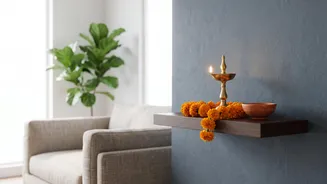
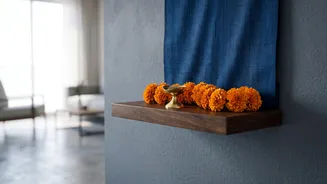
One of the most popular solutions for space-starved homes is the wall-mounted pooja unit. By lifting the mandir off the floor, you instantly create a sense of spaciousness and maintain an open feel. These floating shelves and compact cabinets are a game-changer for small apartments. Available in everything from traditional carved wood to sleek, modern finishes, they can be installed in a quiet corner or a passage, transforming an overlooked wall into a spiritual focal point. Many designs come with small drawers for storing essentials like incense and diyas, combining practicality with piety. For Navratri, these can be decorated with lightweight floral strings or subtle LED backlighting to create a festive glow without adding clutter.
The Art of the Corner Setup
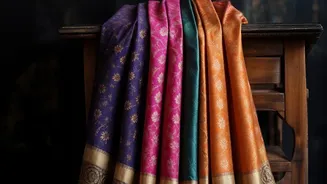
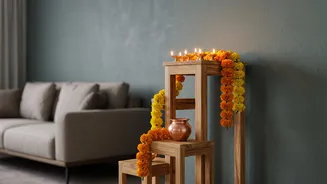
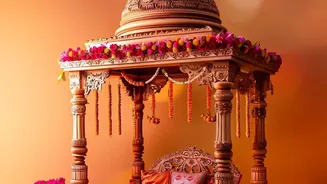
Never underestimate the power of a well-utilized corner. Unused corners in living rooms or dining areas are prime real estate for a compact Navratri display. A small wooden chowki or a tiered stand can serve as the base for your idol and kalash. The key is to define the space. This can be done beautifully with a backdrop, such as a colourful dupatta or a traditional saree draped against the wall, instantly setting a festive mood. Another elegant solution is using a decorative 'jali' or lattice screen as a partition, which creates a sense of separation without blocking light or making the room feel smaller. Layering the setup with fresh marigold garlands and a few brass diyas completes the look, creating a cosy, contained, and captivating prayer nook.
Modern Materials, Traditional Soul
The modern prayer setup is a masterclass in material fusion. While wood remains a timeless favourite for its warmth, materials like marble, metal, and even acrylic are making their way into mandir design. A simple marble shelf can exude purity and calm, while brass accents on a minimalist cabinet add a touch of traditional elegance. For Navratri, many are opting for modular or convertible units—designs that can be adapted for the nine days of celebration and then returned to a more compact form. Lighting plays a crucial role, with warm, soft LED strips integrated into back panels or shelves, creating a divine halo effect that’s both energy-efficient and visually stunning. This blend of old and new ensures the sacred space complements a modern home's aesthetic while honouring age-old traditions.
Accessorising the Small-Scale Shrine
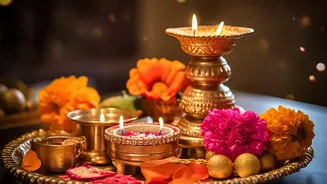
With a smaller setup, every decorative element counts. The goal is to create a sense of occasion without overwhelming the space. Instead of crowding the mandap, focus on the approach. A beautiful toran on the main door sets the festive tone from the moment someone enters. Rather than a sprawling powder rangoli that can get messy in a flat, a vibrant rangoli mat or a small floral pattern at the threshold offers a practical and beautiful alternative. For the mandir itself, think in layers: a single statement brass lamp instead of many small ones, and delicate flower strings draped along the edge of the shelf rather than thick, heavy garlands. Using urlis filled with water and flower petals can add a serene touch to a nearby surface, extending the festive feel without cluttering the main altar.