






A Divine Procession
At the heart of the festival is a simple, beautiful idea: the gods are taking a holiday. Lord Jagannath, an incarnation of Vishnu, along with his elder brother Lord Balabhadra and sister Devi Subhadra, leave their sanctum at the grand Jagannath Temple
in Puri, Odisha. They embark on a nine-day journey to their 'aunt's house,' the Gundicha Temple, located about three kilometres away. This procession, known as Rath Yatra or the Chariot Festival, is not a quiet affair. It's a colossal spectacle of devotion, where millions of people converge to catch a glimpse of the deities, believing that seeing them on their chariots is an act of immense piety.
The Chariots of the Gods
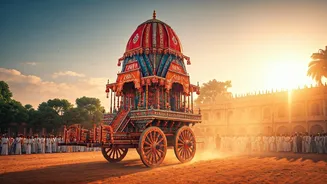
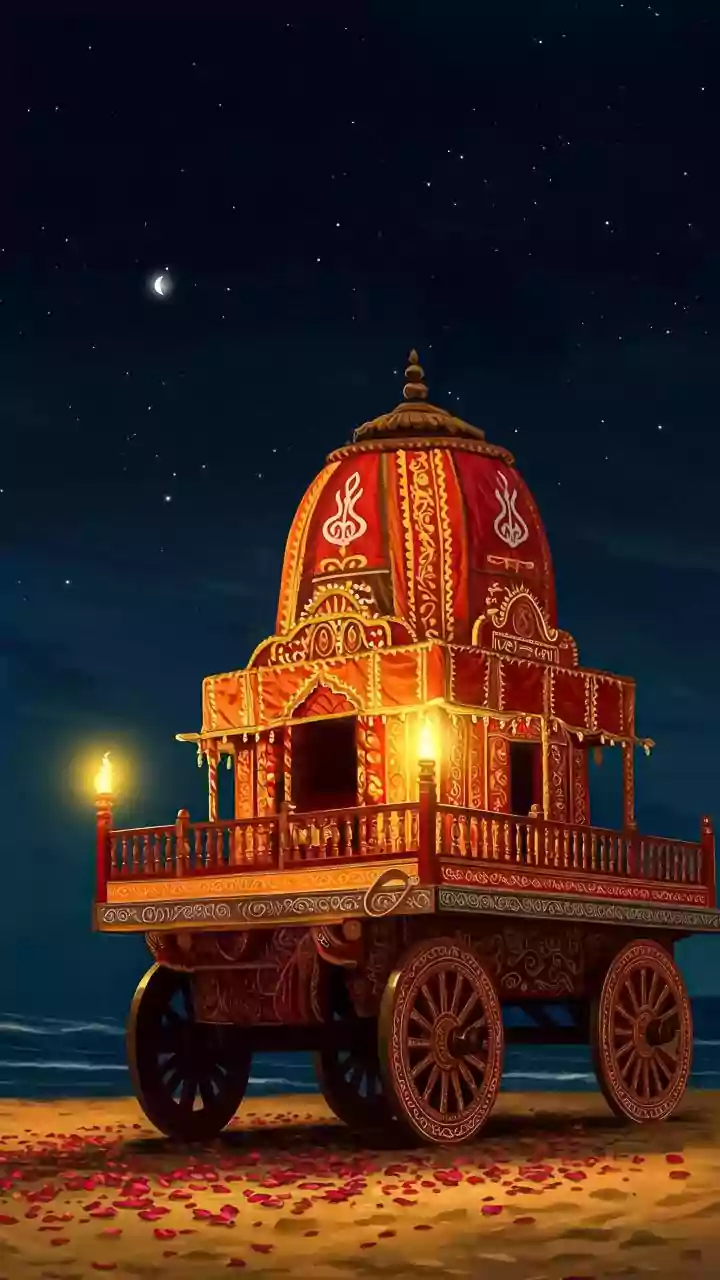
The vehicles for this divine journey are no ordinary carts. They are three massive, ornate chariots, built anew every single year from specified woods like phassi and dhausa. Lord Jagannath's chariot, Nandighosha, stands tall at 45 feet, draped in red and yellow cloth. Lord Balabhadra’s chariot, Taladhwaja, is covered in red and green, while Devi Subhadra’s Darpadalana is adorned with red and black. The construction is a sacred ritual in itself, undertaken by generations of carpenters and artisans who follow ancient traditions. On the day of the yatra, these towering structures become the focal point of all energy, pulled not by engines, but by the sheer force of thousands of devotees holding thick coir ropes.
The Ritual of Humility
Before the chariots begin their slow, majestic roll, a powerful ritual called 'Chhera Pahana' takes place. The Gajapati King of Puri, considered the first servant of the Lord, sweeps the platforms of the chariots with a golden-handled broom and sprinkles them with sandalwood-scented water. This act is a profound statement on spirituality. It signifies that in the eyes of the divine, everyone is equal, and even a king must perform the humble duty of a sweeper. This tradition breaks down social barriers, reinforcing the festival's core message of unity and devotion over status. It is a moment of quiet humility amidst the roaring chants of 'Jai Jagannath!' from the sea of humanity.
A Journey, Not a Destination
The pulling of the chariots is a slow, arduous process. The Grand Road (Bada Danda) of Puri transforms into a river of people, each pushing and pulling, their collective effort moving the divine vehicles inch by inch. The atmosphere is electric, filled with the sounds of gongs, cymbals, and ecstatic chanting. For the devotees, touching the ropes of the chariot is a blessing, a direct connection to the divine. The journey to the Gundicha Temple can take hours, even days, but the pace is part of the experience. It represents the trials and tribulations of life's own journey, undertaken with unwavering faith.
A Global Phenomenon
While Puri remains the epicentre, the spiritual charge of Rath Yatra radiates across the globe. From Kolkata to Ahmedabad, and in over 100 cities worldwide including London, New York, and Sydney, vibrant Rath Yatras are organised by ISKCON and other Hindu communities. These events replicate the rituals and the devotional fervour, allowing people everywhere to partake in the celebration. It shows how this ancient festival, rooted in the traditions of Odisha, carries a universal message of love, community, and the accessibility of the divine. It's a reminder that God is not confined to the temple but is willing to come out onto the streets to be with the people.