


Why Monsoon Is Different for Indoor Plants
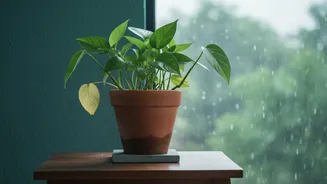
The shift from scorching summer to the damp monsoon season changes everything for your indoor garden. During the rains, humidity skyrockets. This means the soil in your pots dries out much slower than it does in summer. At the same time, persistent cloud
cover reduces the amount of sunlight streaming through your windows, slowing down photosynthesis and the plant's water usage. This combination of high humidity, low light, and wet soil creates a perfect storm for the number one killer of indoor plants: root rot. The roots essentially suffocate in waterlogged soil, unable to absorb oxygen, which can quickly lead to an unhappy, wilting plant.
The Golden Rule: Ditch the Schedule
The single biggest mistake many plant parents make is sticking to a summer watering schedule. During the monsoon, your plants simply do not need water as frequently. Before you even think about picking up the watering can, check the soil. The most reliable method is to push your finger about one to two inches deep into the pot. If the soil feels moist, hold off on watering. Only water when this top layer feels dry to the touch. This intuitive approach prevents the soil from becoming perpetually soggy, giving the roots the air they need to breathe. Remember, it's far easier to save an underwatered plant than an overwatered one.
Drainage Is Your Best Friend
Proper drainage becomes non-negotiable during the monsoon. Ensure every single one of your pots has drainage holes at the bottom. If you use decorative pots without holes, keep your plant in a smaller plastic nursery pot with holes and place it inside the cachepot. After watering, always empty the saucer or tray beneath the pot to ensure the plant isn't sitting in a pool of stagnant water, which is a direct invitation for root rot. For an extra layer of protection, consider elevating your pots on stands or bricks. This small step prevents the drainage holes from getting blocked and improves air circulation around the base of the pot.
Rethink Your Potting Mix
The soil you use plays a massive role in preventing waterlogging. Heavy, dense garden soil is a major culprit as it retains too much water for too long. During the monsoon, a light, well-aerating potting mix is crucial. A good DIY mix often includes equal parts coco peat, garden soil, and a material like coarse sand or perlite to improve porosity. This kind of mixture holds enough moisture for the plant but allows the excess to drain away quickly, preventing the roots from becoming waterlogged. If your plants are already in a dense mix, gently loosening the topsoil can help improve aeration.
Watch for These Warning Signs
Your plants will tell you when they are getting too much water. Paradoxically, one of the first signs of overwatering is wilting, but the leaves will feel soft and limp, not dry and crispy. Another key indicator is yellowing leaves, especially lower ones. You might also spot brown spots on leaves, often surrounded by a yellow halo, which can indicate a bacterial or fungal infection taking hold in the overly moist conditions. A musty or rotten smell from the soil is a definite sign of root rot. Finally, look out for fungus gnats hovering around the plant or white, fuzzy mould on the soil surface, as both thrive in constantly damp environments.
Go Beyond Water: Airflow and Pests
High humidity doesn't just affect watering; it also creates a welcoming environment for fungal diseases like powdery mildew and pests. To combat this, improve air circulation around your plants. Avoid crowding them together; giving each plant some space allows air to move freely. If your plants are indoors, opening a window or even using a small fan on a low setting for a few hours can make a big difference. This is also a good time to reduce how much you fertilise, as many plants slow their growth during the darker, humid months and can't use the extra nutrients.