






A New Sentinel in the Sky
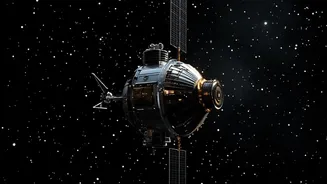
India's first dedicated solar observatory, Aditya-L1, marks a monumental step for ISRO and global space science. Named 'Aditya' after the Sanskrit word for the Sun, the spacecraft is on a five-year mission to unravel our star's deepest secrets. Its primary
goal is to conduct a comprehensive study of the Sun's atmosphere, from its visible surface (photosphere) to its enigmatic outer layer (corona). By doing so, it aims to provide crucial insights into solar dynamics and the powerful phenomena that influence our entire solar system.
The L1 Advantage: A Perpetual Gaze
What makes Aditya-L1 exceptionally powerful is its location. The observatory is positioned in a halo orbit around the Sun-Earth Lagrange Point 1 (L1), approximately 1.5 million kilometres from Earth. At this specific point in space, the gravitational pull of the Sun and Earth balance out, allowing the spacecraft to 'hover' with minimal fuel consumption. This unique vantage point provides Aditya-L1 with a continuous, uninterrupted view of the Sun, free from eclipses or occultations that affect Earth-orbiting satellites. This 24/7 solar surveillance is critical for monitoring dynamic events like solar flares and coronal mass ejections (CMEs) in real time.
A Suite of Seven Eyes
Aditya-L1 is equipped with seven sophisticated, indigenously developed payloads. Four of these are remote-sensing instruments that observe the Sun directly, while the other three perform in-situ measurements of the local space environment. The star of the show is the Visible Emission Line Coronagraph (VELC), designed to study the solar corona closer to the Sun's disk than any previous mission. It works in tandem with instruments like the Solar Ultraviolet Imaging Telescope (SUIT), which captures images of the photosphere and chromosphere in the ultraviolet spectrum. Other payloads measure solar wind particles and variations in the interplanetary magnetic field, providing a holistic picture of solar activity.
Solving Solar Puzzles
The mission seeks to answer some of the most baffling questions in heliophysics. A major focus is the 'coronal heating problem': why the Sun's corona blazes at over a million degrees Celsius while its surface is a relatively cool 5,500 degrees. By observing the corona in unprecedented detail, scientists hope to understand the mechanisms that transfer energy to the Sun's outer atmosphere. Additionally, Aditya-L1's data is vital for studying the origin and acceleration of CMEs—massive eruptions of plasma and magnetic fields that can trigger severe space weather events, threatening satellites, power grids, and communication networks on Earth.
A Global Asset for Science
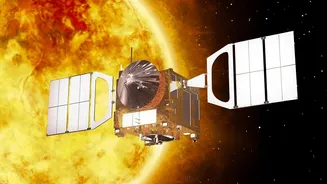
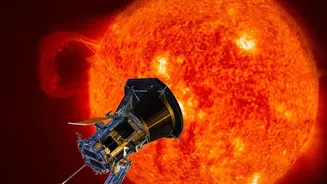
While a triumph of Indian engineering, Aditya-L1 is a resource for the entire world. Its observations complement those of other major solar missions like NASA's Parker Solar Probe and the ESA's Solar Orbiter. While Parker flies daringly close to the Sun, Aditya-L1's continuous watch from the stable L1 point provides a unique and essential long-term perspective. The data gathered is made available to the global scientific community, fostering international collaboration to decode solar physics. This cooperative approach enhances our collective ability to forecast space weather, protecting vital infrastructure and future human spaceflight endeavours.