



Understanding Patellar Tendonitis, or 'Runner's Knee'
Patellar tendonitis, also known as "jumper's knee," is an overuse injury affecting the tendon that connects your kneecap (patella) to your shinbone (tibia). This tendon works with your thigh muscles (quadriceps) to extend your knee, a critical action
for running, jumping, and especially, controlling your descent on a run. Hill runners are particularly susceptible because running downhill places immense stress on the patellar tendon. With every downward step, your quadriceps work like brakes to control your momentum, and the patellar tendon absorbs a huge amount of this force. When the load becomes too much, too soon, or too often, micro-tears and degeneration can occur in the tendon, leading to pain and dysfunction. Unlike a sudden injury, it often starts as a stiffness that might fade as you warm up, but can progress to persistent pain.
The Power of Eccentric Contractions
To prevent this, we need to build a more resilient tendon. This is where eccentric training comes in. A muscle contraction has two main phases: concentric (when the muscle shortens, like lifting a weight) and eccentric (when the muscle lengthens under load, like lowering that same weight slowly). Think of the downward phase of a squat; your quadriceps are lengthening to control your descent. This lengthening-under-load phase is precisely what happens when you run downhill. Research shows that eccentric exercises are uniquely effective for tendon health. This specific type of loading stimulates tendon cells to produce new, healthy collagen—the building block of tendons—and helps organize the fibers into a strong, parallel structure, making the tendon better able to handle stress.
Why 'Slow' is the Magic Word
Simply performing eccentric movements isn't enough; the tempo is crucial. The key is to perform the lowering (eccentric) phase of an exercise very slowly, often over a count of three to five seconds. This slow, controlled movement increases the time the tendon is under tension, which is a powerful signal for it to adapt and strengthen. Fast, jerky movements don't provide the same stimulus for healing and can even exacerbate the problem. By slowing down, you are forcing the muscle and tendon to work harder to control the load, which builds both strength and resilience. The concentric (lifting) phase can then be performed at a normal or even explosive pace. This focus on the slow-lowering phase is what makes these exercises a cornerstone of both rehabilitation and prevention for tendinopathies.
Key Exercises for Prevention
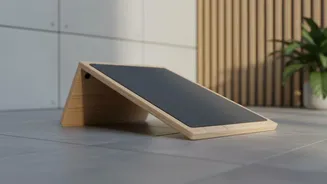
Incorporating slow-eccentric work into your routine is simple. Focus on exercises that target the quads and patellar tendon. A classic and highly effective exercise is the single-leg decline squat. You can use a dedicated slant board or simply place a weight plate under your heel. Stand on one leg and slowly lower yourself into a squat over 3-5 seconds, then use both legs to push back up to the starting position. This removes the stress from the concentric phase and focuses all the effort on the eccentric load. Other excellent exercises include Bulgarian split squats and single-leg box squats, again with a focus on a very slow and controlled descent. For a split squat, you would stand with your back foot elevated on a bench and slowly lower your body until your front thigh is parallel to the ground, then drive back up.
Integrating Into Your Training
You don't need to spend hours in the gym to see the benefits. Aim to perform these exercises two to three times per week, perhaps on your strength training days or after an easy run. Start with a manageable number of repetitions, such as 3 sets of 8-12 reps per leg, and focus on perfect form before adding any weight. Listen to your body. Some mild discomfort in the tendon area during the exercise can be acceptable and is thought to be part of the remodelling process, but sharp or increasing pain is a sign to stop. The goal is to progressively load the tendon over time, making it stronger. Consistency is more important than intensity. A few minutes of dedicated, slow-eccentric work each week is a small price to pay for healthy knees and countless miles on the hills.