


Why Breathability is Non-Negotiable
Natural fibers like wool, cashmere, and alpaca are protein-based and need to breathe. Unlike synthetic materials, they interact with their environment, absorbing and releasing moisture naturally. A 'breathable' container, typically made of cotton or canvas,
allows for this essential air circulation. This process helps regulate humidity within the bag, preventing the stale, musty smell that can develop over months of storage. Think of it as allowing the fabric to maintain its natural balance, which is key to its longevity and softness.
The Dangers of Plastic Storage
It’s tempting to grab a plastic bin or vacuum-sealed bag, assuming an airtight seal is the ultimate protection. However, for natural fibers, it's one of the worst things you can do. Plastic traps moisture against the fabric with no way for it to escape. Even if a sweater feels dry, ambient humidity can get locked in, creating a micro-environment perfect for mold and mildew growth. This trapped moisture can also cause fabric deterioration and lead to permanent yellowing, especially on lighter-colored garments. Over time, chemicals from the plastic itself can even leach into and damage the fibers.
Choosing the Right Storage Bags
The best materials for long-term sweater storage are natural, breathable fabrics. Look for bags made from 100% cotton, canvas, or muslin. These materials provide an effective barrier against dust and pests while still allowing crucial airflow. When choosing a bag, opt for one with a secure zipper to block pests like clothes moths from getting inside and laying eggs. Some bags are made from non-woven polypropylene, which offers a degree of breathability and is better than sealed plastic, but natural cotton remains the superior choice for preserving valuable knitwear.
The Crucial First Step: Proper Cleaning
Never store a sweater that hasn't been cleaned, even if it looks spotless. Invisible residue like body oils, perfume, and tiny food particles are a feast for clothes moths and other pests. These residues are what attract moths, not the clean wool itself. Before storing, either hand wash your sweaters with a gentle, wool-specific detergent or have them professionally dry-cleaned. Ensure every item is completely, thoroughly dry before folding it away. Storing even a slightly damp sweater is a recipe for mildew.
Folding, Not Hanging
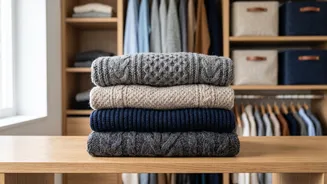
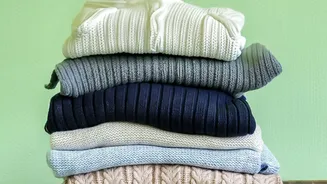
Gravity is the enemy of a well-shaped sweater. Hanging a knit garment, especially a heavy one, will cause the fibers to stretch and distort over time. This often results in permanent bumps at the shoulders and an elongated body that ruins the fit. The correct way to store sweaters is to fold them neatly. Lay the sweater flat, fold the arms in, and then fold the body in half or thirds. To prevent deep creases, you can place a layer of acidfree tissue paper inside the folds. Stack sweaters loosely in their breathable bags, avoiding overcrowding that can crush the fibers.
Natural Pest Protection
While a clean sweater in a sealed bag is your best defense, adding a natural pest repellent offers an extra layer of security. Avoid traditional, toxic mothballs, which can damage fibers and leave a harsh chemical smell. Instead, opt for natural deterrents like cedar blocks or lavender sachets. The aromatic oils in cedar are a powerful repellent to moths. Lavender works similarly and adds a pleasant, subtle fragrance to your stored clothes. Place these items inside the storage bag, but not in direct contact with the garment. Remember that the scent fades, so cedar should be lightly sanded and sachets replaced every few months to remain effective.