





A new job, a major promotion, or a shift in your work-life balance can derail even the most disciplined fitness plans. The key isn't more intensity, but greater sustainability. Let's build a routine that works with your career, not against it.
Redefine What a 'Workout' Means
The 'all-or-nothing'
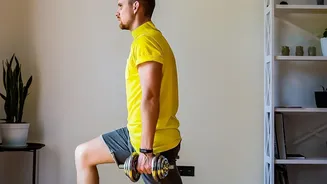
mindset is the biggest enemy of a sustainable fitness routine. If you believe a workout only 'counts' if it's 60 minutes in a gym, you set yourself up for failure on busy days. Instead, broaden your definition. A workout can be a brisk 15-minute walk during your lunch break, a quick 10-minute bodyweight circuit at home before your first meeting, or taking the stairs instead of the lift. These short bursts of activity, sometimes called 'exercise snacks' or 'micro-workouts', are incredibly effective. Studies show that brief, intense periods of exercise can improve cardiovascular health, boost your metabolism, and enhance mental focus, making them perfect for breaking up a sedentary workday. The goal is consistency, not duration. By embracing shorter activities, you make it easier to stay active even when time is your most limited resource.
Anchor Fitness to Existing Habits
Relying on motivation is a flawed strategy because it's inconsistent. Instead, build discipline through 'habit stacking'. This technique involves linking a new, desired habit (exercise) to an existing, automatic one. The formula is simple: 'After I [current habit], I will [new fitness habit]'. For example: 'After my morning coffee finishes brewing, I will do 10 bodyweight squats'. Or, 'Immediately after I log off from work, I will change into my workout clothes'. This strategy removes decision-making from the equation. You're no longer debating if you should exercise; you're just following a pre-established sequence. Start with something incredibly small, like a single push-up or two minutes of stretching. The initial goal isn't to get a six-pack, but to build an unbreakable chain of consistency. Once the habit is automatic, you can gradually increase the duration or intensity.
Schedule Movement Like a Meeting
If it’s not on your calendar, it’s not a priority. Treat your workouts with the same respect you give professional commitments. Block out time in your daily or weekly schedule specifically for physical activity. This doesn't mean you need to find an hour every day. It could be three 20-minute slots a week or a 10-minute block each morning. By scheduling it, you create a non-negotiable appointment with yourself. This is especially crucial during a career shift when your routine is in flux. Your calendar becomes your anchor. Be realistic with your scheduling. If you're not a morning person, don't plan a 5 AM run. If you're drained after work, a lunchtime walk might be more effective. The key is to choose a time that you can consistently protect from other demands.
Prioritise Rest as a Component of Work
In high-pressure careers, it’s tempting to sacrifice rest for productivity. This applies to both work and fitness. However, rest is not inactivity; it's a vital part of recovery and growth. Exercise creates microscopic tears in your muscles, and it's during rest periods that these fibres repair and become stronger. Without adequate recovery, you risk overtraining, injury, and mental burnout, which can derail both your career and your fitness goals. Prioritise getting 7–9 hours of quality sleep, as this is when crucial muscle repair and hormone regulation occurs. Furthermore, schedule active recovery days. These aren't 'cheat days' but involve light activities like walking, stretching, or yoga that increase blood flow and help remove waste products from your tissues. Viewing rest as a productive activity will protect you from the physical and mental fatigue that often accompanies demanding jobs.
Find a 'Why' That Transcends Aesthetics
When your primary motivation is purely aesthetic, it can be hard to stay consistent when stress is high and results seem slow. A more powerful and sustainable motivator is your 'why'. Why do you really want to be active? Perhaps it's to have more energy for your family, to manage work-related stress, or to improve your mental clarity and focus. Physical activity is a proven tool for reducing stress hormones like cortisol and releasing mood-boosting endorphins. Focusing on these immediate mental health benefits can be more motivating on a tough day than a long term weight loss goal. When you connect exercise to how you feel and perform in your daily life—both professionally and personally—it transforms from a chore into a necessary tool for well being. This deeper purpose will keep you going long after superficial goals have lost their appeal.