





Why Yoga Works Wonders for Exam Brain
During high-pressure study periods, the mind and body can feel disconnected. Stress often shows up as a tight neck, hunched shoulders, and a racing mind, making it hard to concentrate or retain information. Yoga brings them back into sync. The practice
combines physical postures (asanas) with controlled breathing (pranayama), a combination proven to soothe the nervous system. Gentle stretching releases physical tension, while deep breathing increases oxygen flow to the brain, enhancing clarity and memory. Even a five-minute yoga break can signal to the body that it's time to 'rest and digest' rather than 'fight or flight', making it easier to return to studies with a renewed sense of focus.
1. The Desk Cat-Cow Stretch
This is a perfect stretch to relieve a stiff back and neck from hunching over books. It can be done without even leaving the study chair. How to do it: Sit tall at the edge of your chair with both feet flat on the floor and hands on your knees. On an inhale, arch your spine, roll your shoulders back, and look up toward the ceiling (Cow Pose). On an exhale, round your spine, drop your chin to your chest, and let your shoulders curve forward (Cat Pose). Flow between these two movements for 8-10 breaths, matching your breath to the movement. This simple flow releases tension in the spine and shoulders, a common complaint during long study hours.
2. Eagle Arms for Shoulder Relief
Typing and writing for hours can create a lot of tension in the shoulders and upper back. Eagle Arms, or Garudasana arms, is a fantastic counter-stretch that can be done while seated. How to do it: Stretch your arms straight out in front of you. Cross your right arm over your left, then bend the elbows. The backs of your hands might touch, or you can wrap them again so your palms touch. Lift your elbows to shoulder height and gently press your hands away from your face to deepen the stretch across your shoulder blades. Hold for five deep breaths, then uncross and repeat with the left arm on top. This pose untangles the knots in the upper back and improves posture.
3. Tree Pose for Unshakeable Focus
Balancing poses are a powerful tool for training the mind to concentrate. Tree Pose, or Vrikshasana, challenges you to find stillness, which directly translates to improved focus during study sessions. How to do it: Stand tall next to your desk, using it for support if needed. Shift your weight onto your right foot. Place the sole of your left foot on your inner right ankle, calf, or thigh (avoiding the knee joint). Bring your hands to your heart in a prayer position. Find a non-moving spot in front of you to fix your gaze on (your drishti). Hold for 5-8 breaths, feeling both grounded and tall. Switch sides. The act of balancing quiets mental chatter and builds confidence.
4. Seated Forward Bend to Calm the Mind
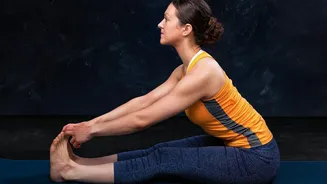
A gentle forward bend is an excellent way to calm the nervous system and release a tired lower back. It encourages introspection and quiet. How to do it: Sit on the floor with your legs stretched out in front of you (or sit on the edge of your chair with feet wide). Inhale to lengthen your spine. As you exhale, gently hinge forward from your hips, walking your hands down your legs. Don't worry about touching your toes; just go until you feel a comfortable stretch in your hamstrings and back. Let your head hang heavy to release your neck. Stay here for 5-10 slow breaths. This pose increases blood flow to the brain while providing a deep sense of relaxation.
5. Box Breathing for Instant Calm
Before an exam or when anxiety hits, a simple breathing technique can be a student's best friend. Box Breathing, or Sama Vritti Pranayama, is incredibly effective for calming nerves and resetting focus. Its structured rhythm gives a racing mind something predictable to follow. How to do it: Sit comfortably. Gently close your eyes. Inhale slowly through your nose for a count of four. Hold your breath for a count of four. Exhale slowly through your nose for a count of four. Hold the breath out for a count of four. That's one 'box'. Repeat this cycle for 5-10 rounds. You can do this right at your desk, or even in the exam hall, to quickly reduce anxiety.