







The Current State of Affairs
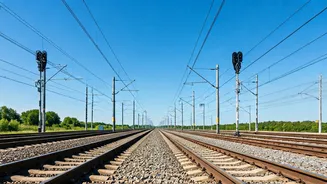
The railway network in Eastern India, covering states like West Bengal, Odisha, Bihar, and Jharkhand, is one of the country's most vital and congested. It's a lifeline for passengers and a critical artery for freight, especially coal and minerals. However,
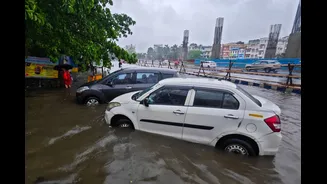
this high traffic density, combined with ageing infrastructure and challenging environmental conditions, creates a complex web of risks. Overcrowding is a persistent issue, with viral videos often showing passengers desperately trying to board packed trains. This strain on the system means that any single point of failure—be it a signalling error, a track defect, or human misjudgment—can have cascading and sometimes tragic consequences. Furthermore, the region faces unique challenges such as flash floods during monsoon season which can compromise track stability, and dense fog in winter that severely reduces visibility for loco pilots, increasing the risk of accidents.
What is Real-Time Checking?
Real-time checking isn't a single technology but a suite of systems working together to provide a live, dynamic picture of the entire railway operation. This includes sensors embedded in tracks to detect fractures or stress, GPS tracking on every locomotive, and automated signalling systems that communicate with each other. A key component is replacing old relay-based interlocking systems with modern Electronic Interlocking (EI). EI is a computer-based system that automates route setting and reduces the chance of human error, which is a factor in many accidents. Another crucial layer is an Automatic Train Protection (ATP) system, which can automatically apply brakes if a train exceeds speed limits or passes a red signal. These technologies move monitoring from a manual, periodic process to an automated, continuous one, capable of flagging anomalies the instant they occur.
The Kavach Solution
India's answer to the need for an ATP system is 'Kavach', an indigenously developed technology designed to prevent collisions. Kavach continuously monitors train movements in real-time and can take control of the brakes to prevent accidents, even in low-visibility conditions. Following tragic incidents, the push to install Kavach has intensified. Recent approvals show significant investment in its deployment across the Eastern and East Coast Railway zones. For instance, the East Coast Railway has recently sanctioned a project to install Kavach over 631 route kilometres covering key corridors in Odisha. Similarly, Eastern Railway received accolades for its progress in deploying Kavach on the high-density Howrah-New Delhi route, covering 260 km and 47 stations. These systems are designed to be integrated with modern signalling and LTE communication backbones to ensure a foolproof safety net.
More Than Just Collision Avoidance
While safety is paramount, real-time monitoring offers broader benefits. Indian Railways has also begun rolling out internal applications like 'Punctuality BZA', which allows railway officials to monitor train movements and delays in real-time. This system provides instant alerts for delays over 15 minutes, helping controllers analyse the cause and take corrective action faster. By integrating GPS data, it automates the tracking of arrivals and departures, moving away from manual documentation. For passengers, this translates into improved punctuality and more reliable service. For the railways, it means greater operational efficiency, better asset management, and the ability to handle higher traffic volumes on congested routes like the Mansi-Saharsa section in Bihar, which is already operating beyond its capacity.
Challenges on the Ground
Implementing these modern systems across the vast and varied terrain of Eastern India is not without its challenges. The process involves significant capital investment, with recent projects in the Eastern Railway zone for electronic interlocking and line doubling costing hundreds of crores. Beyond funding, projects often face delays due to issues with land acquisition, complex inter-agency coordination, and sometimes even political interference or law and order problems. Upgrading infrastructure often has to happen alongside live, operational tracks, which requires meticulous planning and limited work windows to avoid disrupting existing services. Despite these hurdles, the recent flurry of project approvals signals a clear intent to modernise and secure one of India's most critical transport networks.