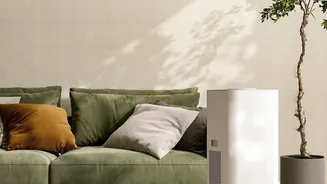




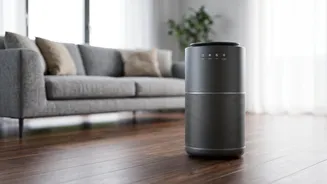
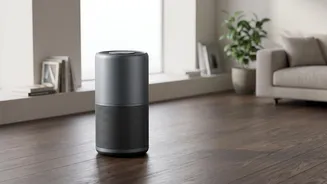

When air quality plummets, many of us turn to houseplants for a natural solution. But does the popular belief that a few green friends can purify a room hold up against severe pollution? The science tells a more complicated, and practical, story.
The Alluring Myth of the Purifying Plant
The idea
that houseplants are nature’s air purifiers is a comforting one. It largely stems from a 1989 NASA study which found that plants could absorb volatile organic compounds (VOCs) like benzene and formaldehyde in a sealed chamber. This finding blossomed in popular culture, leading many to believe that surrounding ourselves with snake plants and peace lilies is a sufficient defence against indoor air pollution. The appeal is obvious: it’s an aesthetic, low-tech, and 'natural' solution that makes our homes look and feel better. During India's pollution season, the desire for such a simple fix is stronger than ever.
A Reality Check: Why Your Living Room Isn't a Space Station
The problem is that our homes are not small, sealed plexiglass chambers. The NASA study's conditions don't translate to real-world environments. Subsequent research has clarified that to replicate the cleaning effect seen in the lab, you would need an impractically large number of plants—some estimates suggest 10 to 1,000 plants per square meter of floor space. In a typical 150-square-foot room, that would mean turning your home into a dense jungle of over 1,000 plants to achieve meaningful air cleaning. Furthermore, plants are primarily effective at absorbing certain gaseous VOCs over long periods but do very little to combat the biggest threat during smog events: fine particulate matter, or PM2.5.
The Real Enemy: Understanding PM2.5
During severe pollution episodes, the primary health concern is PM2.5—microscopic particles less than 2.5 micrometers in diameter. These particles come from vehicle exhaust, industrial emissions, construction dust, and crop burning. Because of their tiny size, they can bypass the body's natural defences, penetrate deep into the lungs, and even enter the bloodstream, leading to respiratory and cardiovascular diseases. Plants, unfortunately, are not equipped to capture these tiny, dangerous particles from the air in any significant quantity. To fight PM2.5, you need a solution designed specifically for the job.
The Mechanical Solution: How HEPA Filtration Works
This is where air purifiers come in. Unlike plants, which passively absorb pollutants, air purifiers actively pull large volumes of air through a series of filters. The gold standard for this is the True HEPA (High-Efficiency Particulate Air) filter. By definition, a True HEPA filter is certified to capture at least 99.97% of airborne particles that are 0.3 microns in size—the most difficult size to trap. This makes them extremely effective at removing PM2.5, as well as dust, pollen, pet dander, and mould spores from your indoor environment, something plants simply cannot do. Studies have repeatedly shown that using a HEPA purifier significantly reduces indoor PM2.5 levels.
How to Choose the Right Air Purifier in India
When buying an air purifier, especially for Indian conditions, the most important metric to look for is the CADR (Clean Air Delivery Rate), measured in cubic meters per hour (m³/h). This tells you how much clean air the purifier can produce at its highest setting. For high-pollution cities, you should choose a purifier with a CADR that can clean the air in your room at least five times per hour. Look for a model with a 'True HEPA' filter, as terms like 'HEPA-type' are not regulated and offer inferior performance. Also, consider the noise level for bedroom use (look for under 35 dB on low settings) and the long term cost and availability of replacement filters.
Don’t Throw Out Your Plants Yet
Just because plants aren't effective air cleaners doesn't mean they are useless. The psychological benefits of being around greenery are well documented. Studies show that indoor plants can reduce stress and anxiety, improve mood, and boost focus. Caring for them can also provide a sense of purpose and calm. Think of your houseplants as a vital part of your home's wellness ecosystem, contributing to your mental health and aesthetic enjoyment. They are a complement to, not a replacement for, mechanical air filtration.