





Meet the Sleeping Monsters
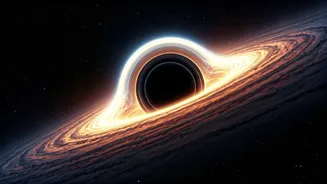
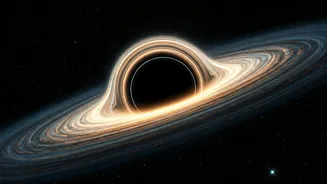
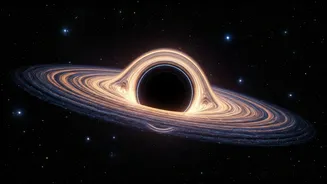
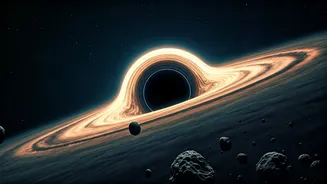
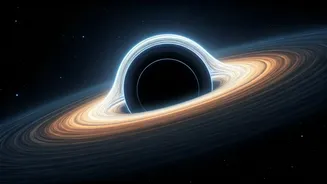
At the heart of most large galaxies, including our own Milky Way, lurks a supermassive black hole—a gravitational behemoth millions or even billions of times more massive than our sun. For most of their lives, these cosmic monsters are quiet. Having long
ago consumed most of the gas and stars in their immediate vicinity, they enter a dormant phase, becoming nearly invisible to our telescopes. But these aren't the only giants napping in the dark. Another type of monster is the magnetar, the city-sized, hyper-magnetic remnant of a massive star's death. These objects possess the most powerful magnetic fields in the universe and can remain quiet for long stretches before suddenly erupting. For astronomers, these quiet periods are a challenge, but the real excitement begins when the alarm clock goes off.
What Triggers the Alarm?
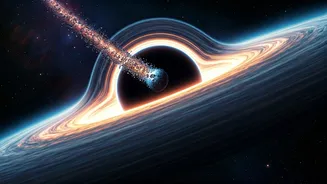
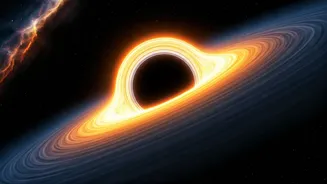
So what wakes a sleeping giant? For a supermassive black hole, the snooze button is hit when a fresh meal wanders too close. This can happen when an unlucky star, on its long orbit around the galactic center, is gravitationally perturbed and veers into the black hole's path. The immense tidal forces of the black hole, the same kind of force that causes tides on Earth but far more extreme, stretch and shred the star in a process gruesomely nicknamed 'spaghettification'. This cataclysmic event, called a Tidal Disruption Event (TDE), provides a sudden feast. As the stellar debris is pulled into a swirling, super-heated accretion disk around the black hole, it releases a tremendous flare of energy across the electromagnetic spectrum, from X-rays to radio waves, making the dormant monster visible once more.
A Sudden Burst of Activity
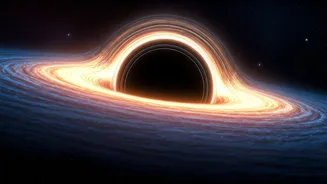
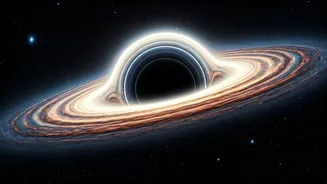
In other cases, the awakening is more mysterious. In late 2019, astronomers watched a previously unremarkable galaxy, SDSS1335+0728, located 300 million light-years away, suddenly begin to brighten dramatically. Over months and years, its core has become immensely more luminous in ultraviolet, optical, and infrared light, and has begun to emit X-rays. Scientists believe this is the first time they are witnessing, in real-time, the 'turning on' of an Active Galactic Nucleus (AGN). An AGN is the term for a supermassive black hole that is actively feeding. It's thought that in this case, a new, massive flow of gas has started to fall into the black hole, triggering its awakening and creating a brilliant beacon that can outshine all the stars in its host galaxy combined.
The Wake-Up Call for Astronomers
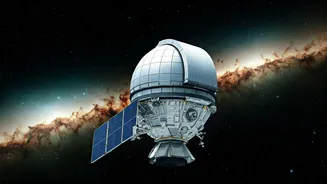
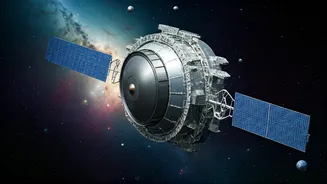
These sudden brightenings, known as transient events, are a vital field of study in modern astronomy. They are a wake-up call not just for the objects themselves, but for astronomers on Earth. When a 'monster' awakens, it provides a rare opportunity to study the most extreme physics in the universe. The brilliant flare from a TDE illuminates the immediate environment of a black hole, allowing scientists to measure properties like its mass and spin, which are otherwise impossible to observe. For magnetars, sudden outbursts and flares release more energy in a second than our sun does in a year. By studying the X-rays from these tantrums, as NASA's IXPE telescope recently did, scientists can probe the structure of their colossal magnetic fields and understand the physics of matter under unimaginable pressures.
Decoding the Cosmic Message
Each cosmic alarm reveals something new about the universe's evolution. Studying AGNs helps us understand how galaxies and their central black holes grow and influence one another. Observations of TDEs confirm theories about gravity and accretion that were once purely speculative. Even the outbursts from magnetars are teaching us about the origins of other mysterious phenomena, like Fast Radio Bursts (FRBs), which are powerful but fleeting blasts of radio waves from distant galaxies. These violent awakenings show us that the universe is not a static stage but a dynamic, evolving place. The sleeping monsters are not just objects of terror, but cosmic laboratories that send us clues about the fundamental laws of nature, written in light and radiation from across the void.