



The Mystery of the Vanishing Gas
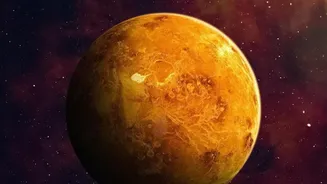
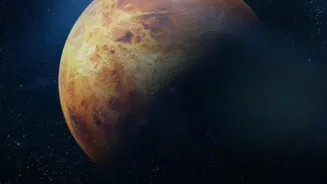
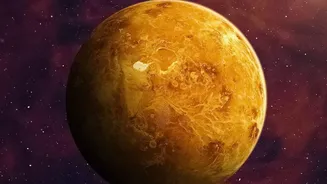
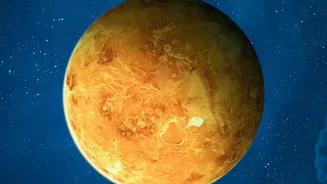
One of the most enduring clues to what might be happening on Venus lies in its thick, acidic clouds. For years, scientists have observed large fluctuations in the amount of sulfur dioxide (SO2) in the planet's upper atmosphere. On Earth, SO2 is a classic
calling card of volcanic eruptions. The puzzle on Venus is that the gas is quickly destroyed by sunlight, meaning it shouldn't hang around for long. If you see sulfur dioxide high up, it must have been recently replenished from below. Missions like NASA's Pioneer Venus in the 1980s and the European Space Agency's Venus Express in the 2000s both detected mysterious spikes in SO2 followed by rapid declines. This strongly suggested that active volcanoes were intermittently pumping the gas into the atmosphere, but it was still just a tantalizing piece of circumstantial evidence. Without seeing a volcano in action, it was impossible to be sure.
Hunting for a Smoking Gun
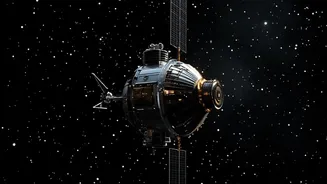
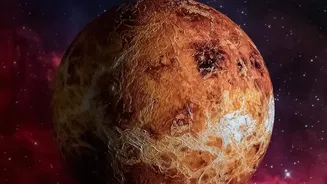
Proving a volcano had erupted on Venus is incredibly difficult. The planet is shrouded in an unbroken layer of clouds so thick that its surface is completely hidden from view. To see what's happening on the ground, scientists have to rely on radar, which can penetrate the dense atmosphere. NASA's Magellan spacecraft did exactly this, mapping about 98% of the planet's surface between 1990 and 1992. The images it sent back revealed a world covered in volcanic features—more volcanoes than any other planet in our solar system. For three decades, these maps provided our best look at Venus, showing vast lava plains and enormous shield volcanoes. But the images were static, like a collection of old photographs. They showed that Venus had a volcanic past, but couldn't answer the crucial question: was it still active?
A Discovery in 30-Year-Old Data
The breakthrough came not from a new mission, but from a fresh look at Magellan's old data. Armed with modern computing power, scientists began meticulously comparing images of the same locations taken months apart. In 2023, they hit pay dirt. A research team discovered that a volcanic vent near the summit of Maat Mons, Venus's highest volcano, had changed shape between February and October 1991. The vent had nearly doubled in size and appeared to be filled with new lava. This was the first direct geological evidence of a recent eruption. Hot on the heels of that discovery, another team in 2024 announced they had found more evidence in two other regions, Sif Mons and Niobe Planitia, that showed signs of new lava flows occurring while Magellan was orbiting. By analysing the old data, scientists finally found the smoking gun they had been looking for.
A Geologically Living Planet
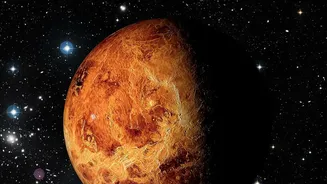
These discoveries are transforming our understanding of our neighbouring planet. Venus is not a geologically dead world, but a dynamic one that joins Earth and Jupiter's moon Io as the only known bodies in the solar system with active magma volcanoes. Some scientists now suggest that the level of volcanic activity on Venus could be comparable to that on Earth. This ongoing activity helps explain many of Venus's mysteries, including the constant presence of sulfur dioxide in its atmosphere and how its interior heat escapes. Instead of a static relic, we are now seeing Venus as a living, breathing planet with a complex and active surface, which fundamentally changes how we view its history and evolution.
The Next Chapter for Venus Exploration
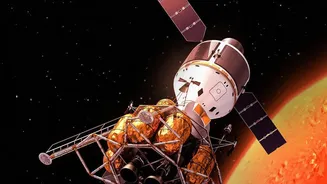
While the evidence is compelling, the scientific process demands confirmation. Some researchers argue that the old radar data isn't clear enough to be considered definitive proof and that future missions are needed to settle the question. Fortunately, a new era of Venus exploration is just around the corner. NASA is planning two ambitious missions, VERITAS and DAVINCI, while the European Space Agency is developing its own called EnVision. These spacecraft will be equipped with advanced, high-resolution radar and spectrometers designed specifically to hunt for active eruptions, measure volcanic gases, and create detailed maps of the surface. After decades of being relatively overlooked in favour of Mars, these missions are set to finally pull back the veil on Earth's twin and answer the question of its volcanic activity once and for all.